Vernonia anthelmintica
Baccharoides anthelmintica · Accepted scientific name
Scientific literature: Sparse (89 studies) · ★★☆☆☆
Vernonia anthelmintica, scientifically known as Baccharoides anthelmintica, is a medicinal plant valued in traditional African medicine. Renowned for its potent anthelmintic properties, it is primarily used to treat intestinal worms. This shrub offers significant therapeutic potential, particularly in managing parasitic infections through its bioactive phytochemical constituents.
- Family
- Asteraceae
- Native range
- Africa
- Parts used
- Seed · Flower
- Common names
- Kinka-Oil
- Scientific synonyms
- Vernonia Anthelmintica · Centratherum Anthelminticum · 6 more
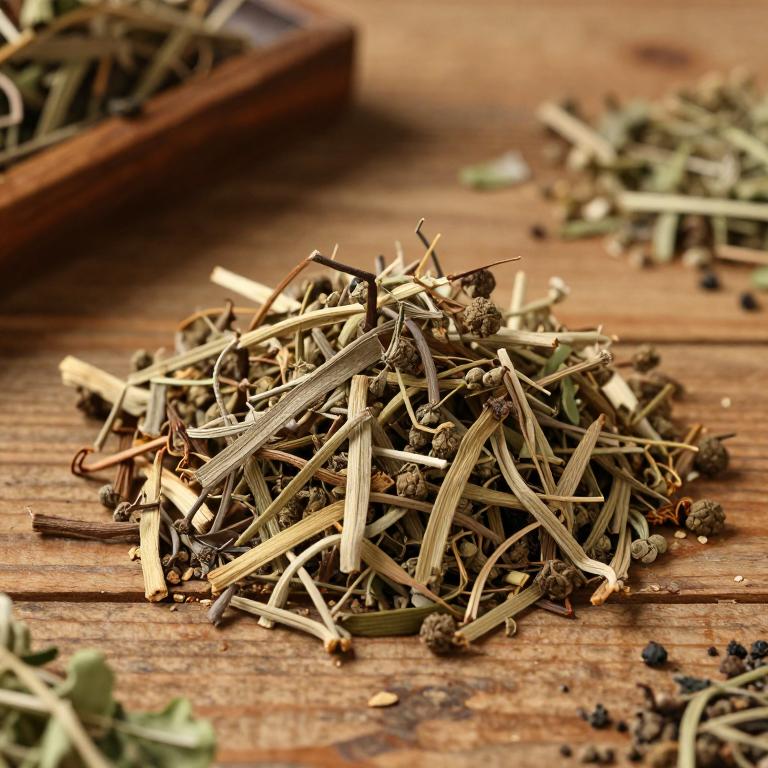
Names and Synonyms
Common Names
- kinka-oil
Scientific Names
Accepted name
Baccharoides anthelminticaSynonyms
- Vernonia anthelmintica
- Centratherum anthelminticum
- Ascaricida anthelminthica
- Dolosanthus silvaticus
- Conyza anthelmintica
- Phyllocephalum anthelminticum
- Vernonia stenolepis
- Serratula anthelmintica
Regional and Traditional Names
German:
- Vernonia anthelmintica
- Wurm-Scheinaster
Sources: Wikidata, Catalogue of Life
Taxonomical Classification
This plant belongs to the kingdom Plantae and the phylum Streptophyta. Within the class Equisetopsida and subclass Magnoliidae, it is classified under the order Asterales. Furthermore, it is a member of the family Asteraceae and is specifically identified by the genus Baccharoides.
| Rank | Classification |
|---|---|
| Kingdom | Plantae |
| Phylum | Streptophyta |
| Class | Equisetopsida |
| Subclass | Magnoliidae |
| Order | Asterales |
| Family | Asteraceae |
| Genus | Baccharoides |
Sources: The World Checklist of Vascular Plants (WCVP)
Distribution
This plant exhibits a broad distribution across several key regions of the African continent. In West-Central Tropical Africa, it can be found within the Democratic Republic of the Congo. Its presence extends into East Tropical Africa, specifically spanning across Kenya, Tanzania, and Uganda. Additionally, the species is documented in the South Tropical Africa region, particularly in Malawi. Together, these locations highlight a wide range of habitats throughout the tropical belt.
| Region | Area |
|---|---|
| West-Central Tropical Africa | DR Congo |
| East Tropical Africa | Kenya |
| East Tropical Africa | Tanzania |
| East Tropical Africa | Uganda |
| South Tropical Africa | Malawi |
| South Tropical Africa | Mozambique |
| South Tropical Africa | Zambia |
| South Tropical Africa | Zimbabwe |
| Southern Africa | Botswana |
| Southern Africa | Namibia |
Sources: The World Checklist of Vascular Plants (WCVP)
Botanical Identification
Ecology
The ecology of Baccharoides anthelmintica is characterized by a highly specific altitudinal niche, as it is found exclusively within a narrow elevational band. This species thrives at a consistent altitude of 1000 m AMSL, representing both its minimum and maximum elevational range. Such precise environmental requirements suggest that the plant is adapted to the particular climatic conditions, temperature gradients, and atmospheric pressures unique to this specific height above sea level.
- Elevational range max:
- 1000 m AMSL
Life history
The life history of Baccharoides anthelmintica is characterized by a perennial lifecycle, allowing the plant to persist in its environment through multiple growing seasons. As a perennial species, it avoids the complete senescence seen in annuals, instead establishing a robust structural foundation that supports continuous or seasonal vegetative growth and reproductive cycles. This enduring life strategy enables the plant to develop complex root systems and accumulate sufficient energy reserves to withstand varying environmental conditions, ensuring its long-term presence and ability to produce seeds over several years.
- Lifecycle :
- annual
Morphology
The morphology of Baccharoides anthelmintiica is characterized by its growth form as a non-woody herb. It functions as a self-supporting plant, meaning it does not require external structures to climb, and it is classified as an independent organism rather than a parasite or an epiphyte. The plant is strictly terrestrial in its habitat and maintains a relatively modest stature, with a mean plant height of approximately 0.8 m, though individuals may reach a maximum height of up to 2 m.
- Aquatic :
- terrestrial
- Climber :
- self-supporting
- Epiphyte :
- terrestrial
- Growth form :
- herb
- Parasite :
- independent
- Plant height max:
- 2 m
- Plant height mean:
- 0.8 m
- Woodiness :
- non-woody
Physiology
The physiology of Baccharoides anthelmintica is characterized by complex metabolic processes geared toward survival in arid or semi-arid environments, where efficient resource management is paramount. Its metabolic pathways are optimized for the synthesis of diverse secondary metabolites, including various alkaloids and glycosides, which serve both defensive and physiological functions within the plant's tissues. Regarding its nutrient acquisition strategies, the plant does not engage in symbiotic nitrogen fixation; specifically, it is not a nitrogen fixer, as it lacks the specialized root nodules required for hosting diazotrophic bacteria. Instead, its nitrogen uptake is primarily driven by the active and passive absorption of nitrates and ammonium ions from the soil through its root system. Water regulation is managed through specialized osmotic adjustments and stomatal control to mitigate transpiration losses, ensuring that photosynthetic efficiency is maintained even under environmental stress.
- Nitrogen fixer :
- no
Reproduction
The reproduction of Baccharoides anthelmintica is characterized by the production of specialized seeds that exhibit specific morphological and mass-related variations. Based on quantitative data, the seed mass of this species is relatively small, with a measured mean seed mass of 0.00433875 g. The distribution of seed weights shows a degree of natural variability, ranging from a minimum mass of 0.0032 g to a maximum mass of 0.00542 g. These precise measurements indicate a consistent reproductive output within a narrow weight range, which is a critical factor in the plant's dispersal and establishment strategies in its natural habitat.
- Seed mass max:
- 0.00542 g
- Seed mass mean:
- 0.00433875 g
- Seed mass min:
- 0.0032 g
Sources: Global Inventory of Floras and Traits (GIFT)
Plant Parts
Baccharoides anthelmintica has 5 reported plant parts identified across 17 scientific publications and several other databases that are studied for medicinal purposes. The most consistently reported plant part include seed, flower, stem, leaf, root.
| Plant part | Supporting sources | Consensus |
|---|---|---|
| Seed | 11 supporting sources | ★★★★★ |
| Flower | 2 supporting sources | ★☆☆☆☆ |
| Stem | 2 supporting sources | ★☆☆☆☆ |
| Leaf | 1 supporting sources | ★☆☆☆☆ |
| Root | 1 supporting sources | ★☆☆☆☆ |
Seed
- Pakistan journal of pharmaceutical sciences
- Zhongguo Zhong yao za zhi = Zhongguo zhongyao zazhi = China journal of Chinese materia medica
- Journal of Asian natural products research
- Microorganisms
- Evidence-based complementary and alternative medicine : eCAM
View 6 additional sources
- Phytochemistry
- Fitoterapia
- International journal of analytical chemistry
- Journal of experimental & clinical cancer research : CR
- Pharmaceuticals (Basel, Switzerland)
- Heliyon
Flower
- International journal of molecular sciences
- Folia microbiologica
Stem
- Microorganisms
- Natural product research
Leaf
- Microorganisms
Root
- Microorganisms
Chemicals
Baccharoides anthelmintica has 37 reported phytochemicals identified across 17 scientific publications and several other databases. The most consistently reported chemicals include VERNODALIN, Flavonoids, Butin, Steroids, Terpenoids.
| Chemical | Supporting sources | Consensus |
|---|---|---|
| VERNODALIN | 4 supporting sources | ★★☆☆☆ |
| Flavonoids | 3 supporting sources | ★★☆☆☆ |
| Butin | 2 supporting sources | ★☆☆☆☆ |
| Steroids | 2 supporting sources | ★☆☆☆☆ |
| Terpenoids | 2 supporting sources | ★☆☆☆☆ |
| 1,3-Dicaffeoyl quinic acid | 1 supporting sources | ★☆☆☆☆ |
| 1-methylquinolin-4(1H)-one | 1 supporting sources | ★☆☆☆☆ |
| 12,13-dihydroxyoleic acid | 1 supporting sources | ★☆☆☆☆ |
| 2-(4'-hydroxyphenyl)-6-methyl-4h-pyran-4-one | 1 supporting sources | ★☆☆☆☆ |
| 3,4-dicaffeoyl quinic acid | 1 supporting sources | ★☆☆☆☆ |
VERNODALIN
- Journal of ethnopharmacology
- PloS one
- Journal of experimental & clinical cancer research : CR
- Biomedical chromatography : BMC
Flavonoids
- Journal of ethnopharmacology
- Pakistan journal of pharmaceutical sciences
- Journal of Asian natural products research
Butin
- Phytotherapy research : PTR
- Biomedical chromatography : BMC
Steroids
- Journal of ethnopharmacology
- Chemistry & biodiversity
Terpenoids
- Pakistan journal of pharmaceutical sciences
- Chemistry & biodiversity
1,3-Dicaffeoyl quinic acid
- Pharmaceuticals (Basel, Switzerland)
1-methylquinolin-4(1H)-one
- Natural product research
12,13-dihydroxyoleic acid
- PloS one
2-(4'-hydroxyphenyl)-6-methyl-4h-pyran-4-one
- Journal of Asian natural products research
3,4-dicaffeoyl quinic acid
- Pharmaceuticals (Basel, Switzerland)
Activities
Baccharoides anthelmintica has 12 reported activities identified across 17 scientific publications and several other databases. The most consistently reported activities include Antioxidant, Antimicrobial, Antidiabetic, Antiparasitic, Antiproliferative.
| Activity | Supporting sources | Consensus |
|---|---|---|
| Antioxidant | 4 supporting sources | ★★☆☆☆ |
| Antimicrobial | 3 supporting sources | ★★☆☆☆ |
| Antidiabetic | 2 supporting sources | ★☆☆☆☆ |
| Antiparasitic | 2 supporting sources | ★☆☆☆☆ |
| Antiproliferative | 2 supporting sources | ★☆☆☆☆ |
| Cytotoxic | 2 supporting sources | ★☆☆☆☆ |
| Analgesic | 1 supporting sources | ★☆☆☆☆ |
| Antipsoriatic | 1 supporting sources | ★☆☆☆☆ |
| Antipyretic | 1 supporting sources | ★☆☆☆☆ |
| Chemopreventive | 1 supporting sources | ★☆☆☆☆ |
Antioxidant
- BMC complementary and alternative medicine
- Journal of ethnopharmacology
- Chemistry & biodiversity
- Folia microbiologica
Antimicrobial
- Journal of ethnopharmacology
- Chemistry & biodiversity
- Folia microbiologica
Antidiabetic
- Chemistry & biodiversity
- Folia microbiologica
Antiparasitic
- Journal of ethnopharmacology
- Chemistry & biodiversity
Antiproliferative
- International journal of oncology
- Journal of ethnopharmacology
Cytotoxic
- PloS one
- Folia microbiologica
Analgesic
- Journal of ethnopharmacology
Antipsoriatic
- Journal of ethnopharmacology
Antipyretic
- Journal of ethnopharmacology
Chemopreventive
- Journal of experimental & clinical cancer research : CR
Conditions
Baccharoides anthelmintica has 4 reported investigations on conditions identified across 17 scientific publications and several other databases. The most consistently reported conditions include Vitiligo, liver disease, neurodegenerative diseases, skin diseases.
| Condition | Supporting sources | Consensus |
|---|---|---|
| Vitiligo | 1 supporting sources | ★☆☆☆☆ |
| Liver disease | 1 supporting sources | ★☆☆☆☆ |
| Neurodegenerative diseases | 1 supporting sources | ★☆☆☆☆ |
| Skin diseases | 1 supporting sources | ★☆☆☆☆ |
Vitiligo
- Planta medica
Liver disease
- Chemistry & biodiversity
Neurodegenerative diseases
- Chemistry & biodiversity
Skin diseases
- Chemistry & biodiversity
Preparations
Baccharoides anthelmintica has 14 reported preparations identified across 17 scientific publications and several other databases. The most consistently reported preparations include seeds, Ethanol (EEVA), Ethanol and hexane extracts, Hexane (HEVA), Methanolic extracts.
| Preparation | Supporting sources | Consensus |
|---|---|---|
| Seeds | 4 supporting sources | ★★☆☆☆ |
| Ethanol (eeva) | 1 supporting sources | ★☆☆☆☆ |
| Ethanol and hexane extracts | 1 supporting sources | ★☆☆☆☆ |
| Hexane (heva) | 1 supporting sources | ★☆☆☆☆ |
| Methanolic extracts | 1 supporting sources | ★☆☆☆☆ |
| Soxhlet | 1 supporting sources | ★☆☆☆☆ |
| Vernonia anthelmintica effective part | 1 supporting sources | ★☆☆☆☆ |
| Water decoction (wdva) | 1 supporting sources | ★☆☆☆☆ |
| Accelerated-ase | 1 supporting sources | ★☆☆☆☆ |
| Extracts | 1 supporting sources | ★☆☆☆☆ |
Seeds
- Journal of Asian natural products research
- Phytochemistry
- International journal of analytical chemistry
- Journal of experimental & clinical cancer research : CR
Ethanol (eeva)
- Pakistan journal of pharmaceutical sciences
Ethanol and hexane extracts
- Pakistan journal of pharmaceutical sciences
Hexane (heva)
- Pakistan journal of pharmaceutical sciences
Methanolic extracts
- Parasitology research
Soxhlet
- Heliyon
Vernonia anthelmintica effective part
- Biomedical chromatography : BMC
Water decoction (wdva)
- Pakistan journal of pharmaceutical sciences
Accelerated-ase
- Heliyon
Extracts
- International journal of oncology