Shire Vernonia
Baccharoides adoensis · Accepted scientific name
Scientific literature: Very Sparse (11 studies) · ★☆☆☆☆
Shire Vernonia, scientifically known as Baccharoides adoensis, is a significant medicinal plant valued for its diverse therapeutic properties. Often utilized in traditional healing practices, this species contains bioactive compounds known to address various ailments. Understanding its botanical characteristics and medicinal applications is essential for exploring its potential in pharmacology.
- Family
- Asteraceae
- Native range
- Africa
- Parts used
- Leaf · Root
- Common names
- Shire Vernonia
- Scientific synonyms
- Gnaphalium Adoense · Vernonia Adoensis
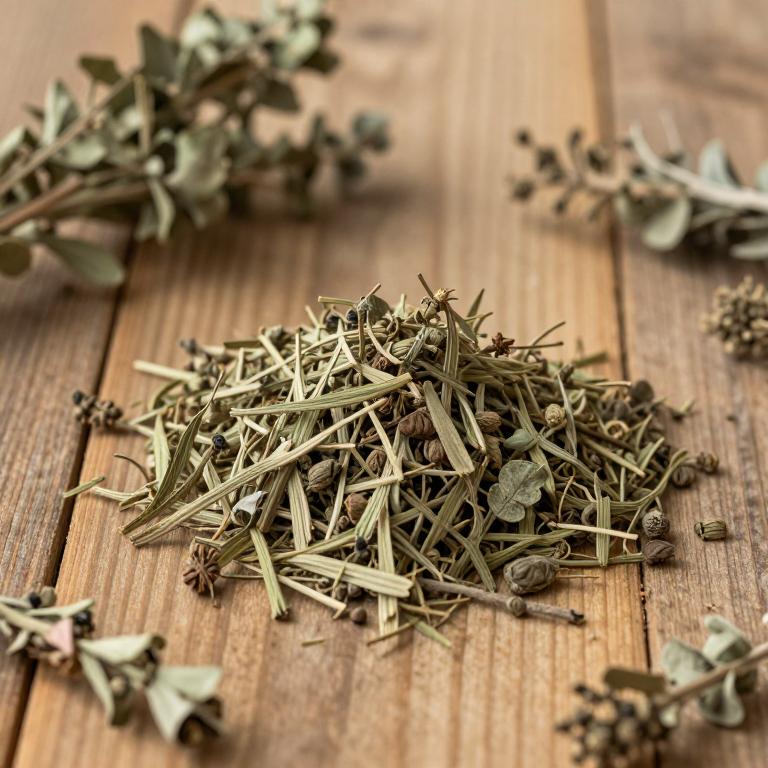
Names and Synonyms
Common Names
- Shire Vernonia
Scientific Names
Accepted name
Baccharoides adoensisSynonyms
- Gnaphalium adoense
- Vernonia adoensis
Sources: Wikidata, Catalogue of Life
Taxonomical Classification
This plant belongs to the kingdom Plantae and the phylum Streptophyta, falling under the class Equisetopsida and subclass Magnoliidae. Within the order Asterales, it is classified under the family Asteraceae and is specifically identified by the genus Baccharoides. Together, these classifications define the botanical position of Baccharoides adoensis.
| Rank | Classification |
|---|---|
| Kingdom | Plantae |
| Phylum | Streptophyta |
| Class | Equisetopsida |
| Subclass | Magnoliidae |
| Order | Asterales |
| Family | Asteraceae |
| Genus | Baccharoides |
Sources: The World Checklist of Vascular Plants (WCVP)
Distribution
This plant is primarily distributed throughout the West Tropical Africa region. Specifically, its presence has been documented within the borders of Benin. It also grows across various parts of Burkina and Guinea. Furthermore, the species can be found in the territories of Mali. Finally, its geographical range extends into Mauritania.
| Region | Area |
|---|---|
| West Tropical Africa | Benin |
| West Tropical Africa | Burkina |
| West Tropical Africa | Guinea |
| West Tropical Africa | Mali |
| West Tropical Africa | Mauritania |
| West Tropical Africa | Nigeria |
| West Tropical Africa | Senegal |
| West Tropical Africa | Togo |
| West-Central Tropical Africa | Burundi |
| West-Central Tropical Africa | Central African Republic |
Sources: The World Checklist of Vascular Plants (WCVP)
Botanical Identification
Ecology
The ecology of Baccharoides adoensis is characterized by its specific niche within montane or sub-montane environments, where it thrives across a distinct altitudinal gradient. This species is primarily found within an elevational range that extends from a minimum of 550 m AMSL to a maximum of 1420 m AMSL. This distribution suggests an adaptation to mid-altitude ecosystems, likely occupying habitats that offer specific moisture regimes and temperature profiles consistent with these elevations. The plant's ability to inhabit this vertical span allows it to navigate varying environmental pressures, from the warmer, potentially more humid lower reaches to the cooler, more temperate conditions found at its upper elevational limit.
- Elevational range max:
- 1420 m AMSL
- Elevational range min:
- 550 m AMSL
Life history
The life history of Baccharoides adoensis is characterized by its status as a perennial plant, allowing it to persist in its environment through multiple growing seasons. In terms of its structural adaptation and survival strategy, it is classified as a hemicryptophyte, meaning that its perennial buds are located at or just below the soil surface, protected by the ground litter or soil layer during unfavorable conditions. This hemicryptophytic life form ensures its long-term establishment and ability to regenerate seasonally within its ecological niche.
- Life form :
- hemicryptophyte
- Lifecycle :
- perennial
Morphology
The morphology of Baccharoides adoensis is characterized by its growth form as a non-woody herb, exhibiting a primarily terrestrial existence rather than being aquatic or epiphytic. As an independent organism, it does not function as a parasite, maintaining a self-supporting structure without the need for climbing. The plant's stature varies significantly depending on environmental conditions, with a height ranging from a minimum of 0.3 m to a maximum of 3 m, maintaining an average height of approximately 2 m.
- Aquatic :
- terrestrial
- Climber :
- self-supporting
- Epiphyte :
- terrestrial
- Growth form :
- herb
- Parasite :
- independent
- Plant height max:
- 3 m
- Plant height mean:
- 2 m
- Plant height min:
- 0.3 m
- Woodiness :
- non-woody
Physiology
The physiology of Baccharoides adoensis is characterized by specialized metabolic processes and nutrient acquisition strategies typical of certain members of the Apocynaceae family. Regarding its nutritional assimilation, the plant does not function as a nitrogen fixer; it lacks the symbiotic relationship with diazotrophic bacteria, such as Rhizobium, required to convert atmospheric nitrogen into bioavailable forms, meaning it relies entirely on the uptake of nitrates and ammonium from the soil through its root system. Its physiological framework supports the synthesis of complex secondary metabolites, which are essential for its medicinal properties, and it utilizes standard photosynthetic pathways to drive carbon fixation and energy production. The plant's water regulation and mineral transport mechanisms are finely tuned to its specific environmental niche, ensuring homeostasis through controlled transpiration and efficient nutrient translocation within its vascular tissues.
- Nitrogen fixer :
- no
Reproduction
The reproduction of Baccharoides adoensis is characterized by the production of seeds with highly specific morphological dimensions. The seed mass within the species exhibits a measurable range of variation, with a recorded mean mass of 0.002961 g. Individual seed weights fluctuate between a minimum value of 0.0019 g and a maximum value of 0.00408 g. These quantitative traits underscore the delicate nature of its propagules, which are essential for the plant's dispersal and subsequent establishment in its natural habitat.
- Seed mass max:
- 0.00408 g
- Seed mass mean:
- 0.002961 g
- Seed mass min:
- 0.0019 g
Sources: Global Inventory of Floras and Traits (GIFT)
Plant Parts
Baccharoides adoensis has 2 reported plant parts identified across 2 scientific publications and several other databases that are studied for medicinal purposes. The most consistently reported plant part include leaf, root.
| Plant part | Supporting sources | Consensus |
|---|---|---|
| Leaf | 1 supporting sources | ★☆☆☆☆ |
| Root | 1 supporting sources | ★☆☆☆☆ |
Leaf
- Antibiotics (Basel, Switzerland)
Root
- TheScientificWorldJournal
Chemicals
Baccharoides adoensis has 2 reported phytochemicals identified across 2 scientific publications and several other databases. The most consistently reported chemicals include E,E,Z-1,3,12-Nonadecatriene-5,14-diol, Stigmasta-5,22-dien-3-ol.
| Chemical | Supporting sources | Consensus |
|---|---|---|
| E,E,Z-1,3,12-Nonadecatriene-5,14-diol | 1 supporting sources | ★☆☆☆☆ |
| Stigmasta-5,22-dien-3-ol | 1 supporting sources | ★☆☆☆☆ |
E,E,Z-1,3,12-Nonadecatriene-5,14-diol
- TheScientificWorldJournal
Stigmasta-5,22-dien-3-ol
- TheScientificWorldJournal
Activities
Baccharoides adoensis has 2 reported activities identified across 2 scientific publications and several other databases. The most consistently reported activities include Antibacterial, Antiplasmodial.
| Activity | Supporting sources | Consensus |
|---|---|---|
| Antibacterial | 1 supporting sources | ★☆☆☆☆ |
| Antiplasmodial | 1 supporting sources | ★☆☆☆☆ |
Antibacterial
- TheScientificWorldJournal
Antiplasmodial
- Journal of ethnopharmacology
Conditions
Baccharoides adoensis has 5 reported investigations on conditions identified across 2 scientific publications and several other databases. The most consistently reported conditions include bacteria, fevers, inflammations, parasites, viruses.
| Condition | Supporting sources | Consensus |
|---|---|---|
| Bacteria | 1 supporting sources | ★☆☆☆☆ |
| Fevers | 1 supporting sources | ★☆☆☆☆ |
| Inflammations | 1 supporting sources | ★☆☆☆☆ |
| Parasites | 1 supporting sources | ★☆☆☆☆ |
| Viruses | 1 supporting sources | ★☆☆☆☆ |
Bacteria
- Journal of ethnopharmacology
Fevers
- Journal of ethnopharmacology
Inflammations
- Journal of ethnopharmacology
Parasites
- Journal of ethnopharmacology
Viruses
- Journal of ethnopharmacology
Preparations
Baccharoides adoensis has 5 reported preparations identified across 2 scientific publications and several other databases. The most consistently reported preparations include Ethyl Acetate Root Extracts, ethanol extracts, ethyl acetate extract, leaves, root extracts.
| Preparation | Supporting sources | Consensus |
|---|---|---|
| Ethyl acetate root extracts | 1 supporting sources | ★☆☆☆☆ |
| Ethanol extracts | 1 supporting sources | ★☆☆☆☆ |
| Ethyl acetate extract | 1 supporting sources | ★☆☆☆☆ |
| Leaves | 1 supporting sources | ★☆☆☆☆ |
| Root extracts | 1 supporting sources | ★☆☆☆☆ |
Ethyl acetate root extracts
- TheScientificWorldJournal
Ethanol extracts
- Tropical biomedicine
Ethyl acetate extract
- TheScientificWorldJournal
Leaves
- Antibiotics (Basel, Switzerland)
Root extracts
- TheScientificWorldJournal