Baccharis uncinella
Baccharis uncinella · Accepted scientific name
Scientific literature: Very Sparse (8 studies) · ★☆☆☆☆
, scientifically known as Baccharis uncinella, is a significant medicinal shrub native to specific tropical regions. Renowned for its diverse pharmacological properties, this plant is frequently utilized in traditional healing practices to treat inflammatory conditions and infections, offering a natural resource for exploring new therapeutic developments in modern medicine.
- Family
- Asteraceae
- Native range
- Southern America
- Parts used
- Not available
- Common names
- Not available
- Scientific synonyms
- Baccharis Discolor
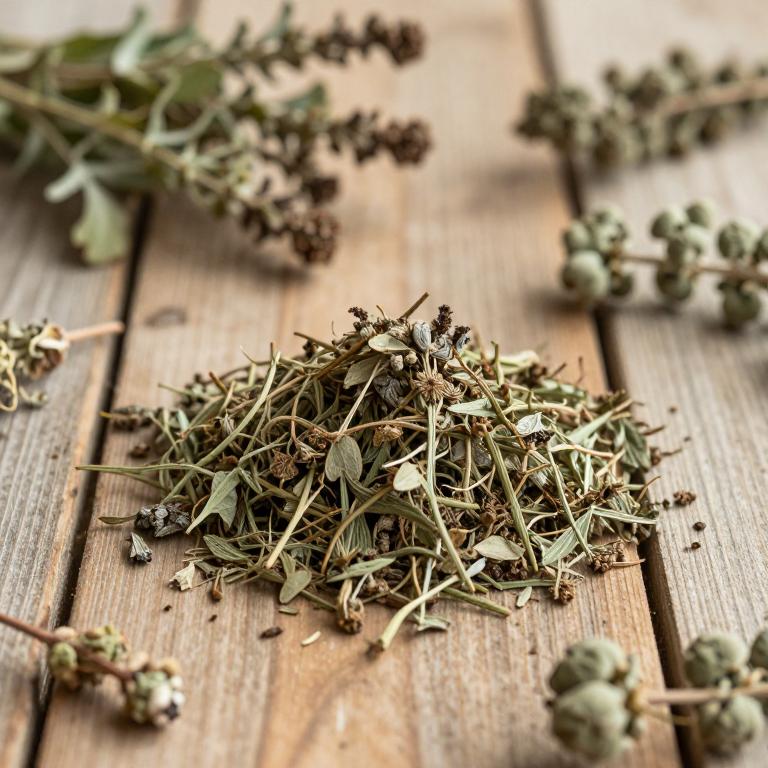
Names and Synonyms
Scientific Names
Accepted name
Baccharis uncinellaSynonyms
- Baccharis discolor
Sources: Wikidata, Catalogue of Life
Taxonomical Classification
This plant belongs to the kingdom Plantae and the phylum Streptophyta, falling under the class Equisetopsida and subclass Magnoliidae. Within the order Asterales, it is classified under the family Asteraceae. Specifically, it is identified by its genus name, Baccharis, and its species designation, uncinella.
| Rank | Classification |
|---|---|
| Kingdom | Plantae |
| Phylum | Streptophyta |
| Class | Equisetopsida |
| Subclass | Magnoliidae |
| Order | Asterales |
| Family | Asteraceae |
| Genus | Baccharis |
Sources: The World Checklist of Vascular Plants (WCVP)
Distribution
This plant exhibits a specific range within the South American continent. Its presence is documented primarily within the borders of Brazil. Specifically, the species can be found throughout the Southeast region of the country. Additionally, it is distributed across the South region of Brazil. These locations define its known natural geographical footprint.
| Region | Area |
|---|---|
| Brazil | Brazil Southeast |
| Brazil | Brazil South |
Sources: The World Checklist of Vascular Plants (WCVP)
Botanical Identification
Ecology
The ecology of Baccharis uncinnella is characterized by its ability to inhabit diverse environments across a broad altitudinal gradient, ranging from sea level (0 m AMSL) to elevations as high as 1700 m AMSL. This species is specifically adapted to specialized ecosystems, finding its primary habitats within the Campo de Altitude and the Floresta Ombrófila Mista. These distinct ecological niches suggest a capacity to thrive in both high-altitude grasslands and the temperate, humid mixed ombrophilous forests, reflecting a versatile environmental tolerance.
- Elevational range max:
- 1700 m AMSL
- Elevational range min:
- 0 m AMSL
- Habitat :
- Campo de Altitude, Floresta Ombrófila Mista
Life history
The life history of Baccharis uncinnella is characterized by its status as a perennial species, allowing it to persist in its environment over multiple growing seasons. As a long-lived plant, it undergoes a continuous life cycle that enables it to establish a stable presence within its ecological niche. This perennial nature suggests a robust developmental strategy, where the plant can invest in long-term structural growth and repeated reproductive efforts rather than completing its entire cycle within a single year. Through this extended lifespan, the species maintains its population stability and adapts to seasonal environmental variations over time.
- Lifecycle :
- perennial
Morphology
The morphology of Baccharis uncinnella is characterized by a woody growth form, specifically identifying it as a shrub. It functions as a self-supporting plant, exhibiting neither climbing nor vine-like tendencies, and it does not require external support to maintain its structure. As an independent organism, it lacks parasitic behavior, maintaining its own nutritional processes without reliance on a host. Regarding its ecological habitat and placement, the species is strictly terrestrial, neither existing as an aquatic or semiaquatic plant nor acting as an epiphyte.
- Aquatic :
- terrestrial
- Climber :
- self-supporting
- Epiphyte :
- terrestrial
- Growth form :
- shrub
- Parasite :
- independent
- Woodiness :
- woody
Sources: Global Inventory of Floras and Traits (GIFT)
Chemicals
Baccharis uncinella has 5 reported phytochemicals identified across 0 scientific publications and several other databases. The most consistently reported chemicals include Caryophyllene, Caryophyllene oxide, LIMONENE, Spathulenol, Viridiflorol.
| Chemical | Supporting sources | Consensus |
|---|---|---|
| Caryophyllene | 1 supporting sources | ★☆☆☆☆ |
| Caryophyllene oxide | 1 supporting sources | ★☆☆☆☆ |
| LIMONENE | 1 supporting sources | ★☆☆☆☆ |
| Spathulenol | 1 supporting sources | ★☆☆☆☆ |
| Viridiflorol | 1 supporting sources | ★☆☆☆☆ |
Caryophyllene
- Pharmaceutical biology
Caryophyllene oxide
- Pharmaceutical biology
LIMONENE
- Pharmaceutical biology
Spathulenol
- Pharmaceutical biology
Viridiflorol
- Pharmaceutical biology
Activities
Baccharis uncinella has 2 reported activities identified across 0 scientific publications and several other databases. The most consistently reported activities include Antibiotic, Antiseptic.
| Activity | Supporting sources | Consensus |
|---|---|---|
| Antibiotic | 1 supporting sources | ★☆☆☆☆ |
| Antiseptic | 1 supporting sources | ★☆☆☆☆ |
Antibiotic
- Parasitology research
Antiseptic
- Parasitology research
Preparations
Baccharis uncinella has 1 reported preparations identified across 0 scientific publications and several other databases. The most consistently reported preparations include Essential oils.
| Preparation | Supporting sources | Consensus |
|---|---|---|
| Essential oils | 1 supporting sources | ★☆☆☆☆ |
Essential oils
- Pharmaceutical biology