Baccharis gaudichaudiana
Baccharis gaudichaudiana · Accepted scientific name
Scientific literature: Very Sparse (19 studies) · ★☆☆☆☆
, scientifically known as Baccharis gaudichaudiaana, is a resilient medicinal shrub native to South American landscapes. Renowned for its diverse pharmacological potential, this plant is traditionally utilized for its anti-inflammatory and antimicrobial properties. Researchers are increasingly exploring its bioactive compounds to develop innovative natural treatments for various ailments.
- Family
- Asteraceae
- Native range
- Southern America
- Parts used
- Not available
- Common names
- Not available
- Scientific synonyms
- Baccharis Articulata Var. Gaudichaudiana
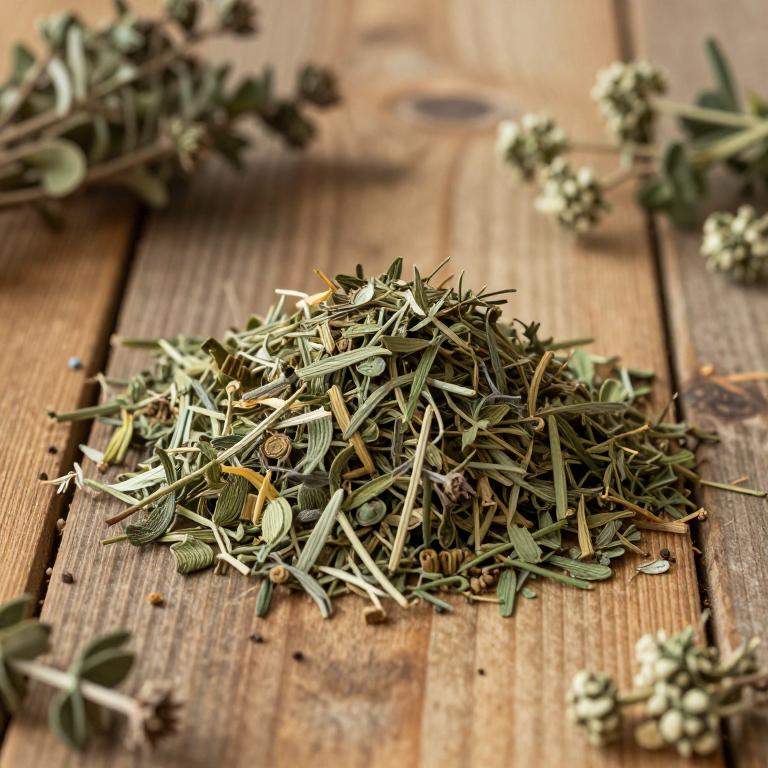
Names and Synonyms
Scientific Names
Accepted name
Baccharis gaudichaudianaSynonyms
- Baccharis articulata var. gaudichaudiana
Sources: Wikidata
Taxonomical Classification
This plant belongs to the kingdom Plantae and is classified under the phylum Streptophyta and class Equisetopsida. Within the subclass Magnoliidae, it is further categorized under the order Asterales and the family Asteraceae. Finally, it is identified by the genus Baccharis, specifically as the species Baccharis gaudichaudiaana.
| Rank | Classification |
|---|---|
| Kingdom | Plantae |
| Phylum | Streptophyta |
| Class | Equisetopsida |
| Subclass | Magnoliidae |
| Order | Asterales |
| Family | Asteraceae |
| Genus | Baccharis |
Sources: The World Checklist of Vascular Plants (WCVP)
Distribution
This plant exhibits a specific distribution pattern concentrated within the southern regions of the South American continent. In Brazil, its presence is primarily recorded throughout the southern portion of the country. Its range extends into Argentina, where it can be found in both the northeast and northwest territories. Additionally, the species is documented to grow within the borders of Paraguay. Together, these locations define the core geographical footprint of Baccharis gaudichauidiana.
| Region | Area |
|---|---|
| Brazil | Brazil South |
| Southern South America | Argentina Northeast |
| Southern South America | Argentina Northwest |
| Southern South America | Paraguay |
Sources: The World Checklist of Vascular Plants (WCVP)
Botanical Identification
Morphology
The morphology of Baccharis gaudichauidiana is characterized by its growth form as a woody shrub that functions as a self-supporting plant. It is a terrestrial species, neither aquatic nor semiaquatic, and it does not exhibit climbing habits such as lianas or vines, nor does it act as an epiphyte. Furthermore, the plant is an independent organism, lacking any parasitic tendencies.
- Aquatic :
- terrestrial
- Climber :
- self-supporting
- Epiphyte :
- terrestrial
- Growth form :
- shrub
- Parasite :
- independent
- Woodiness :
- woody
Sources: Global Inventory of Floras and Traits (GIFT)
Chemicals
Baccharis gaudichaudiana has 13 reported phytochemicals identified across 0 scientific publications and several other databases. The most consistently reported chemicals include apigenin, 13-Epi-15,16-epoxy-15alpha-methoxy-ent-clerod-3-en-18-oic acid, 15,16-epoxy-15alpha-methoxy-ent-clerod-3-en-18-oic acid, 4,10-Aromadendranediol, 7-Oxo-16-hydroxy-ent-clerod-3-en-15-oic acid methyl ester -18,19-olide.
| Chemical | Supporting sources | Consensus |
|---|---|---|
| apigenin | 2 supporting sources | ★☆☆☆☆ |
| 13-Epi-15,16-epoxy-15alpha-methoxy-ent-clerod-3-en-18-oic acid | 1 supporting sources | ★☆☆☆☆ |
| 15,16-epoxy-15alpha-methoxy-ent-clerod-3-en-18-oic acid | 1 supporting sources | ★☆☆☆☆ |
| 4,10-Aromadendranediol | 1 supporting sources | ★☆☆☆☆ |
| 7-Oxo-16-hydroxy-ent-clerod-3-en-15-oic acid methyl ester -18,19-olide | 1 supporting sources | ★☆☆☆☆ |
| Gaudichaudone | 1 supporting sources | ★☆☆☆☆ |
| Hispidulin | 1 supporting sources | ★☆☆☆☆ |
| Kobusone | 1 supporting sources | ★☆☆☆☆ |
| Spathulenol | 1 supporting sources | ★☆☆☆☆ |
| Ursolic acid | 1 supporting sources | ★☆☆☆☆ |
apigenin
- Journal of natural products
- Virology journal
13-Epi-15,16-epoxy-15alpha-methoxy-ent-clerod-3-en-18-oic acid
- Journal of natural products
15,16-epoxy-15alpha-methoxy-ent-clerod-3-en-18-oic acid
- Journal of natural products
4,10-Aromadendranediol
- Journal of natural products
7-Oxo-16-hydroxy-ent-clerod-3-en-15-oic acid methyl ester -18,19-olide
- Journal of natural products
Gaudichaudone
- Journal of natural products
Hispidulin
- Journal of natural products
Kobusone
- Journal of natural products
Spathulenol
- Journal of natural products
Ursolic acid
- Journal of natural products
Activities
Baccharis gaudichaudiana has 1 reported activities identified across 0 scientific publications and several other databases. The most consistently reported activities include Cytotoxic.
| Activity | Supporting sources | Consensus |
|---|---|---|
| Cytotoxic | 1 supporting sources | ★☆☆☆☆ |
Cytotoxic
- Journal of natural products
Preparations
Baccharis gaudichaudiana has 2 reported preparations identified across 0 scientific publications and several other databases. The most consistently reported preparations include dried twigs, organic (OE) and aqueous extracts (AE).
| Preparation | Supporting sources | Consensus |
|---|---|---|
| Dried twigs | 1 supporting sources | ★☆☆☆☆ |
| Organic (oe) and aqueous extracts (ae) | 1 supporting sources | ★☆☆☆☆ |
Dried twigs
- Journal of natural products
Organic (oe) and aqueous extracts (ae)
- Virology journal