Baccharis crispa
Baccharis crispa · Accepted scientific name
Scientific literature: Very Sparse (7 studies) · ★☆☆☆☆
, scientifically known as Baccharis crispa, is a versatile medicinal shrub native to various tropical regions. Renowned for its diverse therapeutic properties, this plant is traditionally utilized in folk medicine to treat skin ailments, inflammation, and digestive issues. Its unique phytochemical profile offers significant potential for modern pharmacological research.
- Family
- Asteraceae
- Native range
- Southern America
- Parts used
- Not available
- Common names
- Not available
- Scientific synonyms
- Molina Crispa · Molina Cylindrica · 7 more
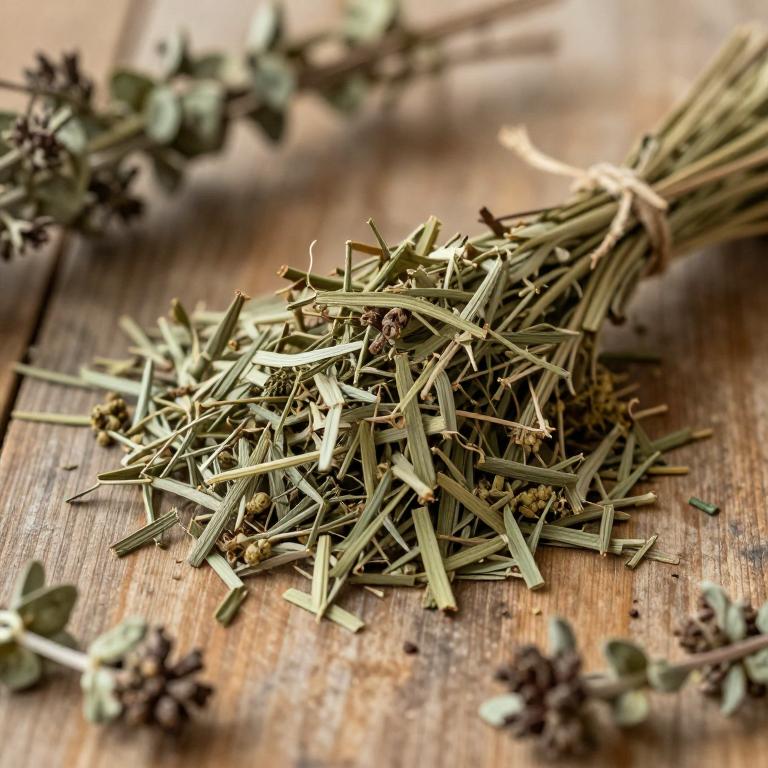
Names and Synonyms
Scientific Names
Accepted name
Baccharis crispaSynonyms
- Molina crispa
- Molina cylindrica
- Pingraea crispa
- Baccharis genistelloides subsp. crispa
- Baccharis cylindrica
- Baccharis genistelloides var. crispa
- Baccharis genistelloides var. cylindrica
- Baccharis perplexa
- Baccharis subcrispa
Regional and Traditional Names
Spanish:
- Carqueja
Sources: Wikidata, Catalogue of Life
Taxonomical Classification
This plant belongs to the kingdom Plantae and is classified within the phylum Streptophyta and the class Equisetopsida. It further falls under the subclass Magnoliidae and the order Asterales, specifically within the family Asteraceae. Finally, it is categorized under the genus Baccharis.
| Rank | Classification |
|---|---|
| Kingdom | Plantae |
| Phylum | Streptophyta |
| Class | Equisetopsida |
| Subclass | Magnoliidae |
| Order | Asterales |
| Family | Asteraceae |
| Genus | Baccharis |
Sources: The World Checklist of Vascular Plants (WCVP)
Distribution
This plant exhibits a broad geographical distribution across several regions of South America. Within Brazil, its presence is documented extensively throughout the West-Central, Northeast, and Southeast areas. It is also found throughout the southern portion of the country. Beyond the borders of Brazil, the species extends into the northern reaches of Argentina. Consequently, its habitat spans a significant range from the Brazilian tropics to the Northeast of Argentina.
| Region | Area |
|---|---|
| Brazil | Brazil West-Central |
| Brazil | Brazil Northeast |
| Brazil | Brazil Southeast |
| Brazil | Brazil South |
| Southern South America | Argentina Northeast |
| Southern South America | Argentina South |
| Southern South America | Argentina Northwest |
| Southern South America | Paraguay |
| Southern South America | Uruguay |
Sources: The World Checklist of Vascular Plants (WCVP)
Botanical Identification
Ecology
The ecology of Baccharis crispa is characterized by its remarkable adaptability to a diverse array of environmental settings and significant altitudinal shifts. This species exhibits an extensive elevational range, thriving from sea level (0 m AMSL) up to high-altitude environments reaching 2500 m AMSL. Its habitat preferences are highly varied, allowing it to colonize multiple distinct ecosystems including anthropogenic areas (Área Antrópica), high-altitude grasslands (Campo de Altitude), open fields (Campo Limpo), and rocky rupestrian grasslands (Campo Rupestre). Furthermore, it is integrated into broader biomes and specialized niches such as the Cerrado (latu sensu), Ombrophilous Forests (both strictly Ombrophilous and Mixed Ombrophilous/Atlantic Forest), coastal Restinga, and specialized vegetation growing over rocky outcrops (Vegetação Sobre Afloramentos Rochosos).
- Elevational range max:
- 2500 m AMSL
- Elevational range min:
- 0 m AMSL
- Habitat :
- Área Antrópica, Campo de Altitude, Campo Limpo, Campo Rupestre, Cerrado (lato sensu), Floresta Ombrófila (= Floresta Pluvial), Floresta Ombrófila Mista, Restinga, Vegetação Sobre Afloramentos Rochosos
Life history
The life history of Baccharis crispa is characterized by its nature as a perennial species, allowing it to persist in its environment over multiple growing seasons. As a long-lived plant, it undergoes various developmental stages that enable it to maintain a stable presence within its ecological niche. Its lifecycle is defined by sustained vegetative growth and periodic reproductive phases, ensuring its long-term survival and ability to colonize suitable habitats through continuous biological activity.
- Lifecycle :
- perennial
Morphology
The morphology of Baccharis crispa is characterized by a woody growth form, specifically developing as a self-supporting shrub. As a terrestrial species, it does not exhibit aquatic, semiaquatic, or epiphytic tendencies, functioning as an independent organism rather than a parasite or a hemi-epiphyte. Its structural development is defined by its woodiness, which supports its stature as a robust, non-climbing shrub within its natural habitat.
- Aquatic :
- terrestrial
- Climber :
- self-supporting
- Epiphyte :
- terrestrial
- Growth form :
- shrub
- Parasite :
- independent
- Woodiness :
- woody
Sources: Global Inventory of Floras and Traits (GIFT)
Chemicals
Baccharis crispa has 5 reported phytochemicals identified across 0 scientific publications and several other databases. The most consistently reported chemicals include CHLOROFORM, DELPHINIDIN-3-GLUCOSIDE, Delphinidin, Flavonoids, ethanol.
| Chemical | Supporting sources | Consensus |
|---|---|---|
| CHLOROFORM | 1 supporting sources | ★☆☆☆☆ |
| DELPHINIDIN-3-GLUCOSIDE | 1 supporting sources | ★☆☆☆☆ |
| Delphinidin | 1 supporting sources | ★☆☆☆☆ |
| Flavonoids | 1 supporting sources | ★☆☆☆☆ |
| ethanol | 1 supporting sources | ★☆☆☆☆ |
CHLOROFORM
- Plants (Basel, Switzerland)
DELPHINIDIN-3-GLUCOSIDE
- Plants (Basel, Switzerland)
Delphinidin
- Plants (Basel, Switzerland)
Flavonoids
- Plants (Basel, Switzerland)
ethanol
- Plants (Basel, Switzerland)
Conditions
Baccharis crispa has 2 reported investigations on conditions identified across 0 scientific publications and several other databases. The most consistently reported conditions include helminthiasis, viral infections.
| Condition | Supporting sources | Consensus |
|---|---|---|
| Helminthiasis | 1 supporting sources | ★☆☆☆☆ |
| Viral infections | 1 supporting sources | ★☆☆☆☆ |
Helminthiasis
- Experimental parasitology
Viral infections
- Plants (Basel, Switzerland)