Azorella ruizii
Azorella ruizii · Accepted scientific name
Scientific literature: Very Sparse (7 studies) · ★☆☆☆☆
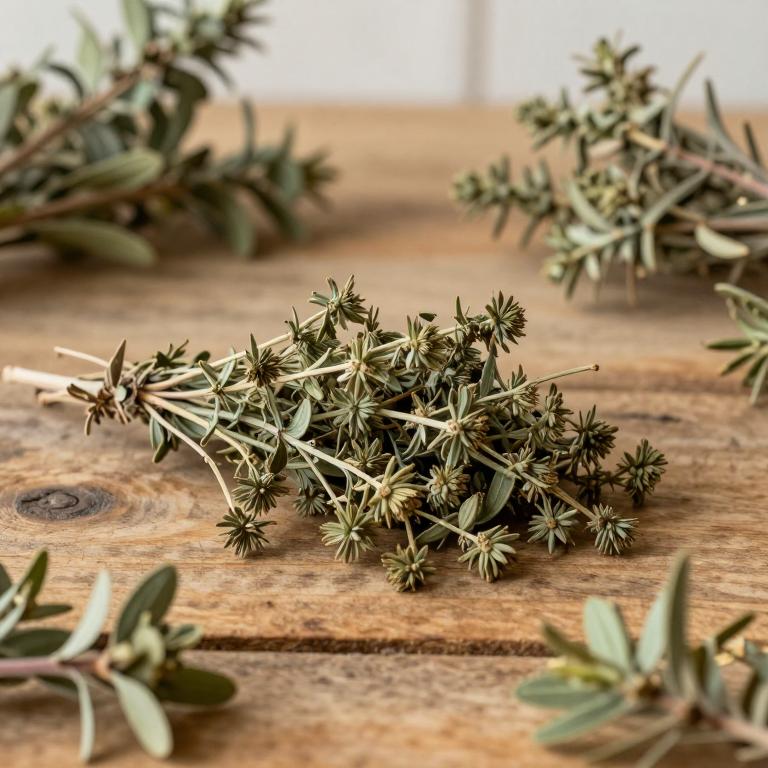
, scientifically known as Azorella ruizii, is a resilient high-altitude shrub native to the Andean ecosystems. Often referred to as Yareta, this slow-growing plant plays a vital role in mountain biodiversity. Renowned for its unique compact form, it holds significant traditional importance in regional medicinal and cultural practices.
- Family
- Apiaceae
- Native range
- Southern America
- Parts used
- Not available
- Common names
- Not available
- Scientific synonyms
- Laretia Acaulis · Mulinum Acaule
Names and Synonyms
Scientific Names
Accepted name
Azorella ruiziiSynonyms
- Laretia acaulis
- Mulinum acaule
Regional and Traditional Names
Spanish:
- Llareta
Sources: Wikidata, Catalogue of Life
Taxonomical Classification
This plant, known scientifically as Azorella ruizii, belongs to the kingdom Plantae and the phylum Streptophyta. It is classified under the class Equisetopsida and the subclass Magnoliidae within the order Apiales. Furthermore, it is a member of the family Apiaceae and falls under the genus Azorella.
| Rank | Classification |
|---|---|
| Kingdom | Plantae |
| Phylum | Streptophyta |
| Class | Equisetopsida |
| Subclass | Magnoliidae |
| Order | Apiales |
| Family | Apiaceae |
| Genus | Azorella |
Sources: The World Checklist of Vascular Plants (WCVP)
Distribution
This plant is found across specific regions of Southern South America. Its presence extends into the Northwest portion of Argentina. Additionally, the species is distributed throughout the Central regions of Chile. It also inhabits the Northern territories of Chile. Together, these locations define the primary geographical range of Azorella ruizii.
| Region | Area |
|---|---|
| Southern South America | Argentina Northwest |
| Southern South America | Chile Central |
| Southern South America | Chile North |
Sources: The World Checklist of Vascular Plants (WCVP)
Botanical Identification
Ecology
The ecology of Azorella ruizii is defined by its adaptation to high-altitude environments, specifically within specialized montane ecosystems. This species thrives within a distinct elevational range, occupying habitats starting from a minimum of 2000 m AMSL and extending up to a maximum of 3500 m AMSL. Within this altitudinal belt, the plant is subject to the unique environmental pressures characteristic of high-mountain zones, including intense solar radiation, significant diurnal temperature fluctuations, and potentially thin, rocky soils. Its presence across this 1500-meter vertical gradient indicates a specialized niche within these high-elevation landscapes, where it plays a role in the stability and biological structure of its specific mountain habitat.
- Elevational range max:
- 3500 m AMSL
- Elevational range min:
- 2000 m AMSL
Life history
The life history of Azorella ruizii is characterized by its status as a perennial species, allowing it to persist in its environment over many successive growing seasons. As a long-lived plant, it undergoes a continuous cycle of vegetative growth and reproductive phases rather than completing its life cycle within a single year or two. This perennial nature enables the plant to establish a robust presence in its specific ecological niche, accumulating resources over time to support its survival through varying seasonal conditions and to facilitate periodic flowering and seed production.
- Lifecycle :
- perennial
Morphology
The morphology of Azorella ruizii is characterized by a growth form classified as a herb, presenting a non-woody structure throughout its development. This plant is strictly terrestrial in its habitat preference, lacking aquatic or semiaquatic tendencies, and it functions as an independent organism rather than a parasite. In terms of its physical habit, it is a self-supporting species, meaning it does not exhibit climbing, vine-like, or liana behaviors, nor does it function as an epiphyte.
- Aquatic :
- terrestrial
- Climber :
- self-supporting
- Epiphyte :
- terrestrial
- Growth form :
- herb
- Parasite :
- independent
- Woodiness :
- non-woody
Reproduction
The reproduction of Azorella ruizii is characterized by specific seed metrics that play a critical role in its life cycle and dispersal capabilities. Based on quantitative data, the species produces seeds with a highly consistent mass, showing no variation across measured samples. The seed mass mean, maximum, and minimum are all identical, recorded at 0.00892 g. This uniformity in seed mass suggests a stabilized reproductive strategy, where the plant allocates a precise amount of energy to each individual seed to ensure consistent germination potential within its ecological niche.
- Seed mass mean:
- 0.00892 g
Sources: Global Inventory of Floras and Traits (GIFT)
Chemicals
Azorella ruizii has 4 reported phytochemicals identified across 0 scientific publications and several other databases. The most consistently reported chemicals include 13-Epiazorellanol, 7-Deacetylazorellanol, Azorellanol, mulinolic acid.
| Chemical | Supporting sources | Consensus |
|---|---|---|
| 13-Epiazorellanol | 1 supporting sources | ★☆☆☆☆ |
| 7-Deacetylazorellanol | 1 supporting sources | ★☆☆☆☆ |
| Azorellanol | 1 supporting sources | ★☆☆☆☆ |
| mulinolic acid | 1 supporting sources | ★☆☆☆☆ |
13-Epiazorellanol
- Phytotherapy research : PTR
7-Deacetylazorellanol
- Phytotherapy research : PTR
Azorellanol
- Phytotherapy research : PTR
mulinolic acid
- Phytochemistry
Activities
Azorella ruizii has 1 reported activities identified across 0 scientific publications and several other databases. The most consistently reported activities include Analgesic.
| Activity | Supporting sources | Consensus |
|---|---|---|
| Analgesic | 1 supporting sources | ★☆☆☆☆ |
Analgesic
- Bioorganic & medicinal chemistry