Mother-in-law Cushion
Azorella prolifera · Accepted scientific name
Scientific literature: Very Sparse (3 studies) · ★☆☆☆☆
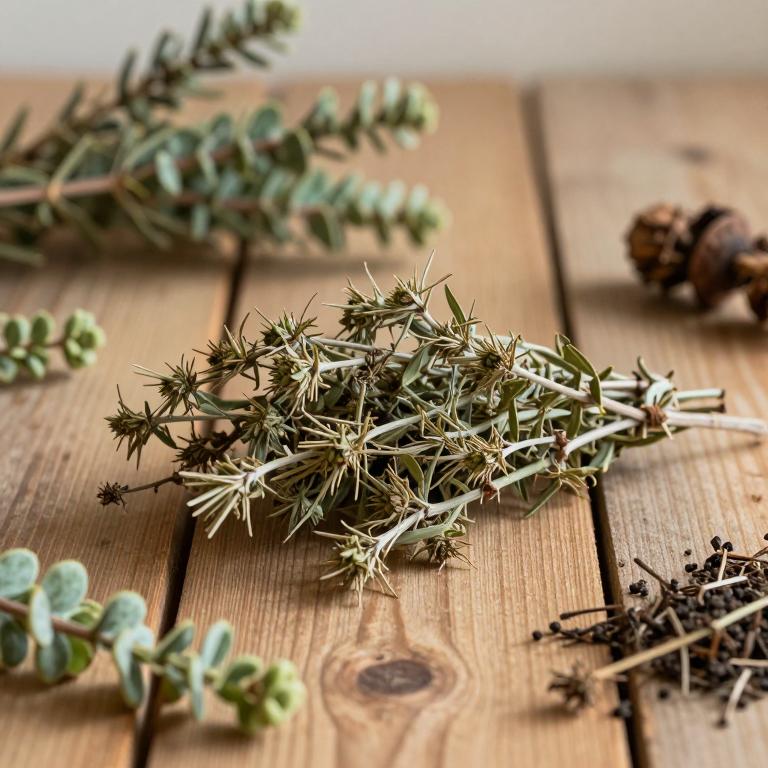
Mother-in-law Cushion, scientifically known as Azorella prolifera, is a resilient, cushion-forming shrub native to the high-altitude Andes. Renowned for its compact growth and dense foliage, this hardy plant thrives in extreme alpine conditions. It holds significant ethnobotanical value, traditionally utilized in folk medicine for its diverse healing properties.
- Family
- Apiaceae
- Native range
- Southern America
- Parts used
- Not available
- Common names
- Mother-In-Law Cushion
- Scientific synonyms
- Mulinum Spinosum · Mulinum Proliferum · 24 more
Names and Synonyms
Common Names
- Mother-in-law Cushion
Scientific Names
Accepted name
Azorella proliferaSynonyms
- Mulinum spinosum
- Mulinum proliferum
- Bolax prolifer
- Mulinum spinosum var. longeinvolucratum
- Bolax echinus
- Selinum proliferum
- Mulinum spinosum var. quinquepartitum
- Mulinum spinosum f. humilis
- Mulinum spinosum f. minus
- Mulinum hirsutum
- Mulinum echinus
- Mulinum spinosum var. minus
- Mulinum ovalleanum
- Mulinum laxum
- Mulinum leoninum
- Azorella echinus
- Mulinum spinosum var. trispinescens
- Mulinum spinosum var. proliferum
- Mulinum spinosum f. toscae
- Mulinum spinosum var. leoninum
- Mulinum gandogeri
- Mulinum chillanense
- Mulinum spinosum var. hirsutum
- Mulinum spinosum var. zechii
- Azorella prolifera var. zechii
- Azorella prolifera var. hirsuta
Sources: Wikidata, Catalogue of Life
Taxonomical Classification
This plant belongs to the kingdom Plantae within the phylum Streptophyta and the class Equisetopsida. It is further classified under the subclass Magnoliidae and the order Apiales. Finally, it is a member of the family Apiaceae and is situated within the genus Azorella.
| Rank | Classification |
|---|---|
| Kingdom | Plantae |
| Phylum | Streptophyta |
| Class | Equisetopsida |
| Subclass | Magnoliidae |
| Order | Apiales |
| Family | Apiaceae |
| Genus | Azorella |
Sources: The World Checklist of Vascular Plants (WCVP)
Distribution
This plant is primarily distributed across the diverse landscapes of Western and Southern South America. In the western region, its presence is recorded within the borders of Bolivia. Moving into southern territories, it can be found spanning the Northeast, Northwest, and South regions of Argentina. Additionally, the species occupies a significant portion of Central Chile. Together, these locations highlight a wide longitudinal range across the southern continent.
| Region | Area |
|---|---|
| Western South America | Bolivia |
| Southern South America | Argentina Northeast |
| Southern South America | Argentina South |
| Southern South America | Argentina Northwest |
| Southern South America | Chile Central |
| Southern South America | Chile North |
| Southern South America | Chile South |
Sources: The World Checklist of Vascular Plants (WCVP)
Botanical Identification
Ecology
The ecology of Azorella prolifera is characterized by its distribution across a vast altitudinal gradient, spanning from sea level to high-altitude environments. Its elevational range extends from a minimum of 0 m AMSL to a maximum of 2500 m AMSL, allowing it to occupy diverse ecological niches within these vertical zones. This broad range suggests an adaptability to varying climatic conditions, including fluctuations in temperature, atmospheric pressure, and moisture availability encountered as elevation increases. Such environmental versatility enables the species to establish itself in a variety of habitats within its geographical scope, ranging from coastal or lowland areas to more rugged, high-elevation terrains.
- Elevational range max:
- 2500 m AMSL
- Elevational range min:
- 0 m AMSL
Life history
The life history of Azorella prolifera is characterized by its nature as a perennial species, allowing it to persist in its high-altitude environment over many years. As a long-lived woody plant, it maintains a stable presence within its ecosystem, often forming dense, cushion-like mats that contribute to soil stability and microhabitat creation. This perennial lifecycle enables the plant to endure the harsh, fluctuating climatic conditions of its habitat, investing resources into slow, sustained growth rather than rapid seasonal cycles. Over its lifespan, the plant undergoes gradual development, establishing a robust structural foundation that supports its long-term survival and reproductive capabilities within its specific ecological niche.
- Lifecycle :
- perennial
Morphology
The morphology of Azorella prolifera is characterized by a growth form categorized as a shrub, exhibiting a structural habit that is self-supporting rather than acting as a climber or liana. As a terrestrial species, it does not function as an aquatic or semiaquatic plant, nor does it exhibit epiphytic tendencies, remaining strictly terrestrial in its ecological placement. The plant is an independent organism, lacking any parasitic relationship with other species. In terms of its structural composition, the specimen is classified as non-woody, distinguishing its physical texture from more rigid, woody perennials.
- Aquatic :
- terrestrial
- Climber :
- self-supporting
- Epiphyte :
- terrestrial
- Growth form :
- shrub
- Parasite :
- independent
- Woodiness :
- non-woody
Reproduction
Reproduction in Azorella prolifera is characterized by the production of specialized seeds that exhibit a highly consistent morphological profile. Quantitative analysis of the reproductive output reveals a uniform seed mass across the sampled population, with a mean seed mass of 0.00544 g. This stability is further evidenced by the lack of variance in the data, as both the maximum and minimum recorded seed mass values are identical at 0.00544 g. Such precise uniformity in seed weight suggests a highly standardized developmental process during the maturation of the plant's reproductive structures.
- Seed mass mean:
- 0.00544 g
Sources: Global Inventory of Floras and Traits (GIFT)
Chemicals
Azorella prolifera has 3 reported phytochemicals identified across 0 scientific publications and several other databases. The most consistently reported chemicals include MULINENIC ACID, Mulin-12-ene-14-one-20-oic acid, mulinolic acid.
| Chemical | Supporting sources | Consensus |
|---|---|---|
| MULINENIC ACID | 1 supporting sources | ★☆☆☆☆ |
| Mulin-12-ene-14-one-20-oic acid | 1 supporting sources | ★☆☆☆☆ |
| mulinolic acid | 1 supporting sources | ★☆☆☆☆ |
MULINENIC ACID
- Phytochemistry
Mulin-12-ene-14-one-20-oic acid
- Phytochemistry
mulinolic acid
- Phytochemistry
Preparations
Azorella prolifera has 1 reported preparations identified across 0 scientific publications and several other databases. The most consistently reported preparations include organic extracts.
| Preparation | Supporting sources | Consensus |
|---|---|---|
| Organic extracts | 1 supporting sources | ★☆☆☆☆ |
Organic extracts
- Parasitology research