Azorella compacta
Azorella compacta · Accepted scientific name
Scientific literature: Very Sparse (21 studies) · ★☆☆☆☆
, scientifically known as Azorella compacta, is a resilient, cushion-shaped shrub native to the high-altitude Andes. Often called Yareta, this ancient plant grows extremely slowly in harsh, alpine environments. Renowned for its dense, moss-like appearance, it holds significant cultural and medicinal importance for local communities in South America.
- Family
- Apiaceae
- Native range
- Southern America
- Parts used
- Not available
- Common names
- Not available
- Scientific synonyms
- Laretia Compacta · Azorella Columnaris · 3 more
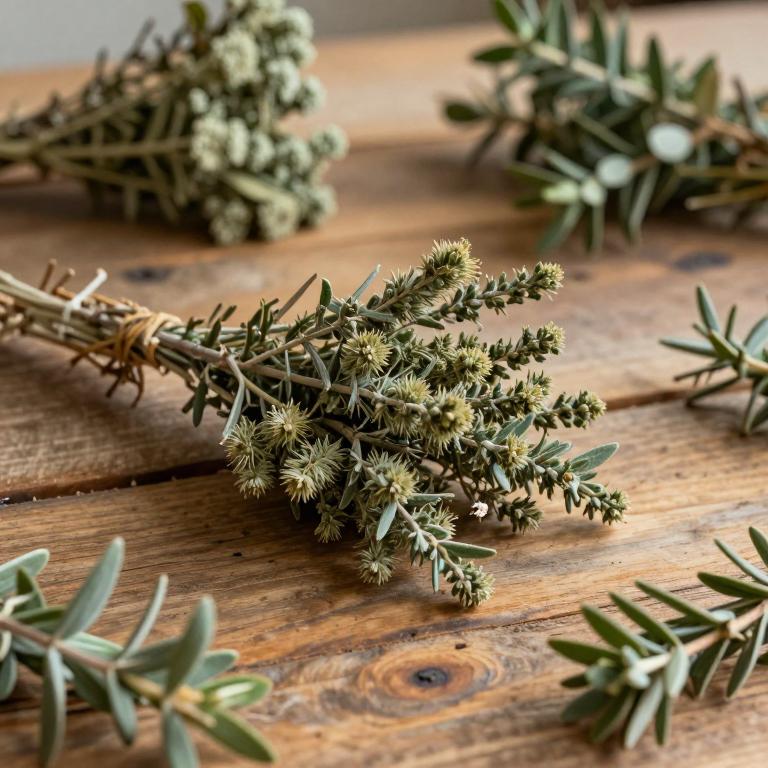
Names and Synonyms
Scientific Names
Accepted name
Azorella compactaSynonyms
- Laretia compacta
- Azorella columnaris
- Azorella prismatoclada
- Azorella yareta
- Laretia yareta
Regional and Traditional Names
Spanish:
- Llareta
- Yareta
- Azorella yareta
- yareta
German:
- Yareta
- Llareta
- Azorella yareta
French:
- Yareta
Sources: Wikidata, Catalogue of Life
Taxonomical Classification
This plant belongs to the kingdom Plantae and the phylum Streptophyta. It is classified under the class Equisetopsida and subclass Magnoliidae, falling within the order Apiales. Finally, it is a member of the family Apiaceae and the genus Azorella.
| Rank | Classification |
|---|---|
| Kingdom | Plantae |
| Phylum | Streptophyta |
| Class | Equisetopsida |
| Subclass | Magnoliidae |
| Order | Apiales |
| Family | Apiaceae |
| Genus | Azorella |
Sources: The World Checklist of Vascular Plants (WCVP)
Distribution
This plant is distributed across several specific regions within the western and southern portions of South America. In the western part of the continent, its range extends through the countries of Bolivia and Peru. Moving toward the southern regions, it can be found in the northwest area of Argentina. Additionally, the species inhabits the northern territories of Chile. Together, these locations define the unique geographical footprint of this medicinal species.
| Region | Area |
|---|---|
| Western South America | Bolivia |
| Western South America | Peru |
| Southern South America | Argentina Northwest |
| Southern South America | Chile North |
Sources: The World Checklist of Vascular Plants (WCVP)
Botanical Identification
Ecology
The ecology of Azorella compacta is defined by its specialized adaptation to high-altitude, extreme environments within the Andean ecosystems. This plant occupies a specific altitudinal niche, thriving at an elevational range that begins at 3500 m AMSL and extends up to a maximum of 5200 m AMSL. Within this vast vertical distribution, it functions as a key component of high-mountain cushion communities, where it must withstand intense solar radiation, drastic temperature fluctuations, and low atmospheric pressure. By growing in dense, compact mats, the species creates its own microclimate, which helps retain moisture and provides a stable habitat for various other high-altitude organisms, effectively acting as a foundation species in these fragile, high-elevation landscapes.
- Elevational range max:
- 5200 m AMSL
- Elevational range min:
- 3500 m AMSL
Life history
The life history of Azorella compacta is characterized by its status as a long-lived perennial, allowing it to persist in the harsh, high-altitude environments of the Andes for extended periods. As a perennial species, it avoids the rapid turnover seen in annual or biennial plants, instead investing energy into slow, steady growth and structural resilience to survive extreme climatic fluctuations. This enduring lifecycle enables the plant to establish dense, cushion-like formations that stabilize its immediate microhabitat, contributing to its long-term survival and ability to endure the physiological stresses of its specialized ecological niche.
- Lifecycle :
- perennial
Morphology
The morphology of Azorella compacta is characterized by a non-woody, herb-like growth form that functions as a self-supporting structure within its environment. As a terrestrial organism, it does not exhibit aquatic, semiaquatic, or epiphytic tendencies, existing instead as an independent species without parasitic requirements. Although it maintains a compact, cushion-like habit, its morphological classification aligns with a non-woody, self-supporting herb rather than a climber, vine, or liana.
- Aquatic :
- terrestrial
- Climber :
- self-supporting
- Epiphyte :
- terrestrial
- Growth form :
- herb
- Parasite :
- independent
- Woodiness :
- non-woody
Reproduction
The reproduction of Azorella compacta is characterized by specific seed metrics that play a critical role in its life cycle within its natural habitat. The production of its seeds is highly uniform, as evidenced by the data showing that the seed mass remains constant across all recorded observations. Specifically, the seed mass mean is 0.00263 g, which is identical to both the maximum seed mass (0.00263 g) and the minimum seed mass (0.00263 g). This lack of variance in seed mass suggests a highly standardized reproductive strategy, ensuring that each individual seed carries a consistent nutritional and physical profile to facilitate germination and subsequent establishment.
- Seed mass mean:
- 0.00263 g
Sources: Global Inventory of Floras and Traits (GIFT)
Chemicals
Azorella compacta has 7 reported phytochemicals identified across 0 scientific publications and several other databases. The most consistently reported chemicals include Azorellanol, 13-epi-Azorellanol, 17-Acetoxy-mulinic acid, 7-Acetoxy-mulin-9,12-diene, 7-Deacetylazorellanol.
| Chemical | Supporting sources | Consensus |
|---|---|---|
| Azorellanol | 2 supporting sources | ★☆☆☆☆ |
| 13-epi-Azorellanol | 1 supporting sources | ★☆☆☆☆ |
| 17-Acetoxy-mulinic acid | 1 supporting sources | ★☆☆☆☆ |
| 7-Acetoxy-mulin-9,12-diene | 1 supporting sources | ★☆☆☆☆ |
| 7-Deacetylazorellanol | 1 supporting sources | ★☆☆☆☆ |
| Mulin-11,13-dien-20-oic acid | 1 supporting sources | ★☆☆☆☆ |
| mulinolic acid | 1 supporting sources | ★☆☆☆☆ |
Azorellanol
- Bioorganic & medicinal chemistry
- Journal of the science of food and agriculture
13-epi-Azorellanol
- Journal of the science of food and agriculture
17-Acetoxy-mulinic acid
- Journal of the science of food and agriculture
7-Acetoxy-mulin-9,12-diene
- Journal of the science of food and agriculture
7-Deacetylazorellanol
- Bioorganic & medicinal chemistry
Mulin-11,13-dien-20-oic acid
- Journal of the science of food and agriculture
mulinolic acid
- Journal of the science of food and agriculture
Activities
Azorella compacta has 3 reported activities identified across 0 scientific publications and several other databases. The most consistently reported activities include Analgesic, Antibacterial, Toxic.
| Activity | Supporting sources | Consensus |
|---|---|---|
| Analgesic | 1 supporting sources | ★☆☆☆☆ |
| Antibacterial | 1 supporting sources | ★☆☆☆☆ |
| Toxic | 1 supporting sources | ★☆☆☆☆ |
Analgesic
- Bioorganic & medicinal chemistry
Antibacterial
- Molecular medicine reports
Toxic
- Molecular medicine reports
Conditions
Azorella compacta has 5 reported investigations on conditions identified across 0 scientific publications and several other databases. The most consistently reported conditions include inflammation, asthma, bronchitis, cancer, pain.
| Condition | Supporting sources | Consensus |
|---|---|---|
| Inflammation | 2 supporting sources | ★☆☆☆☆ |
| Asthma | 1 supporting sources | ★☆☆☆☆ |
| Bronchitis | 1 supporting sources | ★☆☆☆☆ |
| Cancer | 1 supporting sources | ★☆☆☆☆ |
| Pain | 1 supporting sources | ★☆☆☆☆ |
Inflammation
- Bioorganic & medicinal chemistry
- Journal of the science of food and agriculture
Asthma
- Bioorganic & medicinal chemistry
Bronchitis
- Bioorganic & medicinal chemistry
Cancer
- Molecular medicine reports
Pain
- Bioorganic & medicinal chemistry
Preparations
Azorella compacta has 2 reported preparations identified across 0 scientific publications and several other databases. The most consistently reported preparations include methanolic extract, resin.
| Preparation | Supporting sources | Consensus |
|---|---|---|
| Methanolic extract | 1 supporting sources | ★☆☆☆☆ |
| Resin | 1 supporting sources | ★☆☆☆☆ |
Methanolic extract
- Molecular medicine reports
Resin
- Journal of the science of food and agriculture