water velvet
Azolla pinnata · Accepted scientific name
Scientific literature: Very Sparse (2 studies) · ★☆☆☆☆
Water velvet, scientifically known as Azolla pinnata, is a remarkable floating aquatic fern prized for its rapid growth and nitrogen-fixing capabilities. Often used as a biofertilizer and nutritious animal feed, this tiny plant plays a vital role in sustainable agriculture and wetland ecosystems by enhancing soil fertility and productivity.
- Family
- Salviniaceae
- Native range
- Australasia
- Parts used
- Not available
- Common names
- Ferny Azolla · Mosquito Fern · 4 more
- Scientific synonyms
- Azolla Pinnata Subsp. Pinnata
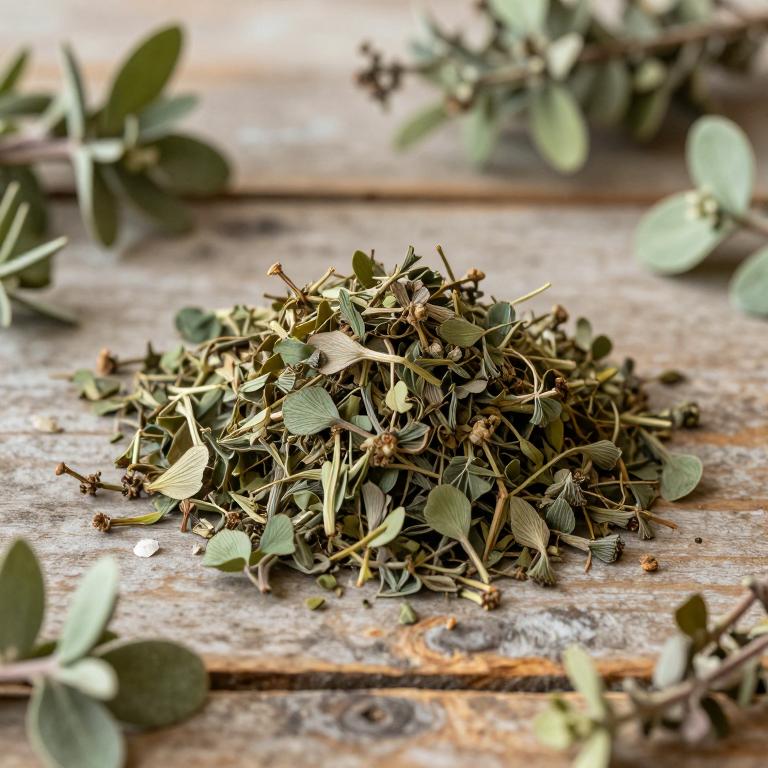
Names and Synonyms
Common Names
- Ferny Azolla
- Mosquito Fern
- Water Velvet
- green azolla
- water-velvet
- Feathered Mosquito Fern
Scientific Names
Accepted name
Azolla pinnataSynonyms
- Azolla pinnata subsp. pinnata
Regional and Traditional Names
Spanish:
- Helecho acuático africano
Sources: Wikidata, Catalogue of Life
Taxonomical Classification
This plant, Azolla pinnata, belongs to the kingdom Plantae and the phylum Streptophyta. Within the class Equisetopsida and subclass Polypodiinae, it is classified under the order Salviniales and the family Salviniaceae. Ultimately, it is identified by the genus Azolla.
| Rank | Classification |
|---|---|
| Kingdom | Plantae |
| Phylum | Streptophyta |
| Class | Equisetopsida |
| Subclass | Polypodiinae |
| Order | Salviniales |
| Family | Salviniaceae |
| Genus | Azolla |
Sources: The World Checklist of Vascular Plants (WCVP)
Distribution
This plant, known as Azolla pinnata, exhibits a widespread presence across various regions of Australia. It can be found growing in the waters of New South Wales and the Northern Territory. Furthermore, its distribution extends through the tropical and subtropical areas of Queensland. The species is also documented within the southern reaches of South Australia. Finally, its geographical range includes the temperate environments of Victoria.
| Region | Area |
|---|---|
| Australia | New South Wales |
| Australia | Northern Territory |
| Australia | Queensland |
| Australia | South Australia |
| Australia | Victoria |
| Australia | Western Australia |
| New Zealand | New Zealand North |
| Southwestern Pacific | New Caledonia |
| North-Central Pacific | Hawaii |
| Southwestern U.S.A. | California |
Sources: The World Checklist of Vascular Plants (WCVP)
Botanical Identification
Ecology
The ecology of Azolla pinnata is characterized by its preference for lowland environments, where it thrives in stable aquatic settings. It exhibits a broad vertical distribution across various landscapes, occupying an elevational range that begins at a minimum of 9 m AMSL and extends to a maximum of 1030 m AMSL. This wide altitudinal tolerance allows the species to colonize diverse lowland ecosystems, ranging from coastal marshes to montane wetlands, provided the necessary hydrological conditions are met.
- Elevational range max:
- 1030 m AMSL
- Elevational range min:
- 9 m AMSL
- Habitat :
- Lowland
Life history
The life history of Azolla pinnata is characterized by a variable lifecycle that can function as an annual, biennial, or perennial depending on environmental conditions, allowing it to adapt to shifting aquatic habitats. As a specialized hydrophyte, it thrives in water environments, utilizing its aquatic adaptations to colonize the surface of stagnant or slow-moving bodies of water. Its vegetative state is consistently evergreen, maintaining its foliage and photosynthetic capabilities throughout its active growth periods without undergoing seasonal leaf shedding. Furthermore, its biological classification as a cryptophyte underscores its survival strategy, where its essential regenerative structures are protected from harsh environmental fluctuations, ensuring its persistence within its niche.
- Deciduousness :
- evergreen
- Life form :
- hydrophyte
- Life form :
- cryptophyte
- Lifecycle :
- annual
Morphology
The morphology of Azolla pinnata is characterized by its diminutive stature, with a mean plant height of approximately 0.02 m and a maximum height reaching up to 0.05 m. It is classified as an aquatic plant, functioning as a non-woody, self-supporting organism rather than a climber or a vine. Its growth form is defined as a herb and specifically a forb, exhibiting a terrestrial ecological orientation in its epiphytic classification. As an independent species, it does not exhibit parasitic behavior, maintaining a self-sufficient biological structure.
- Aquatic :
- aquatic
- Climber :
- self-supporting
- Epiphyte :
- terrestrial
- Growth form :
- herb
- Growth form :
- forb
- Parasite :
- independent
- Plant height max:
- 0.05 m
- Plant height mean:
- 0.02 m
- Woodiness :
- non-woody
Physiology
The physiology of Azolla pinnata is characterized by its specialized micro-morphology and specific nutrient processing capabilities. The plant exhibits highly consistent leaf dimensions, with a maximum leaf length of approximately 0.2 cm. Its leaf width remains uniform across various developmental stages, maintaining a mean, minimum, and maximum measurement of 0.2 cm, which contributes to its compact, floating structural integrity. Regarding its metabolic processes, although many species within the Azolla genus are renowned for their symbiotic relationships, the specific physiological profile for this instance indicates that it does not function as a nitrogen fixer (Nitrogen_fix_1: no), distinguishing its nutrient acquisition strategy from nitrogen-fixing varieties.
- Leaf length max:
- 0.2 cm
- Leaf width mean:
- 0.2 cm
- Nitrogen fixer :
- no
Reproduction
The reproduction of Azolla pinnata is characterized by a complex interplay of biological and environmental processes. In terms of sexual reproduction, the plant utilizes an abiotic pollination syndrome, where the transfer of pollen is mediated by non-living environmental factors, specifically following a water-based pollination syndrome. Once fertilization occurs, the dispersal of its progeny follows an anemochorous syndrome, relying on wind currents to transport reproductive units. Interestingly, within the specific parameters of its reproductive profile, asexual reproduction is noted as absent, placing the primary emphasis on its specialized sexual mechanisms and environmental dispersal strategies.
- Dispersal syndrome :
- anemochorous
- Pollination syndrome :
- water
- Pollination syndrome :
- abiotic
- Reproduction asexual :
- absent
Sources: Global Inventory of Floras and Traits (GIFT)
Activities
Azolla pinnata has 1 reported activities identified across 0 scientific publications and several other databases. The most consistently reported activities include Antioxidant.
| Activity | Supporting sources | Consensus |
|---|---|---|
| Antioxidant | 1 supporting sources | ★☆☆☆☆ |
Antioxidant
- Iranian biomedical journal
Conditions
Azolla pinnata has 1 reported investigations on conditions identified across 0 scientific publications and several other databases. The most consistently reported conditions include oxidative stress.
| Condition | Supporting sources | Consensus |
|---|---|---|
| Oxidative stress | 1 supporting sources | ★☆☆☆☆ |
Oxidative stress
- Iranian biomedical journal
Preparations
Azolla pinnata has 1 reported preparations identified across 0 scientific publications and several other databases. The most consistently reported preparations include Fresh Azolla pinnata.
| Preparation | Supporting sources | Consensus |
|---|---|---|
| Fresh azolla pinnata | 1 supporting sources | ★☆☆☆☆ |
Fresh azolla pinnata
- Journal of the Egyptian Society of Parasitology