triplinerved eupatorium
Ayapana triplinervis · Accepted scientific name
Scientific literature: Moderate (149 studies) · ★★★☆☆
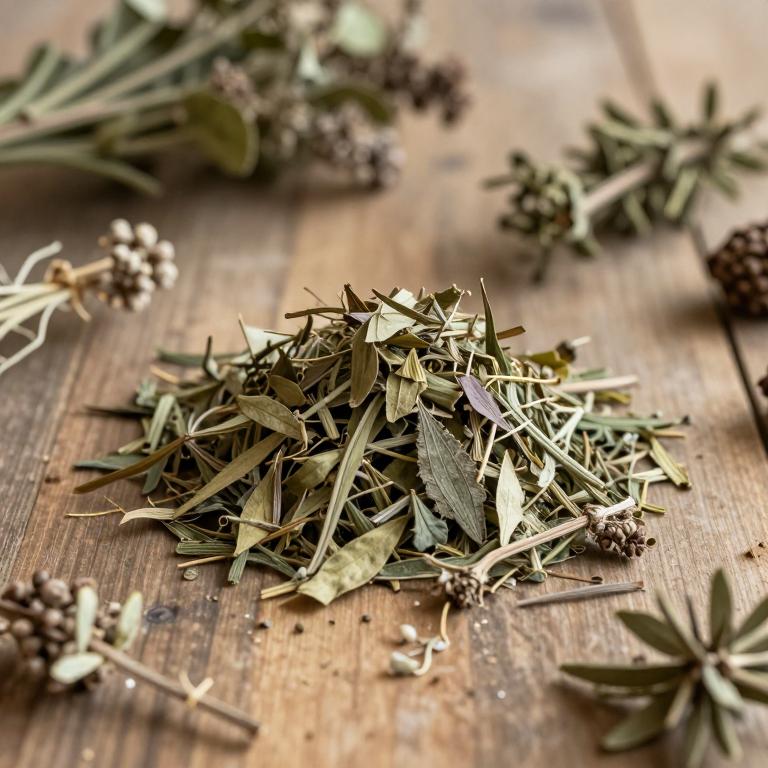
Triplinerved eupatorium, scientifically known as Ayapana triplinervis, is a medicinal herb valued in traditional healing practices. Often found in tropical regions, this plant is recognized for its unique bioactive compounds. It is frequently utilized for its purported therapeutic properties, offering potential benefits in managing various ailments and supporting wellness.
- Family
- Asteraceae
- Native range
- Africa
- Parts used
- Leaf
- Common names
- Triplinerved Eupatorium
- Scientific synonyms
- Ayapana Officinalis · Eupatorium Ayapana · 2 more
Names and Synonyms
Common Names
- triplinerved eupatorium
Scientific Names
Accepted name
Ayapana triplinervisSynonyms
- Ayapana officinalis
- Eupatorium ayapana
- Eupatorium luzoniense
- Eupatorium triplinerve
Regional and Traditional Names
Spanish:
- Eupatorium ayapana
- Eupatorium luzoniense
- Ayapana officinalis
German:
- dreinerviger Wasserdost
French:
- Eupatorium ayapana
Sources: Wikidata, Catalogue of Life
Taxonomical Classification
This plant belongs to the kingdom Plantae and the phylum Streptophyta, falling under the class Equisetopsida and subclass Magnoliidae. Within the order Asterales, it is classified under the family Asteraceae. Finally, it is identified by its specific genus, Ayapana, and species name, trip linervis.
| Rank | Classification |
|---|---|
| Kingdom | Plantae |
| Phylum | Streptophyta |
| Class | Equisetopsida |
| Subclass | Magnoliidae |
| Order | Asterales |
| Family | Asteraceae |
| Genus | Ayapana |
Sources: The World Checklist of Vascular Plants (WCVP)
Distribution
This plant, Apayana triplinervis, exhibits a specific geographical distribution across several distinct regions. In West Tropical Africa, its presence is documented within the borders of Benin. Moving toward the maritime regions, it can be found throughout the Western Indian Ocean. Specifically, this species inhabits the islands of Mauritius, Réunion, and Rodrigues. Finally, its range extends further within the Western Indian Ocean to include the Seychelles.
| Region | Area |
|---|---|
| West Tropical Africa | Benin |
| Western Indian Ocean | Mauritius |
| Western Indian Ocean | Réunion |
| Western Indian Ocean | Rodrigues |
| Western Indian Ocean | Seychelles |
| Indian Subcontinent | Assam |
| Indian Subcontinent | Bangladesh |
| Indian Subcontinent | India |
| Indo-China | Cambodia |
| Indo-China | Vietnam |
Sources: The World Checklist of Vascular Plants (WCVP)
Botanical Identification
Ecology
The ecology of Ayapana tripinnervis is intrinsically linked to the unique environmental conditions of the Campinarana ecosystem. This specialized habitat, characterized by white-sand soils that are typically nutrient-poor and highly acidic, dictates the plant's growth patterns and survival strategies. Within these sandy campinas, the vegetation is often stunted and adapted to high solar radiation and periodic moisture fluctuations, creating a distinct niche that Ayapana tripinnervis occupies. The plant's presence in these specific sandy environments suggests a high degree of specialization to the low-nutrient, well-drained substrates characteristic of the region, where it plays a role in the complex biological interactions of this restricted ecological formation.
- Habitat :
- Campinarana
Life history
The life history of Ayapana triplinervis is characterized by its nature as a perennial plant, allowing it to persist through multiple growing seasons. Throughout its developmental stages, it establishes a robust presence in its natural habitat, transitioning through various phases of growth that support its long-term survival. As a perennial species, it does not follow the rapid single-season cycle of annuals or the two-year cycle of biennials, but instead maintains a continuous life cycle that facilitates repeated flowering and vegetative expansion over several years.
- Lifecycle :
- perennial
Morphology
The morphology of Ayapana triplinervis is characterized by its growth form as a non-woody herb and forb, which functions as a self-supporting organism rather than a climber or a parasite, maintaining an independent biological status. This terrestrial plant typically exhibits a height ranging from a minimum of approximately 0.61 m to a maximum of 0.91 m, with a recorded mean height of 1.5 m. It does not possess epiphytic qualities, growing instead directly in terrestrial habitats, and is entirely non-aquatic in its ecological niche.
- Aquatic :
- terrestrial
- Climber :
- self-supporting
- Epiphyte :
- terrestrial
- Growth form :
- herb
- Growth form :
- forb
- Parasite :
- independent
- Plant height max:
- 0.914411119 m
- Plant height mean:
- 1.5 m
- Plant height min:
- 0.609607413 m
- Woodiness :
- non-woody
Physiology
The physiology of Apayana tripinnervis is characterized by complex metabolic pathways and specialized nutrient acquisition strategies essential for its survival in specific ecological niches. A key aspect of its physiological profile involves its interaction with soil nutrients, particularly regarding its capacity for atmospheric nitrogen assimilation; specifically, the plant is not a nitrogen fixer, meaning it lacks the symbiotic relationship with diazotrophic bacteria required to convert atmospheric nitrogen into ammonia. Instead, it relies on the uptake of inorganic nitrogen sources, such as nitrates and ammonium, through its root system to support protein synthesis and cellular growth. Its metabolic processes are governed by efficient photosynthetic mechanisms that drive the production of carbohydrates, which are then distributed via vascular tissues to facilitate various physiological functions, including secondary metabolite production and structural maintenance.
- Nitrogen fixer :
- no
Sources: Global Inventory of Floras and Traits (GIFT)
Plant Parts
Ayapana triplinervis has 1 reported plant parts identified across 3 scientific publications and several other databases that are studied for medicinal purposes. The most consistently reported plant part include leaf.
| Plant part | Supporting sources | Consensus |
|---|---|---|
| Leaf | 3 supporting sources | ★★☆☆☆ |
Leaf
- RSC advances
- Pharmaceutical biology
- Journal of ethnopharmacology
Chemicals
Ayapana triplinervis has 24 reported phytochemicals identified across 3 scientific publications and several other databases. The most consistently reported chemicals include quercetin, 7-Methoxycoumarin, coumarin, ALPHA-PHELLANDRENE, BETA-SELINENE.
| Chemical | Supporting sources | Consensus |
|---|---|---|
| quercetin | 3 supporting sources | ★★☆☆☆ |
| 7-Methoxycoumarin | 2 supporting sources | ★☆☆☆☆ |
| coumarin | 2 supporting sources | ★☆☆☆☆ |
| ALPHA-PHELLANDRENE | 1 supporting sources | ★☆☆☆☆ |
| BETA-SELINENE | 1 supporting sources | ★☆☆☆☆ |
| BORNYL ACETATE | 1 supporting sources | ★☆☆☆☆ |
| Borneol | 1 supporting sources | ★☆☆☆☆ |
| CHLOROGENIC ACID | 1 supporting sources | ★☆☆☆☆ |
| Coumarins | 1 supporting sources | ★☆☆☆☆ |
| Dipentene | 1 supporting sources | ★☆☆☆☆ |
quercetin
- Biomedicine & pharmacotherapy = Biomedecine & pharmacotherapie
- International journal of molecular sciences
- Antioxidants (Basel, Switzerland)
7-Methoxycoumarin
- Dr. Duke
- Journal of ethnopharmacology
coumarin
- Dr. Duke
- RSC advances
ALPHA-PHELLANDRENE
- Dr. Duke
BETA-SELINENE
- Dr. Duke
BORNYL ACETATE
- Dr. Duke
Borneol
- Dr. Duke
CHLOROGENIC ACID
- Biomedicine & pharmacotherapy = Biomedecine & pharmacotherapie
Coumarins
- Pharmaceutical biology
Dipentene
- Dr. Duke
Activities
Ayapana triplinervis has 101 reported activities identified across 3 scientific publications and several other databases. The most consistently reported activities include Analgesic, Antibacterial, Sedative, (-)-Chronotropic, (-)-Inotropic.
| Activity | Supporting sources | Consensus |
|---|---|---|
| Analgesic | 2 supporting sources | ★☆☆☆☆ |
| Antibacterial | 2 supporting sources | ★☆☆☆☆ |
| Sedative | 2 supporting sources | ★☆☆☆☆ |
| (-)-Chronotropic | 1 supporting sources | ★☆☆☆☆ |
| (-)-Inotropic | 1 supporting sources | ★☆☆☆☆ |
| Aldose-Reductase-Inhibitor | 1 supporting sources | ★☆☆☆☆ |
| Allelochemic | 1 supporting sources | ★☆☆☆☆ |
| Allergenic | 1 supporting sources | ★☆☆☆☆ |
| Anesthetic | 1 supporting sources | ★☆☆☆☆ |
| Anthelmintic | 1 supporting sources | ★☆☆☆☆ |
Analgesic
- Dr. Duke
- Pharmaceutical biology
Antibacterial
- Dr. Duke
- Pharmaceutical biology
Sedative
- Dr. Duke
- Pharmaceutical biology
(-)-Chronotropic
- Dr. Duke
(-)-Inotropic
- Dr. Duke
Aldose-Reductase-Inhibitor
- Dr. Duke
Allelochemic
- Dr. Duke
Allergenic
- Dr. Duke
Anesthetic
- Dr. Duke
Anthelmintic
- Pharmaceutical biology
Conditions
Ayapana triplinervis has 9 reported investigations on conditions identified across 3 scientific publications and several other databases. The most consistently reported conditions include wounds, ZIKV infection, Zika virus, immune responses, inflammation.
| Condition | Supporting sources | Consensus |
|---|---|---|
| Wounds | 2 supporting sources | ★☆☆☆☆ |
| Zikv infection | 1 supporting sources | ★☆☆☆☆ |
| Zika virus | 1 supporting sources | ★☆☆☆☆ |
| Immune responses | 1 supporting sources | ★☆☆☆☆ |
| Inflammation | 1 supporting sources | ★☆☆☆☆ |
| Insect bites | 1 supporting sources | ★☆☆☆☆ |
| Metabolic diseases | 1 supporting sources | ★☆☆☆☆ |
| Oxidative stress | 1 supporting sources | ★☆☆☆☆ |
| Regeneration | 1 supporting sources | ★☆☆☆☆ |
Wounds
- Biomedicine & pharmacotherapy = Biomedecine & pharmacotherapie
- Journal of ethnopharmacology
Zikv infection
- Molecules (Basel, Switzerland)
Zika virus
- Molecules (Basel, Switzerland)
Immune responses
- Biomedicine & pharmacotherapy = Biomedecine & pharmacotherapie
Inflammation
- Biomedicine & pharmacotherapy = Biomedecine & pharmacotherapie
Insect bites
- Journal of ethnopharmacology
Metabolic diseases
- Biomedicine & pharmacotherapy = Biomedecine & pharmacotherapie
Oxidative stress
- Biomedicine & pharmacotherapy = Biomedecine & pharmacotherapie
Regeneration
- Biomedicine & pharmacotherapy = Biomedecine & pharmacotherapie
Preparations
Ayapana triplinervis has 9 reported preparations identified across 3 scientific publications and several other databases. The most consistently reported preparations include polyphenolic extracts, Essential Oil, Fresh bruised leaves, alcoholic extract (AYA), alcoholic leaf extracts.
| Preparation | Supporting sources | Consensus |
|---|---|---|
| Polyphenolic extracts | 2 supporting sources | ★☆☆☆☆ |
| Essential oil | 1 supporting sources | ★☆☆☆☆ |
| Fresh bruised leaves | 1 supporting sources | ★☆☆☆☆ |
| Alcoholic extract (aya) | 1 supporting sources | ★☆☆☆☆ |
| Alcoholic leaf extracts | 1 supporting sources | ★☆☆☆☆ |
| Aqueous extract | 1 supporting sources | ★☆☆☆☆ |
| Aqueous extracts | 1 supporting sources | ★☆☆☆☆ |
| Methanol extract | 1 supporting sources | ★☆☆☆☆ |
| Water extract of the leaves (ayw) | 1 supporting sources | ★☆☆☆☆ |
Polyphenolic extracts
- International journal of molecular sciences
- Antioxidants (Basel, Switzerland)
Essential oil
- Molecules (Basel, Switzerland)
Fresh bruised leaves
- Journal of ethnopharmacology
Alcoholic extract (aya)
- RSC advances
Alcoholic leaf extracts
- RSC advances
Aqueous extract
- RSC advances
Aqueous extracts
- Biomedicine & pharmacotherapy = Biomedecine & pharmacotherapie
Methanol extract
- Pharmaceutical biology
Water extract of the leaves (ayw)
- RSC advances