sponge-fruit saltbush
Atriplex lindleyi subsp. inflata · Accepted scientific name
Scientific literature: Very Sparse (8 studies) · ★☆☆☆☆
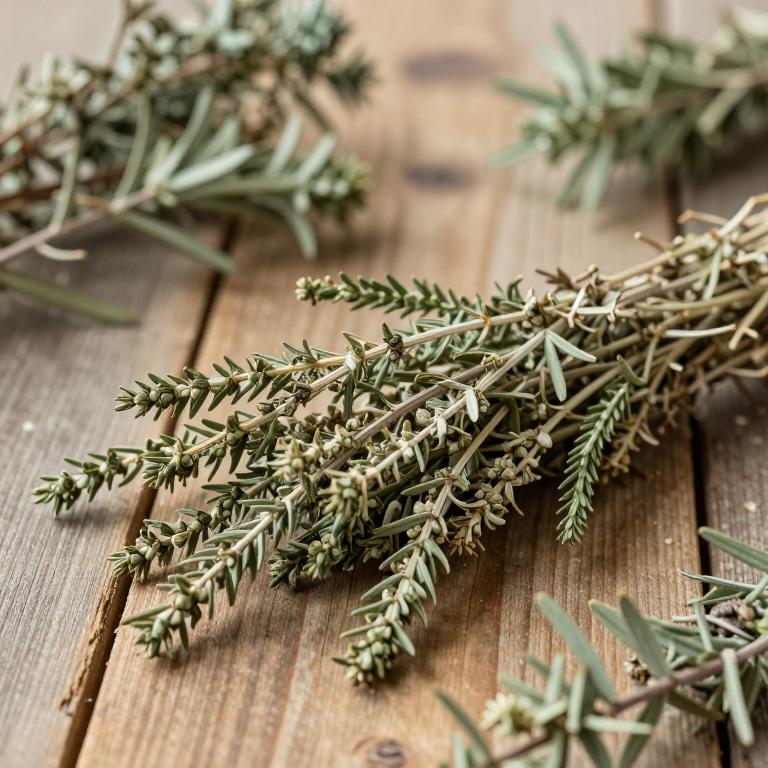
Sponge-fruit saltbush, scientifically known as Atriplex lindleyi subsp. inflata, is a resilient Australian shrub valued for its medicinal potential. Native to arid landscapes, this plant features unique, inflated bracts. Historically used in traditional healing, it offers intriguing properties that continue to interest researchers studying natural bioactive compounds for wellness.
Names and Synonyms
Common Names
- sponge-fruit saltbush
- Australian Saltbush
- Little Saltbush
- Spongefruit Saltbush
Scientific Names
Accepted name
Atriplex lindleyi subsp. inflataSynonyms
- Obione inflata
- Blackiella inflata
- Atriplex lampifer
- Atriplex inflata
Regional and Traditional Names
German:
- Atriplex inflata
- Blackiella inflata
- Atriplex lampifer
Sources: Wikidata, Catalogue of Life
Taxonomical Classification
This plant belongs to the kingdom Plantae and the phylum Streptophyta, specifically classified under the class Equisetopsida and subclass Magnoliidae. It is a member of the order Caryophyllales within the family Amaranthaceae. Its taxonomic hierarchy concludes with the genus Atriplex, specifically the subspecies lindleyi subsp. inflata.
| Rank | Classification |
|---|---|
| Kingdom | Plantae |
| Phylum | Streptophyta |
| Class | Equisetopsida |
| Subclass | Magnoliidae |
| Order | Caryophyllales |
| Family | Amaranthaceae |
| Genus | Atriplex |
Sources: The World Checklist of Vascular Plants (WCVP)
Distribution
This plant exhibits a specific distribution pattern primarily concentrated within the North African region. It can be found growing across the territories of Algeria, Egypt, Libya, and Tunisia. Additionally, its presence extends beyond the Maghreb into the Northeast Tropical African landscape. Specifically, the subspecies is documented to occur within the borders of Eritrea. Together, these locations define the known geographical range of this particular medicinal plant.
| Region | Area |
|---|---|
| Northern Africa | Algeria |
| Northern Africa | Egypt |
| Northern Africa | Libya |
| Northern Africa | Tunisia |
| Northeast Tropical Africa | Eritrea |
| Southern Africa | Cape Provinces |
| Southern Africa | Namibia |
| Southern Africa | Free State |
| Southern Africa | Northern Provinces |
| Western Asia | Palestine |
Sources: The World Checklist of Vascular Plants (WCVP)
Plant Parts
Atriplex lindleyi subsp. inflata has 2 reported plant parts identified across 2 scientific publications and several other databases that are studied for medicinal purposes. The most consistently reported plant part include fruit, leaf.
| Plant part | Supporting sources | Consensus |
|---|---|---|
| Fruit | 1 supporting sources | ★☆☆☆☆ |
| Leaf | 1 supporting sources | ★☆☆☆☆ |
Fruit
- Revista do Instituto de Medicina Tropical de Sao Paulo
Leaf
- Revista do Instituto de Medicina Tropical de Sao Paulo
Chemicals
Atriplex lindleyi subsp. inflata has 2 reported phytochemicals identified across 2 scientific publications and several other databases. The most consistently reported chemicals include Sterols, triterpenoids.
| Chemical | Supporting sources | Consensus |
|---|---|---|
| Sterols | 1 supporting sources | ★☆☆☆☆ |
| triterpenoids | 1 supporting sources | ★☆☆☆☆ |
Sterols
- Revista do Instituto de Medicina Tropical de Sao Paulo
triterpenoids
- Revista do Instituto de Medicina Tropical de Sao Paulo
Activities
Atriplex lindleyi subsp. inflata has 1 reported activities identified across 2 scientific publications and several other databases. The most consistently reported activities include Antibacterial.
| Activity | Supporting sources | Consensus |
|---|---|---|
| Antibacterial | 1 supporting sources | ★☆☆☆☆ |
Antibacterial
- The Journal of pharmacy and pharmacology
Preparations
Atriplex lindleyi subsp. inflata has 6 reported preparations identified across 2 scientific publications and several other databases. The most consistently reported preparations include aqueous solutions, ethyl acetate extracts of fruits, ethyl acetate extracts of leaves, hexane extracts of fruits, hexane extracts of leaves.
| Preparation | Supporting sources | Consensus |
|---|---|---|
| Aqueous solutions | 1 supporting sources | ★☆☆☆☆ |
| Ethyl acetate extracts of fruits | 1 supporting sources | ★☆☆☆☆ |
| Ethyl acetate extracts of leaves | 1 supporting sources | ★☆☆☆☆ |
| Hexane extracts of fruits | 1 supporting sources | ★☆☆☆☆ |
| Hexane extracts of leaves | 1 supporting sources | ★☆☆☆☆ |
| Powders | 1 supporting sources | ★☆☆☆☆ |
Aqueous solutions
- Revista do Instituto de Medicina Tropical de Sao Paulo
Ethyl acetate extracts of fruits
- Revista do Instituto de Medicina Tropical de Sao Paulo
Ethyl acetate extracts of leaves
- Revista do Instituto de Medicina Tropical de Sao Paulo
Hexane extracts of fruits
- Revista do Instituto de Medicina Tropical de Sao Paulo
Hexane extracts of leaves
- Revista do Instituto de Medicina Tropical de Sao Paulo
Powders
- Revista do Instituto de Medicina Tropical de Sao Paulo