Atraphaxis pyrifolia
Atraphaxis pyrifolia · Accepted scientific name
Scientific literature: Very Sparse (11 studies) · ★☆☆☆☆
Atraphaxis pyrifolia, scientifically known as Atraphaxis pyrifolia, is a rare medicinal plant prized for its unique phytochemical properties. Found in specific ecological niches, this species offers significant potential in traditional healing practices. Ongoing research explores its bioactive compounds, aiming to unlock new therapeutic applications for modern pharmacological development.
- Family
- Polygonaceae
- Native range
- Asia-Temperate
- Parts used
- Leaf · Stem
- Common names
- Not available
- Scientific synonyms
- Not available
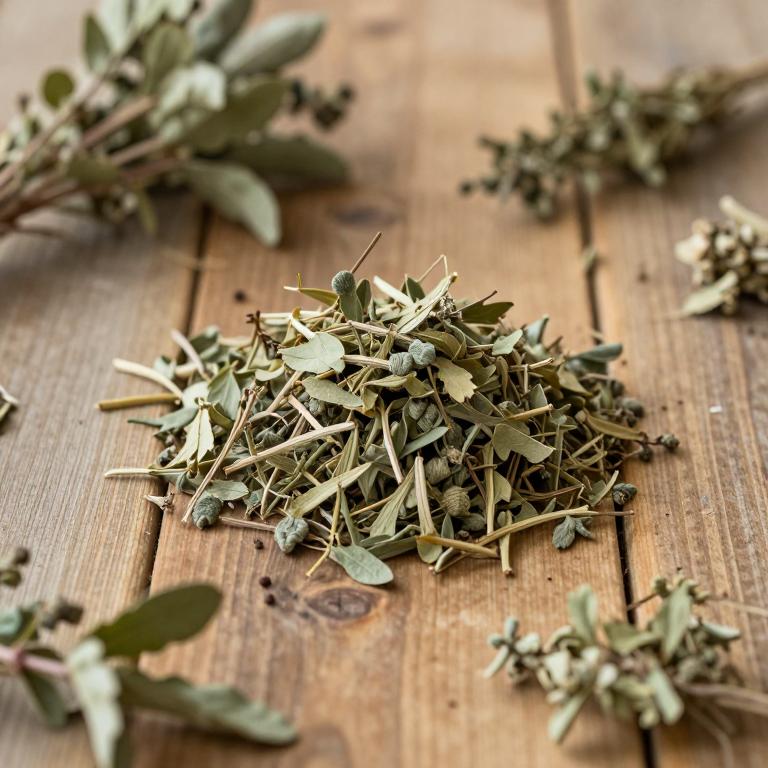
Names and Synonyms
Scientific Names
Accepted name
Atraphaxis pyrifoliaSources: Wikidata, Catalogue of Life
Taxonomical Classification
This plant belongs to the kingdom Plantae and the phylum Streptophyta, falling under the class Equisetopsida and subclass Magnoliidae. Within the order Caryophyllales, it is classified under the family Polygonaceae. Finally, it is identified by its specific genus, Atraphaxis, and species name, pyrifolia.
| Rank | Classification |
|---|---|
| Kingdom | Plantae |
| Phylum | Streptophyta |
| Class | Equisetopsida |
| Subclass | Magnoliidae |
| Order | Caryophyllales |
| Family | Polygonaceae |
| Genus | Atraphaxis |
Sources: The World Checklist of Vascular Plants (WCVP)
Distribution
This plant is primarily distributed across the vast regions of Central Asia. Specifically, it can be found growing within the borders of Kazakhstan. Its presence is also documented throughout the territories of Kirgizstan and Tadzhikistan. Furthermore, the species extends its reach into the landscapes of Uzbekistan. Finally, its geographical range includes parts of Western Asia, specifically within Afghanistan.
| Region | Area |
|---|---|
| Central Asia | Kazakhstan |
| Central Asia | Kirgizstan |
| Central Asia | Tadzhikistan |
| Central Asia | Uzbekistan |
| Western Asia | Afghanistan |
| China | Xinjiang |
| Indian Subcontinent | Pakistan |
Sources: The World Checklist of Vascular Plants (WCVP)
Botanical Identification
Ecology
The ecology of Atraphaxis pyrifolia is characterized by its preference for high-altitude environments, specifically thriving within mountainous regions and stony places. This species occupies a broad vertical distribution, with an elevational range that begins at a minimum of 730 m AMSL and extends up to a maximum of 2700 m AMSL. Throughout its natural range, the plant maintains a mean elevation of approximately 1115 m AMSL, positioning it within diverse montane niches where rocky substrates provide its primary habitat.
- Elevational range max:
- 2700 m AMSL
- Elevational range mean:
- 1115 m AMSL
- Elevational range min:
- 730 m AMSL
- Habitat :
- mountains, stony places
Morphology
The morphology of Atraphaxis pyrifolia is characterized by a woody growth form, specifically developing as a shrub. The plant exhibits a structural height that typically reaches a mean of 1 m, with individual specimens ranging from a minimum of 1 m to a maximum height of 2 m.
- Growth form :
- shrub
- Plant height max:
- 2 m
- Plant height mean:
- 1 m
- Woodiness :
- woody
Physiology
The physiology of Atraphaxis pyrifolia is characterized by distinct morphological dimensions of its foliage, which play a critical role in its photosynthetic capacity and environmental adaptation. The leaves exhibit a specific range of size variations, with a minimum leaf length of 1.5 cm and a maximum length reaching up to 2.5 cm, resulting in a calculated mean leaf length of 2 cm. Complementing these longitudinal measurements, the leaf width varies from a minimum of 1 cm to a maximum of 1.3 cm. These specific leaf dimensions contribute to the plant's overall surface area, influencing its transpiration rates and its ability to manage light interception within its natural habitat.
- Leaf length max:
- 2.5 cm
- Leaf length mean:
- 2 cm
- Leaf length min:
- 1.5 cm
- Leaf width max:
- 1.3 cm
- Leaf width min:
- 1 cm
Reproduction
The reproduction of Atraphaxis pyrifolia is characterized by a specific seasonal flowering window that dictates its reproductive cycle. The flowering process typically commences in May, marking the beginning of its period of active bloom. This reproductive phase continues through the late spring and early summer months, reaching its conclusion in June. Consequently, the plant's ability to produce flowers and facilitate subsequent seed development is concentrated within this relatively brief timeframe of approximately two months.
- Flowering time :
- May
- Flowering time :
- Jun
Sources: Global Inventory of Floras and Traits (GIFT)
Plant Parts
Atraphaxis pyrifolia has 2 reported plant parts identified across 2 scientific publications and several other databases that are studied for medicinal purposes. The most consistently reported plant part include leaf, stem.
| Plant part | Supporting sources | Consensus |
|---|---|---|
| Leaf | 1 supporting sources | ★☆☆☆☆ |
| Stem | 1 supporting sources | ★☆☆☆☆ |
Leaf
- Molecules (Basel, Switzerland)
Stem
- Molecules (Basel, Switzerland)
Chemicals
Atraphaxis pyrifolia has 1 reported phytochemicals identified across 2 scientific publications and several other databases. The most consistently reported chemicals include NONACOSANE.
| Chemical | Supporting sources | Consensus |
|---|---|---|
| NONACOSANE | 1 supporting sources | ★☆☆☆☆ |
NONACOSANE
- Molecules (Basel, Switzerland)
Activities
Atraphaxis pyrifolia has 1 reported activities identified across 2 scientific publications and several other databases. The most consistently reported activities include Antioxidant.
| Activity | Supporting sources | Consensus |
|---|---|---|
| Antioxidant | 1 supporting sources | ★☆☆☆☆ |
Antioxidant
- Molecules (Basel, Switzerland)
Conditions
Atraphaxis pyrifolia has 5 reported investigations on conditions identified across 2 scientific publications and several other databases. The most consistently reported conditions include antioxidant, gastrointestinal disorders, hypertension, hypoglycemic, wound healing.
| Condition | Supporting sources | Consensus |
|---|---|---|
| Antioxidant | 1 supporting sources | ★☆☆☆☆ |
| Gastrointestinal disorders | 1 supporting sources | ★☆☆☆☆ |
| Hypertension | 1 supporting sources | ★☆☆☆☆ |
| Hypoglycemic | 1 supporting sources | ★☆☆☆☆ |
| Wound healing | 1 supporting sources | ★☆☆☆☆ |
Antioxidant
- Molecules (Basel, Switzerland)
Gastrointestinal disorders
- Molecules (Basel, Switzerland)
Hypertension
- Molecules (Basel, Switzerland)
Hypoglycemic
- Molecules (Basel, Switzerland)
Wound healing
- Molecules (Basel, Switzerland)
Preparations
Atraphaxis pyrifolia has 3 reported preparations identified across 2 scientific publications and several other databases. The most consistently reported preparations include Methanolic Extracts, hexane extract, methanolic extract.
| Preparation | Supporting sources | Consensus |
|---|---|---|
| Methanolic extracts | 1 supporting sources | ★☆☆☆☆ |
| Hexane extract | 1 supporting sources | ★☆☆☆☆ |
| Methanolic extract | 1 supporting sources | ★☆☆☆☆ |
Methanolic extracts
- Molecules (Basel, Switzerland)
Hexane extract
- Molecules (Basel, Switzerland)
Methanolic extract
- Molecules (Basel, Switzerland)