Atractylis carduus
Atractylis carduus · Accepted scientific name
Scientific literature: Very Sparse (13 studies) · ★☆☆☆☆
, scientifically known as Atractylis carduus, is a distinctive medicinal herb belonging to the Asteraceae family. Primarily found in Mediterranean regions, this plant is highly valued in traditional medicine for its potent therapeutic properties, particularly for supporting digestive health, detoxification, and treating various hepatic and gallbladder-related ailments.
- Family
- Not available
- Native range
- Africa
- Parts used
- Not available
- Common names
- Not available
- Scientific synonyms
- Not available
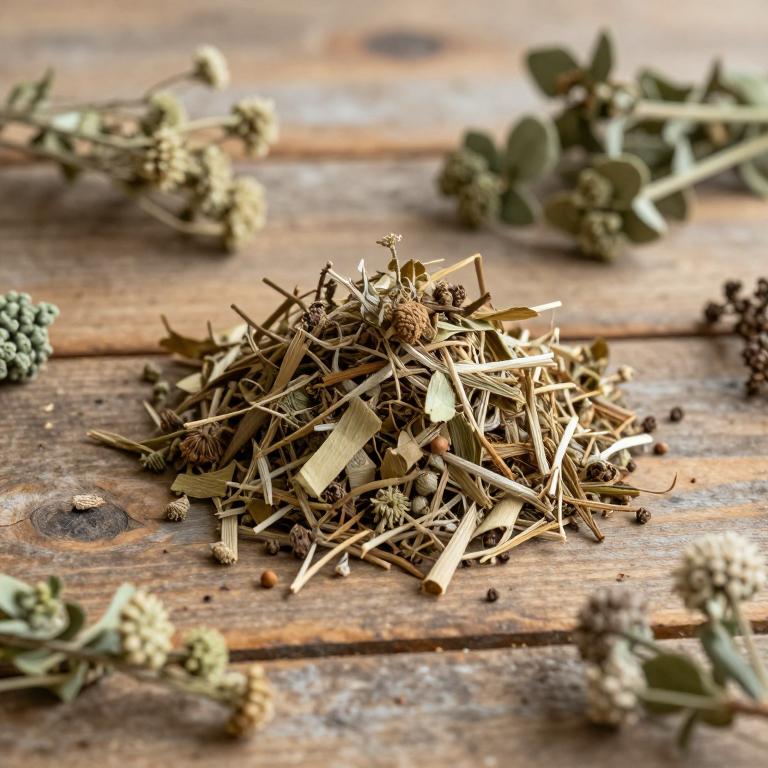
Names and Synonyms
Scientific Names
Accepted name
Atractylis carduusDistribution
This plant is primarily distributed throughout the northern regions of the African continent. Within this broad area, its presence is noted across several key countries. Specifically, it can be found growing in the landscapes of Algeria and Morocco. Additionally, the species inhabits the territories of Tunisia and Libya. Finally, its geographical range extends further east to include Egypt.
| Region | Area |
|---|---|
| Northern Africa | Algeria |
| Northern Africa | Egypt |
| Northern Africa | Libya |
| Northern Africa | Morocco |
| Northern Africa | Tunisia |
| Western Asia | Iraq |
| Western Asia | Lebanon-Syria |
| Western Asia | Palestine |
| Western Asia | Sinai |
| Western Asia | Türkiye |
Sources: The World Checklist of Vascular Plants (WCVP)
Botanical Identification
Life history
The life history of Atractylis carduus is characterized by its nature as a perennial species, allowing the plant to persist through multiple growing seasons. Its developmental cycle involves navigating various stages of maturity, which can occasionally exhibit variable growth patterns depending on environmental conditions. As a perennial, the plant establishes a robust root system that enables it to survive periods of dormancy and re-emerge to complete its reproductive cycle. This long-term survival strategy ensures that the plant can continuously contribute to its population through successive years of growth and seed production.
- Lifecycle :
- perennial
Morphology
The morphology of Atractylis carduus is characterized by its growth form as a non-woody herb, specifically functioning as a forb. The plant is terrestrial in its habitat requirements, distinguishing it from aquatic or semiaquatic species. It is a self-supporting organism that does not exhibit any climbing tendencies, maintaining a sturdy, upright structure without the need for external support. Furthermore, the species is an independent plant, meaning it does not function as a parasite on other organisms.
- Aquatic :
- terrestrial
- Climber :
- self-supporting
- Growth form :
- herb
- Parasite :
- independent
- Woodiness :
- non-woody
Physiology
The physiology of Atractylis cardus is characterized by its adaptation to Mediterranean-type climates, where it manages energy acquisition and water conservation through a specific metabolic framework. The plant utilizes the C3 photosynthetic pathway, meaning that carbon fixation occurs via the enzyme RuBisCO during the Calvin cycle, which is the standard mechanism for plants in temperate and semi-arid environments where moderate temperatures prevail. This C3 metabolism involves the initial fixation of atmospheric CO2 into a three-carbon compound, facilitating the production of carbohydrates necessary for the growth of its large, thistle-like foliage and robust root systems. To support this process under varying environmental stresses, the plant employs physiological mechanisms to regulate transpiration and maintain turgor pressure, balancing the intake of carbon dioxide against the potential loss of water through its stomata.
- Photosynthetic pathway :
- C3
Reproduction
The reproduction of Atractylis carduus is governed by a seasonal flowering cycle that is notably flexible and dependent on environmental conditions. The flowering period is characterized by a variable timeline, though it typically begins around March. The onset of the blooming phase can fluctuate, with the flowering start period encompassing a wide range of months including January, February, March, April, May, June, July, August, September, October, November, and December, depending on specific local variables. The flowering cycle generally reaches its conclusion around April, though, similar to the start period, the flowering end is highly variable and can span across any month of the year. This adaptability in its reproductive timing allows the plant to synchronize its flowering with optimal pollinator availability and climatic stability.
- Flowering time :
- Mar
- Flowering time :
- Apr
Sources: Global Inventory of Floras and Traits (GIFT)
Chemicals
Atractylis carduus has 1 reported phytochemicals identified across 0 scientific publications and several other databases. The most consistently reported chemicals include Betulin.
| Chemical | Supporting sources | Consensus |
|---|---|---|
| Betulin | 1 supporting sources | ★☆☆☆☆ |
Betulin
- Dr. Duke
Activities
Atractylis carduus has 12 reported activities identified across 0 scientific publications and several other databases. The most consistently reported activities include AntiHIV, Anticarcinomic, Antifeedant, Antiflu, Antiinflammatory.
| Activity | Supporting sources | Consensus |
|---|---|---|
| AntiHIV | 1 supporting sources | ★☆☆☆☆ |
| Anticarcinomic | 1 supporting sources | ★☆☆☆☆ |
| Antifeedant | 1 supporting sources | ★☆☆☆☆ |
| Antiflu | 1 supporting sources | ★☆☆☆☆ |
| Antiinflammatory | 1 supporting sources | ★☆☆☆☆ |
| Antitumor | 1 supporting sources | ★☆☆☆☆ |
| Antiviral | 1 supporting sources | ★☆☆☆☆ |
| Aphidifuge | 1 supporting sources | ★☆☆☆☆ |
| Cytotoxic | 1 supporting sources | ★☆☆☆☆ |
| Hypolipemic | 1 supporting sources | ★☆☆☆☆ |
AntiHIV
- Dr. Duke
Anticarcinomic
- Dr. Duke
Antifeedant
- Dr. Duke
Antiflu
- Dr. Duke
Antiinflammatory
- Dr. Duke
Antitumor
- Dr. Duke
Antiviral
- Dr. Duke
Aphidifuge
- Dr. Duke
Cytotoxic
- Dr. Duke
Hypolipemic
- Dr. Duke