lady fern
Athyrium · Accepted scientific name
Scientific literature: Very Sparse (8 studies) · ★☆☆☆☆
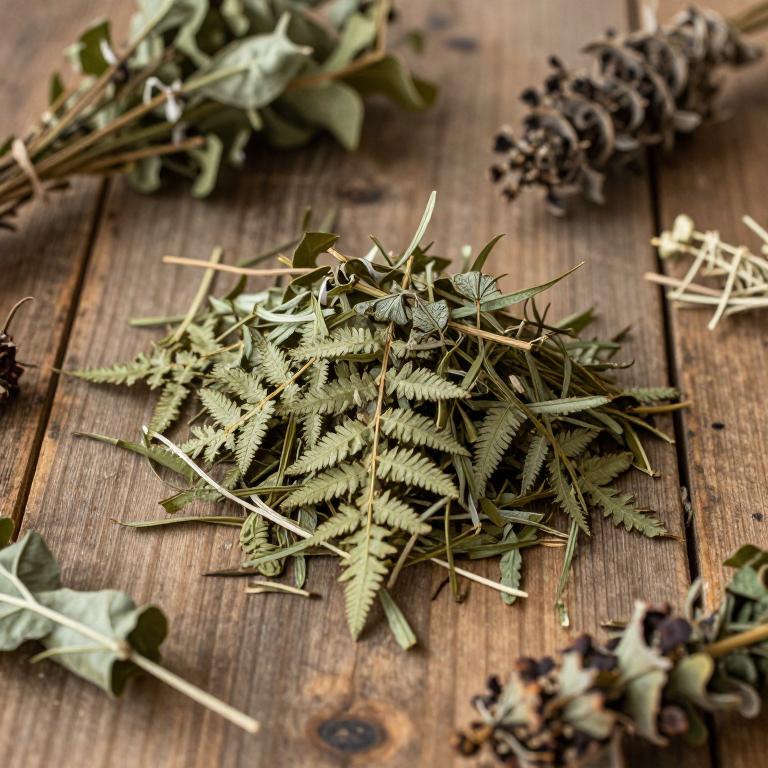
Lady fern, scientifically known as Athyrium, is a versatile genus of ferns admired for its elegant, feathery fronds. Beyond its ornamental appeal in lush landscapes, various species possess traditional medicinal properties, often utilized in herbal remedies to address inflammatory conditions and promote overall vitality through their unique bioactive compounds.
- Family
- Aspleniaceae
- Native range
- Europe
- Parts used
- Not available
- Common names
- Lady Fern · Lady Ferns
- Scientific synonyms
- Pseudocystopteris · Anisocampium · 8 more
Names and Synonyms
Common Names
- lady fern
- lady ferns
Scientific Names
Accepted name
AthyriumSynonyms
- Pseudocystopteris
- Anisocampium
- Cornopteris
- Oligocampia
- Neoathyrium
- Kuniwatsukia
- × Apseudathyrium
- Ephemeropteris
- × Cornoathyrium
- Pseudathyrium
Regional and Traditional Names
German:
- Frauenfarne
- Frauenfarn
- Frauenfarne
French:
- Fougère-femelle
Sources: Wikidata, Catalogue of Life
Taxonomical Classification
This plant belongs to the kingdom Plantae and the phylum Streptophyta. Within the class Equisetopsida and subclass Polypodiinae, it is categorized under the order Polypodiales. Finally, it is classified under the family Aspleniaceae and the genus Athyrium.
| Rank | Classification |
|---|---|
| Kingdom | Plantae |
| Phylum | Streptophyta |
| Class | Equisetopsida |
| Subclass | Polypodiinae |
| Order | Polypodiales |
| Family | Aspleniaceae |
| Genus | Athyrium |
Sources: The World Checklist of Vascular Plants (WCVP)
Distribution
This plant exhibits a distinct distribution pattern across several regions within Northern Europe. It can be found growing in the natural landscapes of Denmark and Finland. The species also extends its range to the island of Iceland. Additionally, its presence is documented in the Faroe Islands, known locally as Føroyar. Finally, this medicinal plant is widely distributed throughout Great Britain.
| Region | Area |
|---|---|
| Northern Europe | Denmark |
| Northern Europe | Finland |
| Northern Europe | Føroyar |
| Northern Europe | Great Britain |
| Northern Europe | Iceland |
| Northern Europe | Ireland |
| Northern Europe | Norway |
| Northern Europe | Sweden |
| Middle Europe | Austria |
| Middle Europe | Belgium |
Sources: The World Checklist of Vascular Plants (WCVP)
Activities
Athyrium has 5 reported activities identified across 0 scientific publications and several other databases. The most consistently reported activities include Anthelmintic, Antimicrobial, Antioxidant, Antiproliferative, Carminative.
| Activity | Supporting sources | Consensus |
|---|---|---|
| Anthelmintic | 1 supporting sources | ★☆☆☆☆ |
| Antimicrobial | 1 supporting sources | ★☆☆☆☆ |
| Antioxidant | 1 supporting sources | ★☆☆☆☆ |
| Antiproliferative | 1 supporting sources | ★☆☆☆☆ |
| Carminative | 1 supporting sources | ★☆☆☆☆ |
Anthelmintic
- Journal of traditional and complementary medicine
Antimicrobial
- Journal of traditional and complementary medicine
Antioxidant
- Journal of traditional and complementary medicine
Antiproliferative
- Journal of traditional and complementary medicine
Carminative
- Journal of traditional and complementary medicine
Conditions
Athyrium has 3 reported investigations on conditions identified across 0 scientific publications and several other databases. The most consistently reported conditions include cough, pain, scorpion stings.
| Condition | Supporting sources | Consensus |
|---|---|---|
| Cough | 1 supporting sources | ★☆☆☆☆ |
| Pain | 1 supporting sources | ★☆☆☆☆ |
| Scorpion stings | 1 supporting sources | ★☆☆☆☆ |
Cough
- Journal of traditional and complementary medicine
Pain
- Journal of traditional and complementary medicine
Scorpion stings
- Journal of traditional and complementary medicine
Preparations
Athyrium has 1 reported preparations identified across 0 scientific publications and several other databases. The most consistently reported preparations include methanol extracts.
| Preparation | Supporting sources | Consensus |
|---|---|---|
| Methanol extracts | 1 supporting sources | ★☆☆☆☆ |
Methanol extracts
- Veterinary research