Athyrium monomachii
Athyrium monomachii · Accepted scientific name
Scientific literature: Very Sparse (2 studies) · ★☆☆☆☆
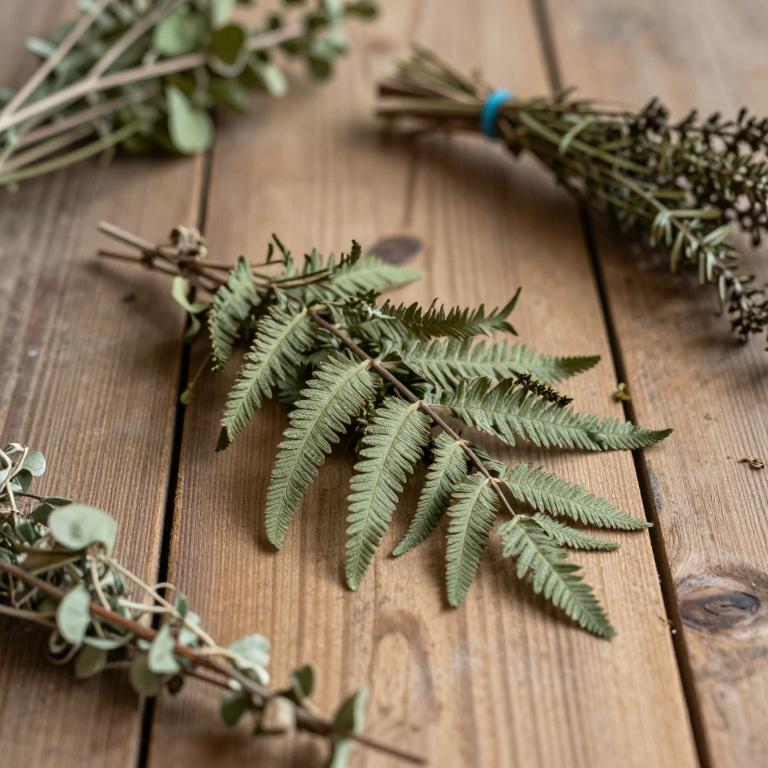
, scientifically known as Athyrium monomachii, is a distinctive fern species often valued in traditional botanical studies. While primarily recognized for its unique structural elegance in shaded habitats, its medicinal potential lies in its bioactive compounds. Exploring this plant offers fascinating insights into natural pharmacology and diverse ecosystem wellness.
- Family
- Aspleniaceae
- Native range
- Asia-Temperate
- Parts used
- Not available
- Common names
- Not available
- Scientific synonyms
- Athyrium Filix-Femina Subsp. Jacutense · Athyrium Brevifrons · 15 more
Names and Synonyms
Scientific Names
Accepted name
Athyrium monomachiiSynonyms
- Athyrium filix-femina subsp. jacutense
- Athyrium brevifrons
- Athyrium filix-femina subsp. longipes
- Athyrium sinense f. multidentatum
- Athyrium submelanolepis
- Athyrium multidentatum
- Athyrium sinense subsp. longipes
- Athyrium brevifrons var. angustifrons
- Athyrium filix-femina var. longipes
- Athyrium melanolepis var. angustifrons
- Athyrium filix-femina var. monomachii
- Athyrium filix-femina var. jacutense
- Athyrium acutidentatum
- Athyrium changbaishanense
- Athyrium dailingense
- Athyrium hebeiense
- Aspidium filix-femina var. multidentatum
Sources: Wikidata
Taxonomical Classification
This plant belongs to the kingdom Plantae and is classified under the phylum Streptophyta and the class Equisetopsida. Within the subclass Polypodiinae and the order Polypodiales, it is a member of the family Aspleniaceae. Its specific taxonomic placement is defined by the genus Athyrium, specifically the species Athyrium monomachii.
| Rank | Classification |
|---|---|
| Kingdom | Plantae |
| Phylum | Streptophyta |
| Class | Equisetopsida |
| Subclass | Polypodiinae |
| Order | Polypodiales |
| Family | Aspleniaceae |
| Genus | Athyrium |
Sources: The World Checklist of Vascular Plants (WCVP)
Distribution
This plant exhibits a specific geographical distribution primarily concentrated across various regions of Siberia. Within this vast territory, it can be found growing in the Altay mountains. The species also inhabits the areas of Buryatiya and Chita. Furthermore, its presence extends into the Irkutsk region. Finally, the plant is documented to grow within the Krasnoyarsk territory.
| Region | Area |
|---|---|
| Siberia | Altay |
| Siberia | Buryatiya |
| Siberia | Chita |
| Siberia | Irkutsk |
| Siberia | Krasnoyarsk |
| Siberia | Yakutiya |
| Russian Far East | Amur |
| Russian Far East | Kamchatka |
| Russian Far East | Khabarovsk |
| Russian Far East | Magadan |
Sources: The World Checklist of Vascular Plants (WCVP)
Botanical Identification
Ecology
The ecology of Athyrium monomachii is characterized by its preference for stable, moist environments found within mixed woods and thickets. Within these shaded woodland ecosystems, the plant thrives in the dappled sunlight and sheltered microclimates provided by a dense canopy and understory vegetation. The structural complexity of mixed woodlands offers the necessary soil moisture retention and organic matter accumulation required for its growth, while the surrounding thickets provide protection from excessive wind and temperature fluctuations. This preference for wooded and bushy habitats suggests a niche dependency on the specific humidity levels and soil compositions typically maintained by forest floor ecosystems.
- Habitat :
- mixed woods and thickets
Life history
The life history of Athyrium monomachii is characterized by a perennial lifecycle, meaning the plant persists through multiple growing seasons rather than completing its cycle in a single year. As a perennial fern, it establishes a robust presence in its habitat by developing underground rhizomes that serve as storage organs, allowing the plant to endure dormant periods and regrow during favorable conditions. Each year, the plant emerges from these rhizomes to produce new fronds, contributing to its long-term survival and ability to spread incrementally within its ecological niche.
- Lifecycle :
- perennial
Reproduction
The reproduction of Athyrium monochaumii is characterized by a specific seasonal cycle, with its flowering period being notably concentrated. The flowering process begins in July and concludes within the same month of July, representing a brief and highly defined window for its reproductive activity.
- Flowering time :
- Jul
Sources: Global Inventory of Floras and Traits (GIFT)
Chemicals
Athyrium monomachii has 1 reported phytochemicals identified across 0 scientific publications and several other databases. The most consistently reported chemicals include glucose.
| Chemical | Supporting sources | Consensus |
|---|---|---|
| glucose | 1 supporting sources | ★☆☆☆☆ |
glucose
- International journal of biological macromolecules
Activities
Athyrium monomachii has 1 reported activities identified across 0 scientific publications and several other databases. The most consistently reported activities include Antioxidant.
| Activity | Supporting sources | Consensus |
|---|---|---|
| Antioxidant | 1 supporting sources | ★☆☆☆☆ |
Antioxidant
- Journal of traditional and complementary medicine
Preparations
Athyrium monomachii has 1 reported preparations identified across 0 scientific publications and several other databases. The most consistently reported preparations include AM ethanol extract.
| Preparation | Supporting sources | Consensus |
|---|---|---|
| Am ethanol extract | 1 supporting sources | ★☆☆☆☆ |
Am ethanol extract
- Journal of ethnopharmacology