rattle-pod
Astragalus · Accepted scientific name
Scientific literature: Sparse (99 studies) · ★★☆☆☆
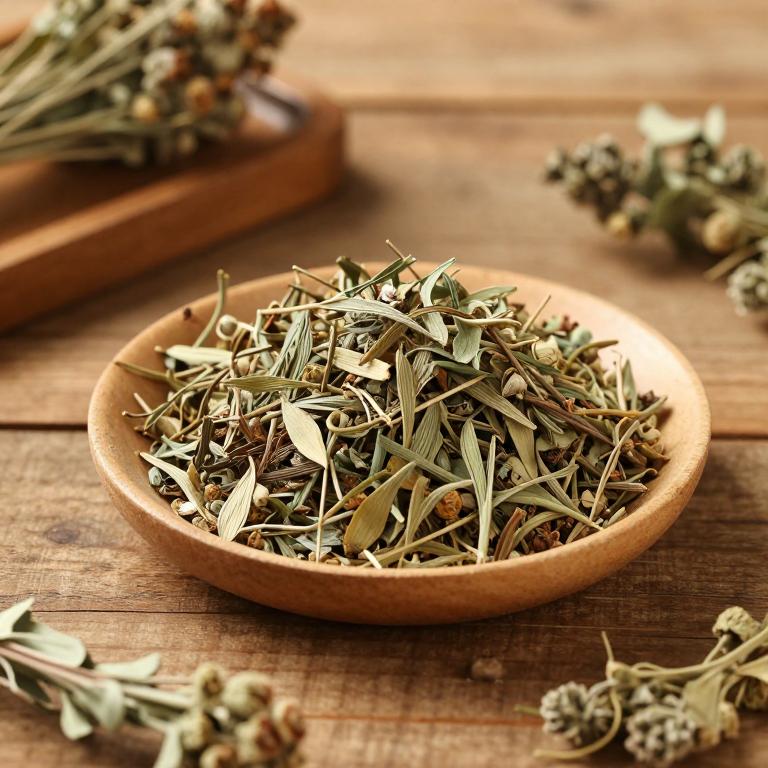
Rattle-pod, scientifically known as Astragalus, is a diverse genus of legumes renowned in traditional medicine for its immune-boosting properties. Rich in polysaccharides and antioxidants, this potent herb is frequently used to enhance vitality, combat fatigue, and support longevity. It remains a cornerstone of herbal wellness for holistic health support.
Names and Synonyms
Common Names
- locoweed
- milk-vetch
- milkvetches
- milkvetch
Scientific Names
Accepted name
AstragalusSynonyms
- Rydbergiella
- Hypoglottis
- Holcophacos
- Ctenophyllum
- Hesperastragalus
- Contortuplicata
- Astenolobium
- Halicacabus
- Euilus
- Feidanthus
- Gynophoraria
- Onyx
- Diplotheca
- Didymopelta
- Acanthyllis
- Cystium
- Brachyphragma
- Pisophaca
- Philammos
- Pedina
- Physondra
- Phacomene
- Phaca
- Pterophacos
- Poecilocarpus
- Alopecias
- Podochrea
- Myctirophora
- Ailuroschia
- Myobroma
- Ankylobus
- Xerophysa
- Xylophacos
- Sewerzowia
- Glottis
- Glandula
- Lithoon
- Geoprumnon
- Triquetra
- Microphacos
- Medyphylla
- Tragacantha
- Tium
- Cnemidophacos
- Batidophaca
- Ophiocarpus
- Oxyglottis
- Oedicephalus
- Orophaca
- Onix
- Barnebyella
- Aulosema
- Neodielsia
- Atelophragma
- Lonchophaca
- Stella
- Solenotus
- Kentrophyta
- Kirchnera
- Jonesiella
- Homalobus
- Hesperonix
- Cryptorrhynchus
- Macrosema
- Cystopora
- Craccina
- Hamaria
- Hedyphylla
- Hamosa
- Diholcos
- Astracantha
- Astragalina
- Astragaloides
- Acanthophaca
Regional and Traditional Names
Spanish:
- Microphacos
- Barnebyella
- Cryptorrhynchus
- Neodielsia
- Xylophacos
- Holcophacos
- Atelophragma
- Tragacantha
- Kentrophyta
- Hesperastragalus
- Phyllolobium
- Thium
- Mystirophora
- Brachyphragma
- Jonesiella
- Hedyphylla
German:
- Tragant
- kozinec
- Tragant
French:
- Astragale
- Astragales
- Astragale
Sources: Wikidata, Catalogue of Life
Taxonomical Classification
This plant belongs to the kingdom Plantae and the phylum Streptophyta, falling under the class Equisetopsida and subclass Magnoliidae. Within the order Fabales, it is a member of the Fabaceae family. Its specific taxonomic classification is defined by the genus Astragalus.
| Rank | Classification |
|---|---|
| Kingdom | Plantae |
| Phylum | Streptophyta |
| Class | Equisetopsida |
| Subclass | Magnoliidae |
| Order | Fabales |
| Family | Fabaceae |
| Genus | Astragalus |
Sources: The World Checklist of Vascular Plants (WCVP)
Distribution
This plant exhibits a specific distribution pattern across several regions of Northern Europe. It can be found growing in the coastal and inland areas of Denmark. Its presence also extends to the northern landscapes of Finland. Furthermore, the species is established within the natural habitats of Great Britain. Finally, it is documented throughout the territories of Ireland and Norway.
| Region | Area |
|---|---|
| Northern Europe | Denmark |
| Northern Europe | Finland |
| Northern Europe | Great Britain |
| Northern Europe | Ireland |
| Northern Europe | Norway |
| Northern Europe | Sweden |
| Middle Europe | Austria |
| Middle Europe | Belgium |
| Middle Europe | Czechia-Slovakia |
| Middle Europe | Germany |
Sources: The World Checklist of Vascular Plants (WCVP)
Plant Parts
Astragalus has 2 reported plant parts identified across 8 scientific publications and several other databases that are studied for medicinal purposes. The most consistently reported plant part include root, rhizome.
| Plant part | Supporting sources | Consensus |
|---|---|---|
| Root | 7 supporting sources | ★★★★☆ |
| Rhizome | 1 supporting sources | ★☆☆☆☆ |
Root
- BMC plant biology
- Molecules (Basel, Switzerland)
- The Yale journal of biology and medicine
- Zhongguo Zhong yao za zhi = Zhongguo zhongyao zazhi = China journal of Chinese materia medica
- Nutrients
View 2 additional sources
- Journal of ethnopharmacology
- Plants (Basel, Switzerland)
Rhizome
- The American journal of Chinese medicine
Chemicals
Astragalus has 17 reported phytochemicals identified across 8 scientific publications and several other databases. The most consistently reported chemicals include Astragaloside IV, Calycosin, Flavonoids, Saponins, swainsonine.
| Chemical | Supporting sources | Consensus |
|---|---|---|
| Astragaloside IV | 2 supporting sources | ★☆☆☆☆ |
| Calycosin | 2 supporting sources | ★☆☆☆☆ |
| Flavonoids | 2 supporting sources | ★☆☆☆☆ |
| Saponins | 2 supporting sources | ★☆☆☆☆ |
| swainsonine | 2 supporting sources | ★☆☆☆☆ |
| Astragaloside A | 1 supporting sources | ★☆☆☆☆ |
| Astragalus polysaccharide | 1 supporting sources | ★☆☆☆☆ |
| COPPER | 1 supporting sources | ★☆☆☆☆ |
| Calycosin 7-glucoside | 1 supporting sources | ★☆☆☆☆ |
| Polysaccharide | 1 supporting sources | ★☆☆☆☆ |
Astragaloside IV
- Zhong yao cai = Zhongyaocai = Journal of Chinese medicinal materials
- International journal of molecular sciences
Calycosin
- Phytotherapy research : PTR
- Evidence-based complementary and alternative medicine : eCAM
Flavonoids
- Evidence-based complementary and alternative medicine : eCAM
- Natural product research
Saponins
- Evidence-based complementary and alternative medicine : eCAM
- Zhong yao cai = Zhongyaocai = Journal of Chinese medicinal materials
swainsonine
- Revista de neurologia
- Journal of natural toxins
Astragaloside A
- Scientific reports
Astragalus polysaccharide
- Japanese journal of pharmacology
COPPER
- Zhongguo Zhong yao za zhi = Zhongguo zhongyao zazhi = China journal of Chinese materia medica
Calycosin 7-glucoside
- Plants (Basel, Switzerland)
Polysaccharide
- International journal of biological macromolecules
Activities
Astragalus has 14 reported activities identified across 8 scientific publications and several other databases. The most consistently reported activities include Anticancer, Antidiabetic, Antioxidant, Antitumor, Neuroprotective.
| Activity | Supporting sources | Consensus |
|---|---|---|
| Anticancer | 3 supporting sources | ★★☆☆☆ |
| Antidiabetic | 2 supporting sources | ★☆☆☆☆ |
| Antioxidant | 2 supporting sources | ★☆☆☆☆ |
| Antitumor | 2 supporting sources | ★☆☆☆☆ |
| Neuroprotective | 2 supporting sources | ★☆☆☆☆ |
| Antibacterial | 1 supporting sources | ★☆☆☆☆ |
| Antifatigue | 1 supporting sources | ★☆☆☆☆ |
| Antineoplastic | 1 supporting sources | ★☆☆☆☆ |
| Antiviral | 1 supporting sources | ★☆☆☆☆ |
| Cardioprotective | 1 supporting sources | ★☆☆☆☆ |
Anticancer
- Evidence-based complementary and alternative medicine : eCAM
- Natural product research
- Nutrients
Antidiabetic
- Natural product research
- Molecules (Basel, Switzerland)
Antioxidant
- International journal of molecular sciences
- Zhongguo Zhong yao za zhi = Zhongguo zhongyao zazhi = China journal of Chinese materia medica
Antitumor
- International journal of molecular sciences
- Zhongguo Zhong yao za zhi = Zhongguo zhongyao zazhi = China journal of Chinese materia medica
Neuroprotective
- International journal of molecular sciences
- Oxidative medicine and cellular longevity
Antibacterial
- Zhongguo Zhong yao za zhi = Zhongguo zhongyao zazhi = China journal of Chinese materia medica
Antifatigue
- Frontiers in pharmacology
Antineoplastic
- Biological procedures online
Antiviral
- Molecules (Basel, Switzerland)
Cardioprotective
- Molecules (Basel, Switzerland)
Conditions
Astragalus has 28 reported investigations on conditions identified across 8 scientific publications and several other databases. The most consistently reported conditions include cancer, Allergic rhinitis, Alzheimer's disease, antioxidant, arrhythmia.
| Condition | Supporting sources | Consensus |
|---|---|---|
| Cancer | 3 supporting sources | ★★☆☆☆ |
| Allergic rhinitis | 1 supporting sources | ★☆☆☆☆ |
| Alzheimer's disease | 1 supporting sources | ★☆☆☆☆ |
| Antioxidant | 1 supporting sources | ★☆☆☆☆ |
| Arrhythmia | 1 supporting sources | ★☆☆☆☆ |
| Bovine mastitis | 1 supporting sources | ★☆☆☆☆ |
| Brain infarction | 1 supporting sources | ★☆☆☆☆ |
| Estrus | 1 supporting sources | ★☆☆☆☆ |
| Gastric cancer | 1 supporting sources | ★☆☆☆☆ |
| Heart failure | 1 supporting sources | ★☆☆☆☆ |
Cancer
- Natural product research
- International journal of molecular sciences
- International journal of biological macromolecules
Allergic rhinitis
- Journal of medicinal food
Alzheimer's disease
- Oxidative medicine and cellular longevity
Antioxidant
- Zhongguo Zhong yao za zhi = Zhongguo zhongyao zazhi = China journal of Chinese materia medica
Arrhythmia
- Phytomedicine : international journal of phytotherapy and phytopharmacology
Bovine mastitis
- Tropical animal health and production
Brain infarction
- Mini reviews in medicinal chemistry
Estrus
- Journal of natural toxins
Gastric cancer
- Pakistan journal of pharmaceutical sciences
Heart failure
- Frontiers in pharmacology
Preparations
Astragalus has 35 reported preparations identified across 8 scientific publications and several other databases. The most consistently reported preparations include Astragalus extract, Astragalus aqueous decoction, Astragalus aqueous extract (AAE), Astragalus injection, Astragalus polysaccharide (APS).
| Preparation | Supporting sources | Consensus |
|---|---|---|
| Astragalus extract | 2 supporting sources | ★☆☆☆☆ |
| Astragalus aqueous decoction | 1 supporting sources | ★☆☆☆☆ |
| Astragalus aqueous extract (aae) | 1 supporting sources | ★☆☆☆☆ |
| Astragalus injection | 1 supporting sources | ★☆☆☆☆ |
| Astragalus polysaccharide (aps) | 1 supporting sources | ★☆☆☆☆ |
| Astragalus polysaccharides | 1 supporting sources | ★☆☆☆☆ |
| Tcm herbal extracts | 1 supporting sources | ★☆☆☆☆ |
| Total flavonoids of astragalus | 1 supporting sources | ★☆☆☆☆ |
| Total polysaccharide of astragalus | 1 supporting sources | ★☆☆☆☆ |
| Alginate-based composite electrospinning nanofibers | 1 supporting sources | ★☆☆☆☆ |
Astragalus extract
- Frontiers in pharmacology
- The Yale journal of biology and medicine
Astragalus aqueous decoction
- Journal of ethnopharmacology
Astragalus aqueous extract (aae)
- Phytomedicine : international journal of phytotherapy and phytopharmacology
Astragalus injection
- Journal of ethnopharmacology
Astragalus polysaccharide (aps)
- Carbohydrate polymers
Astragalus polysaccharides
- Journal of medicinal food
Tcm herbal extracts
- Frontiers in pharmacology
Total flavonoids of astragalus
- Zhongguo Zhong yao za zhi = Zhongguo zhongyao zazhi = China journal of Chinese materia medica
Total polysaccharide of astragalus
- Zhongguo Zhong yao za zhi = Zhongguo zhongyao zazhi = China journal of Chinese materia medica
Alginate-based composite electrospinning nanofibers
- International journal of biological macromolecules