chickpea milk-vetch
Astragalus cicer · Accepted scientific name
Scientific literature: Very Sparse (4 studies) · ★☆☆☆☆
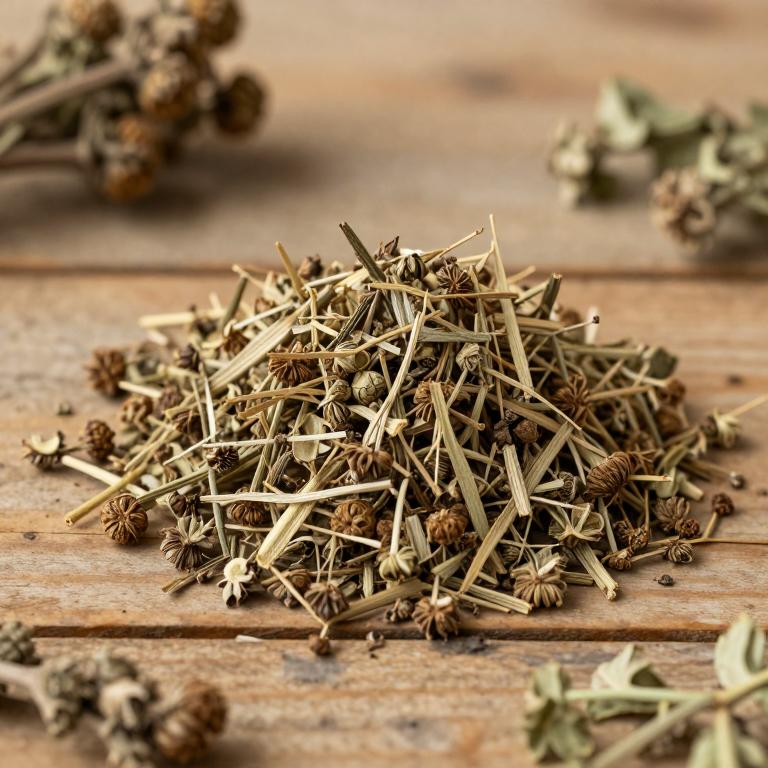
Chickpea milk-vetch, scientifically known as Astragalus cicer, is a versatile medicinal legume native to the Mediterranean and parts of Asia. Renowned for its diverse pharmacological properties, this plant is traditionally utilized for its antioxidant, anti-inflammatory, and immune-boosting capabilities, offering significant potential in modern herbal medicine and therapeutic research.
Names and Synonyms
Common Names
- chickpea milk-vetch
- cicer milk-vetch
- Chick-Pea Milk-Vetch
- Chickpea Milkvetch
- Cicer Milkvetch
Scientific Names
Accepted name
Astragalus cicerSynonyms
- Astragaloides cicera
- Astragalus cicer var. major
- Astragalus cicer var. microphyllus
- Astragalus cicer var. speciosus
- Astragalus cicer var. dieffenbachii
- Tragacantha cicer
- Astragalus mucronatus
- Tragacantha mucronata
- Astragalus pseudocicer
- Cystium pseudocicer
- Cystium cicer
- Astragalus heldaviensis
- Astragalus cicer var. pseudocicer
- Astragalus cicer var. angustifolius
- Astragalus cicer var. heldaviensis
- Astragalus cicer f. heldaviensis
Regional and Traditional Names
Spanish:
- Astragalus cicer var. angustifolius
- Astragalus pseudo-cicer
- Glaux astragaloides
- Astragalus cicer var. major
- Astragalus cicer var. dieffenbachii
- Astragalus cicer var. speciosus
- Astragalus microphyllus
- Astragalus cicer var. heldaviensis
- Astragalus cicer var. microphyllus
- Astragalus mucronatus
- Cystium cicer
- Tragacantha cicer
- Astragalus cicer var. pseudo-cicer
- garbanzo
- garbanzo silvestre
German:
- Kicher-Tragant
- Kichertragant
- Kicher-Tragant
- Kichererbsen-Tragant
French:
- astragale pois-chiche
- chiche sauvage
- Astragale pois chiche
Sources: Wikidata, Catalogue of Life
Taxonomical Classification
This plant belongs to the kingdom Plantae and the phylum Streptophyta, falling under the class Equisetopsida and subclass Magnoliidae. Within the order Fabales, it is classified under the family Fabaceae and the genus Astragalus. As a member of the Astragalus cicer species, it occupies a specific niche within this complex taxonomic hierarchy.
| Rank | Classification |
|---|---|
| Kingdom | Plantae |
| Phylum | Streptophyta |
| Class | Equisetopsida |
| Subclass | Magnoliidae |
| Order | Fabales |
| Family | Fabaceae |
| Genus | Astragalus |
Sources: The World Checklist of Vascular Plants (WCVP)
Distribution
This plant exhibits a specific distribution pattern across several regions of the European continent. In Northern Europe, its presence is documented in both Denmark and Sweden. Moving toward the central part of the continent, the species can also be found in Belgium. Its range extends further into Middle Europe, where it inhabits the landscapes of Austria. Additionally, the plant is recorded within the territories of Czechia and Slovakia.
| Region | Area |
|---|---|
| Northern Europe | Denmark |
| Northern Europe | Sweden |
| Middle Europe | Austria |
| Middle Europe | Belgium |
| Middle Europe | Czechia-Slovakia |
| Middle Europe | Germany |
| Middle Europe | Hungary |
| Middle Europe | Poland |
| Middle Europe | Switzerland |
| Southwestern Europe | France |
Sources: The World Checklist of Vascular Plants (WCVP)
Botanical Identification
Ecology
The ecology of Astragalus cicer is characterized by its ability to thrive across diverse and varied landscapes, demonstrating significant adaptability to different environmental conditions. This species is commonly found inhabiting a wide range of ecosystems, including temperate forests, open meadows, dense shrubberies, and expansive steppe environments. By occupying these distinct niches, the plant utilizes various soil compositions and light availability, ranging from the dappled shade of woodland edges to the intense solar exposure of open grasslands. This broad distribution across forest, meadow, shrub, and steppe habitats suggests a robust ecological strategy that allows it to persist in both sheltered and highly exposed terrains.
- Habitat :
- forest, meadows, shrubberies, steppe
Life history
The life history of Astragalus cicer is characterized by its nature as a perennial plant, allowing it to persist through multiple growing seasons. As a hemicryptophyte, its perennating buds are located at the soil surface, protected by leaf litter or the substrate, which facilitates its survival during unfavorable periods. Furthermore, the species exhibits a deciduous growth habit, shedding its foliage as part of its seasonal cycle.
- Deciduousness :
- deciduous
- Life form :
- hemicryptophyte
- Lifecycle :
- perennial
Morphology
The morphology of Astragalus cicer is characterized by a growth form classified as a non-woody herb and specifically a forb. This plant is a terrestrial species that functions as an independent organism, lacking any parasitic or epiphytic tendencies. In terms of its structural habit, it is a self-supporting plant rather than a climber, liana, or vine. Its physical stature is relatively low, with a plant height that ranges from a minimum of 0.05 m to a maximum of 0.8 m, maintaining an average height of approximately 0.6675 m.
- Aquatic :
- terrestrial
- Climber :
- self-supporting
- Epiphyte :
- terrestrial
- Growth form :
- herb
- Growth form :
- forb
- Parasite :
- independent
- Plant height max:
- 0.8 m
- Plant height mean:
- 0.6675 m
- Plant height min:
- 0.05 m
- Woodiness :
- non-woody
Physiology
The physiology of Astragalus cicer is characterized by a C3 photosynthetic pathway, which dictates its carbon fixation processes and metabolic efficiency in its native environment. The plant exhibits a mean leaf size of approximately 22.1536 cm², reflecting its morphological adaptation to light interception and gas exchange. Furthermore, it possesses a mean Specific Leaf Area (SLA) of 259.9 cm²/g, a physiological metric that indicates the ratio of leaf area to dry mass, providing insight into its leaf thickness, density, and resource allocation strategies for optimizing photosynthetic capacity.
- Leaf size mean:
- 22.1536 cm²
- Photosynthetic pathway :
- C3
- Specific Leaf Area (SLA) mean:
- 259.9 cm²/g
Reproduction
The reproduction of Astragalus cicer is characterized by a seasonal flowering period that typically begins in June and concludes in July. The plant utilizes a biotic pollination syndrome, specifically relying on insects to facilitate the transfer of pollen. Notably, self-fertilization is absent in this species, necessitating cross-pollination for successful reproductive cycles. Following fertilization, the plant produces fruit in the form of a capsule, which is dehiscent, meaning it opens at maturity to release its contents. The seeds produced are quite small, with a mean mass of 0.003696 g, ranging from a minimum of 0.0033 g to a maximum of 0.004 g. For the distribution of these seeds, the plant employs a hydrochorous dispersal syndrome, utilizing water as the primary medium for moving seeds to new locations.
- Dehiscence :
- dehiscent
- Dispersal syndrome :
- hydrochorous
- Flowering time :
- Jun
- Flowering time :
- Jul
- Fruit type :
- capsule
- Pollination syndrome :
- insect
- Pollination syndrome :
- biotic
- Seed mass max:
- 0.004 g
- Seed mass mean:
- 0.003696 g
- Seed mass min:
- 0.0033 g
- Self fertilization :
- absent
Sources: Global Inventory of Floras and Traits (GIFT)
Plant Parts
Astragalus cicer has 1 reported plant parts identified across 1 scientific publications and several other databases that are studied for medicinal purposes. The most consistently reported plant part include root.
| Plant part | Supporting sources | Consensus |
|---|---|---|
| Root | 1 supporting sources | ★☆☆☆☆ |
Root
- Antonie van Leeuwenhoek
Chemicals
Astragalus cicer has 3 reported phytochemicals identified across 1 scientific publications and several other databases. The most consistently reported chemicals include COUMESTROL, Isoflavone, swainsonine.
| Chemical | Supporting sources | Consensus |
|---|---|---|
| COUMESTROL | 1 supporting sources | ★☆☆☆☆ |
| Isoflavone | 1 supporting sources | ★☆☆☆☆ |
| swainsonine | 1 supporting sources | ★☆☆☆☆ |
COUMESTROL
- Journal of food science and technology
Isoflavone
- Journal of food science and technology
swainsonine
- BioMed research international