Thunberg's astilbe
Astilbe thunbergii · Accepted scientific name
Scientific literature: Very Sparse (4 studies) · ★☆☆☆☆
Thunberg's astilbe, scientifically known as Astilbe thunbergii, is a perennial herb valued for its elegant, plume-like flower spikes and lush foliage. While primarily celebrated in ornamental gardening for its beauty, this resilient plant is studied for its traditional medicinal properties, offering a unique blend of aesthetic and therapeutic potential.
- Family
- Saxifragaceae
- Native range
- Asia-Temperate
- Parts used
- Rhizome
- Common names
- Thunberg'S Astilbe · Ostrich Plume
- Scientific synonyms
- Hoteia Thunbergii
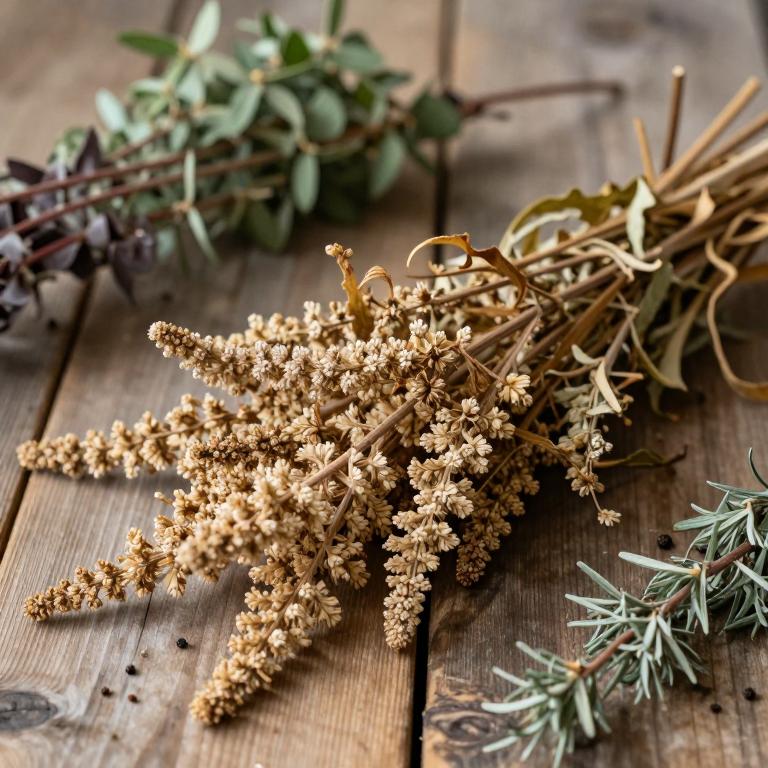
Names and Synonyms
Common Names
- Thunberg's astilbe
- Ostrich Plume
Scientific Names
Accepted name
Astilbe thunbergiiSynonyms
- Hoteia thunbergii
Regional and Traditional Names
German:
- Thunberg-Prachtspiere
Sources: Wikidata, Catalogue of Life
Taxonomical Classification
This plant belongs to the kingdom Plantae and the phylum Streptophyta, falling under the class Equisetopsida and subclass Magnoliidae. Within the order Saxifragales, it is classified under the family Saxifragaceae. Its specific taxonomic identity is defined by the genus Astilbe.
| Rank | Classification |
|---|---|
| Kingdom | Plantae |
| Phylum | Streptophyta |
| Class | Equisetopsida |
| Subclass | Magnoliidae |
| Order | Saxifragales |
| Family | Saxifragaceae |
| Genus | Astilbe |
Sources: The World Checklist of Vascular Plants (WCVP)
Distribution
This plant exhibits a specific and somewhat localized geographical distribution across East Asia. Its presence can be traced to the temperate regions of Japan, where it grows naturally within the landscape. Additionally, the species extends its range into the Russian Far East. Within this northern territory, it is specifically documented on the Kuril Islands. Consequently, the natural habitat of Astilbe thuunbergii is primarily concentrated in these distinct maritime and coastal areas.
| Region | Area |
|---|---|
| Russian Far East | Kuril Is. |
| Eastern Asia | Japan |
Sources: The World Checklist of Vascular Plants (WCVP)
Botanical Identification
Life history
The life history of Astilbe thübergii is characterized by its status as a perennial, meaning it lives for more than two years and undergoes a consistent cycle of seasonal growth and dormancy. As a perennial herb, it establishes a robust root system, often consisting of thick rhizomes, which allows the plant to store energy during the dormant winter months and emerge vigorously each spring. The life cycle begins with the development of basal foliage, which forms lush, mounded clumps of textured leaves. As the growing season progresses, the plant transitions from vegetative growth to its reproductive phase, sending up tall, erect flower spikes that bloom profusely. Following pollination, the plant produces seeds, contributing to its reproductive potential, though in many cultivated settings, it spreads primarily through slow lateral expansion of its rhizomes. Once the flowering period concludes and temperatures drop, the above-ground biomass dies back to the ground level, leaving the perennial root structure to remain protected underground until the next cycle of growth commences.
- Lifecycle :
- perennial
Morphology
The morphology of Astilbe thubergii is characterized by its growth form as a perennial herb and forb, manifesting as a non-woody, herbaceous plant. It functions as an independent organism, neither acting as a parasite nor an epiphyte, as it maintains a terrestrial lifestyle. The plant is self-supporting in its structure, lacking any climber, vine, or liana tendencies, and is primarily adapted to terrestrial environments rather than aquatic or semiaquatic habitats.
- Aquatic :
- terrestrial
- Climber :
- self-supporting
- Epiphyte :
- terrestrial
- Growth form :
- herb
- Parasite :
- independent
- Woodiness :
- non-woody
Reproduction
The reproduction of Astilbe thuunbergii is characterized by the production of minute seeds that play a critical role in its dispersal and establishment processes. Quantitative analysis of its reproductive output reveals that the seeds are exceptionally lightweight, with a recorded mean seed mass of 5.5e-05 g. The variability in individual seed size is relatively narrow, with the seed mass ranging from a minimum of 4e-05 g to a maximum of 7e-05 g. These small seed dimensions suggest a reproductive strategy optimized for efficient distribution, likely facilitated by environmental factors such as wind or water, which assist in the colonization of suitable habitats.
- Seed mass max:
- 7e-05 g
- Seed mass mean:
- 5.5e-05 g
- Seed mass min:
- 4e-05 g
Sources: Global Inventory of Floras and Traits (GIFT)
Plant Parts
Astilbe thunbergii has 1 reported plant parts identified across 1 scientific publications and several other databases that are studied for medicinal purposes. The most consistently reported plant part include rhizome.
| Plant part | Supporting sources | Consensus |
|---|---|---|
| Rhizome | 1 supporting sources | ★☆☆☆☆ |
Rhizome
- Journal of natural products
Chemicals
Astilbe thunbergii has 3 reported phytochemicals identified across 1 scientific publications and several other databases. The most consistently reported chemicals include Astilbin, Eucryphin, bergenin.
| Chemical | Supporting sources | Consensus |
|---|---|---|
| Astilbin | 1 supporting sources | ★☆☆☆☆ |
| Eucryphin | 1 supporting sources | ★☆☆☆☆ |
| bergenin | 1 supporting sources | ★☆☆☆☆ |
Astilbin
- Journal of natural products
Eucryphin
- Journal of natural products
bergenin
- Journal of natural products