Asteriscus graveolens
Asteriscus graveolens · Accepted scientific name
Scientific literature: Sparse (57 studies) · ★★☆☆☆
Asteriscus graveolens, scientifically known as Asteriscus graveolens, is a resilient medicinal shrub native to the Mediterranean region. Renowned for its aromatic foliage, this plant is traditionally utilized in folk medicine to treat digestive ailments, skin inflammations, and respiratory issues, offering a natural wealth of bioactive compounds for healing.
- Family
- Asteraceae
- Native range
- Africa
- Parts used
- Flower · Leaf
- Common names
- Not available
- Scientific synonyms
- Bubonium Graveolens · Nauplius Graveolens · 1 more
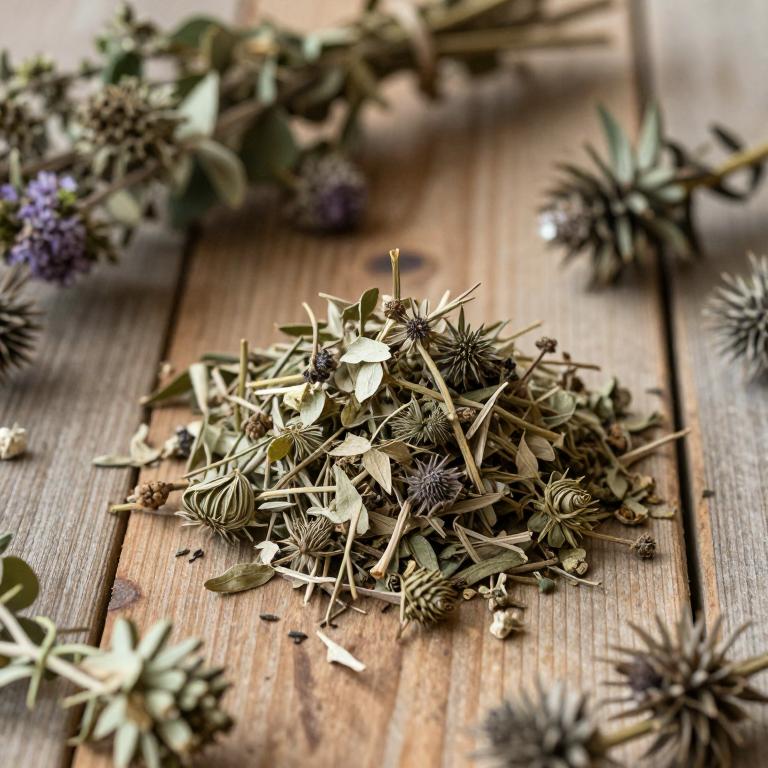
Names and Synonyms
Scientific Names
Accepted name
Asteriscus graveolensSynonyms
- Bubonium graveolens
- Nauplius graveolens
- Buphthalmum graveolens
Regional and Traditional Names
Spanish:
- botonera
Sources: Wikidata, Catalogue of Life
Taxonomical Classification
This plant belongs to the kingdom Plantae and the phylum Streptophyta, situated within the class Equisetopsida and subclass Magnoliidae. It is classified under the order Asterales and the family Asteraceae. Finally, it is identified by the genus Asteriscus.
| Rank | Classification |
|---|---|
| Kingdom | Plantae |
| Phylum | Streptophyta |
| Class | Equisetopsida |
| Subclass | Magnoliidae |
| Order | Asterales |
| Family | Asteraceae |
| Genus | Asteriscus |
Sources: The World Checklist of Vascular Plants (WCVP)
Distribution
This plant is primarily distributed across the vast landscapes of Northern Africa. It can be found growing within the borders of Algeria and Egypt. Furthermore, its presence extends throughout the territories of Libya and Morocco. The species also inhabits the diverse environments of Tunisia. Collectively, these five countries represent its key geographical range in the region.
| Region | Area |
|---|---|
| Northern Africa | Algeria |
| Northern Africa | Egypt |
| Northern Africa | Libya |
| Northern Africa | Morocco |
| Northern Africa | Tunisia |
| Macaronesia | Canary Is. |
| West Tropical Africa | Mali |
| West Tropical Africa | Mauritania |
| Northeast Tropical Africa | Chad |
| Western Asia | Iraq |
Sources: The World Checklist of Vascular Plants (WCVP)
Botanical Identification
Ecology
The ecology of Asteriscus graveolens is defined by its distribution across a specific altitudinal gradient, thriving in environments ranging from low-lying areas to moderate elevations. This plant is typically found at altitudes starting from a minimum of 50 m AMSL and extending up to a maximum of 600 m AMSL. Within this elevational range, its presence is often dictated by the specific soil compositions and moisture availability characteristic of these subtropical or Mediterranean-style landscapes, where it occupies ecological niches that support its specialized growth patterns.
- Elevational range max:
- 600 m AMSL
- Elevational range min:
- 50 m AMSL
Life history
The life history of Asteriscus graveolens is characterized by its status as a perennial plant, allowing it to persist through multiple growing seasons. In terms of its structural growth habit and ecological positioning, it is classified as a chamaephyte, a life form where the permanent shoots are located close to the soil surface, often protected by a layer of leaf litter or soil. This chamaephyte growth strategy, consistent across its morphological classifications, enables the species to adapt to its specific environmental niches by maintaining low-growing, resilient structures that can withstand varying seasonal conditions.
- Life form :
- chamaephyte
- Lifecycle :
- perennial
Morphology
The morphology of Asteriscus graveolens is characterized by its growth form as a woody herb, exhibiting a self-supporting structure rather than a climbing habit. This species is primarily terrestrial in its habitat, though it can exist within a spectrum ranging from semiaquatic to aquatic environments. In terms of stature, the plant is relatively low-growing, with a height that typically ranges from a minimum of 0.1 m to a maximum of approximately 0.457 m. Furthermore, the plant functions as an independent organism, showing no parasitic tendencies in its development.
- Aquatic :
- terrestrial
- Climber :
- self-supporting
- Growth form :
- herb
- Parasite :
- independent
- Plant height max:
- 0.457200914 m
- Plant height min:
- 0.1 m
- Woodiness :
- woody
Physiology
The physiology of Asteriscus graveolens is characterized by specialized morphological adaptations that facilitate metabolic efficiency and environmental resilience. A defining aspect of its vegetative structure is the leaf form, which is distinctly linear, a trait that minimizes surface area to reduce transpirational water loss in arid or semi-arid habitats. This linear leaf morphology influences the plant's photosynthetic capacity and gas exchange dynamics, allowing for optimized light interception while managing thermal stress. The physiological processes of the plant are tightly integrated with its structural morphology, where the narrow, elongated leaf shape serves as a mechanism to maintain turgor pressure and facilitate efficient nutrient transport throughout the vascular system. This structural configuration plays a critical role in the plant's overall resource management and its ability to thrive in specific ecological niches.
- Leaf form :
- linear
Reproduction
The reproduction of Asteriscus graveolens is characterized by a flowering period that typically begins in March and concludes in June, though the timing can be variable across different months. The plant produces yellow flowers that vary in size, with a minimum length of 0.3 cm and a maximum length of 1.2 cm, while the flower width can reach up to 2 cm. Following pollination, the plant develops fruit in the form of an achene. These fruits are indehiscent, meaning they do not open at maturity to release seeds. The seeds themselves exhibit significant variability in mass, ranging from a minimum of 0.00044 g to a maximum of 0.28844 g, with an average seed mass of approximately 0.14444 g. Dispersal of the progeny is facilitated via a hydrochorous syndrome, where water serves as the primary medium for transporting the seeds to new locations.
- Dehiscence :
- indehiscent
- Dispersal syndrome :
- hydrochorous
- Flower colour :
- yellow
- Flower length max:
- 1.2 cm
- Flower length min:
- 0.3 cm
- Flower width max:
- 2 cm
- Flowering time :
- Mar
- Flowering time :
- Jun
- Fruit type :
- achene
- Seed mass max:
- 0.28844 g
- Seed mass mean:
- 0.14444 g
- Seed mass min:
- 0.00044 g
Sources: Global Inventory of Floras and Traits (GIFT)
Plant Parts
Asteriscus graveolens has 3 reported plant parts identified across 3 scientific publications and several other databases that are studied for medicinal purposes. The most consistently reported plant part include flower, leaf, stem.
| Plant part | Supporting sources | Consensus |
|---|---|---|
| Flower | 1 supporting sources | ★☆☆☆☆ |
| Leaf | 1 supporting sources | ★☆☆☆☆ |
| Stem | 1 supporting sources | ★☆☆☆☆ |
Flower
- Chemistry & biodiversity
Leaf
- Chemistry & biodiversity
Stem
- Chemistry & biodiversity
Chemicals
Asteriscus graveolens has 19 reported phytochemicals identified across 3 scientific publications and several other databases. The most consistently reported chemicals include Flavonoids, cis-Chrysanthenyl acetate, CARVACROL, Cynaroside, Germacrene D.
| Chemical | Supporting sources | Consensus |
|---|---|---|
| Flavonoids | 2 supporting sources | ★☆☆☆☆ |
| cis-Chrysanthenyl acetate | 2 supporting sources | ★☆☆☆☆ |
| CARVACROL | 1 supporting sources | ★☆☆☆☆ |
| Cynaroside | 1 supporting sources | ★☆☆☆☆ |
| Germacrene D | 1 supporting sources | ★☆☆☆☆ |
| Isoorientin | 1 supporting sources | ★☆☆☆☆ |
| Kessane | 1 supporting sources | ★☆☆☆☆ |
| Monoterpenes | 1 supporting sources | ★☆☆☆☆ |
| Myrtenyl acetate | 1 supporting sources | ★☆☆☆☆ |
| Orientin | 1 supporting sources | ★☆☆☆☆ |
Flavonoids
- Endocrine, metabolic & immune disorders drug targets
- Fitoterapia
cis-Chrysanthenyl acetate
- Fitoterapia
- Chemistry & biodiversity
CARVACROL
- Fitoterapia
Cynaroside
- Fitoterapia
Germacrene D
- Chemistry & biodiversity
Isoorientin
- Fitoterapia
Kessane
- Fitoterapia
Monoterpenes
- Fitoterapia
Myrtenyl acetate
- Fitoterapia
Orientin
- Fitoterapia
Activities
Asteriscus graveolens has 9 reported activities identified across 3 scientific publications and several other databases. The most consistently reported activities include Anticancer, Antioxidant, Antibacterial, Antidiabetic, Antihypertensive.
| Activity | Supporting sources | Consensus |
|---|---|---|
| Anticancer | 2 supporting sources | ★☆☆☆☆ |
| Antioxidant | 2 supporting sources | ★☆☆☆☆ |
| Antibacterial | 1 supporting sources | ★☆☆☆☆ |
| Antidiabetic | 1 supporting sources | ★☆☆☆☆ |
| Antihypertensive | 1 supporting sources | ★☆☆☆☆ |
| Antimicrobial | 1 supporting sources | ★☆☆☆☆ |
| Cytotoxic | 1 supporting sources | ★☆☆☆☆ |
| Hemolytic | 1 supporting sources | ★☆☆☆☆ |
| Purgative | 1 supporting sources | ★☆☆☆☆ |
Anticancer
- Fitoterapia
- Chemistry & biodiversity
Antioxidant
- Fitoterapia
- Molecules (Basel, Switzerland)
Antibacterial
- Fitoterapia
Antidiabetic
- Fitoterapia
Antihypertensive
- Fitoterapia
Antimicrobial
- Molecules (Basel, Switzerland)
Cytotoxic
- International journal of molecular sciences
Hemolytic
- Fitoterapia
Purgative
- Fitoterapia
Conditions
Asteriscus graveolens has 13 reported investigations on conditions identified across 3 scientific publications and several other databases. The most consistently reported conditions include hypertension, Aspergillus flavus, Aspergillus niger, Bacillus subtilis, Candida albicans.
| Condition | Supporting sources | Consensus |
|---|---|---|
| Hypertension | 2 supporting sources | ★☆☆☆☆ |
| Aspergillus flavus | 1 supporting sources | ★☆☆☆☆ |
| Aspergillus niger | 1 supporting sources | ★☆☆☆☆ |
| Bacillus subtilis | 1 supporting sources | ★☆☆☆☆ |
| Candida albicans | 1 supporting sources | ★☆☆☆☆ |
| Escherichia coli | 1 supporting sources | ★☆☆☆☆ |
| Lymphoma | 1 supporting sources | ★☆☆☆☆ |
| Pseudomonas aeruginosa | 1 supporting sources | ★☆☆☆☆ |
| Staphylococcus aureus | 1 supporting sources | ★☆☆☆☆ |
| Diarrhea | 1 supporting sources | ★☆☆☆☆ |
Hypertension
- Endocrine, metabolic & immune disorders drug targets
- Fitoterapia
Aspergillus flavus
- Molecules (Basel, Switzerland)
Aspergillus niger
- Molecules (Basel, Switzerland)
Bacillus subtilis
- Molecules (Basel, Switzerland)
Candida albicans
- Molecules (Basel, Switzerland)
Escherichia coli
- Molecules (Basel, Switzerland)
Lymphoma
- International journal of molecular sciences
Pseudomonas aeruginosa
- Molecules (Basel, Switzerland)
Staphylococcus aureus
- Molecules (Basel, Switzerland)
Diarrhea
- Fitoterapia
Preparations
Asteriscus graveolens has 14 reported preparations identified across 3 scientific publications and several other databases. The most consistently reported preparations include Asteriscus graveolens (Forssk.) Less (A. graveolens)-derived fraction, aqueous Asteriscus graveolens extract, crude extract, essential oils of flowers, essential oils of leaves.
| Preparation | Supporting sources | Consensus |
|---|---|---|
| Asteriscus graveolens (forssk.) less (a. graveolens)-derived fraction | 1 supporting sources | ★☆☆☆☆ |
| Aqueous asteriscus graveolens extract | 1 supporting sources | ★☆☆☆☆ |
| Crude extract | 1 supporting sources | ★☆☆☆☆ |
| Essential oils of flowers | 1 supporting sources | ★☆☆☆☆ |
| Essential oils of leaves | 1 supporting sources | ★☆☆☆☆ |
| Essential oils of stems | 1 supporting sources | ★☆☆☆☆ |
| Extracts | 1 supporting sources | ★☆☆☆☆ |
| Flavonoids extracted from asteriscus graveolens (fee) | 1 supporting sources | ★☆☆☆☆ |
| Headspace solid-phase microextraction | 1 supporting sources | ★☆☆☆☆ |
| Hydrodistillation of the essential oil | 1 supporting sources | ★☆☆☆☆ |
Asteriscus graveolens (forssk.) less (a. graveolens)-derived fraction
- International journal of molecular sciences
Aqueous asteriscus graveolens extract
- Endocrine, metabolic & immune disorders drug targets
Crude extract
- International journal of molecular sciences
Essential oils of flowers
- Chemistry & biodiversity
Essential oils of leaves
- Chemistry & biodiversity
Essential oils of stems
- Chemistry & biodiversity
Extracts
- Foods (Basel, Switzerland)
Flavonoids extracted from asteriscus graveolens (fee)
- Endocrine, metabolic & immune disorders drug targets
Headspace solid-phase microextraction
- Chemistry & biodiversity
Hydrodistillation of the essential oil
- Chemistry & biodiversity