Annual Asphodel
Asphodelus tenuifolius · Accepted scientific name
Scientific literature: Very Sparse (14 studies) · ★☆☆☆☆
Annual Asphodel, scientifically known as Asphodeluus tenuifolius, is a delicate medicinal herb prized for its therapeutic properties. Characterized by its slender leaves and subtle blooms, this plant plays a vital role in traditional healing practices. It is frequently utilized to treat various ailments, offering natural remedies for holistic wellness.
- Family
- Asphodelaceae
- Native range
- Europe
- Parts used
- Not available
- Common names
- Annual Asphodel
- Scientific synonyms
- Asphodelus Fistulosus Subsp. Tenuifolius · Asphodelus Fistulosus Subsp. Tenuifolius · 14 more
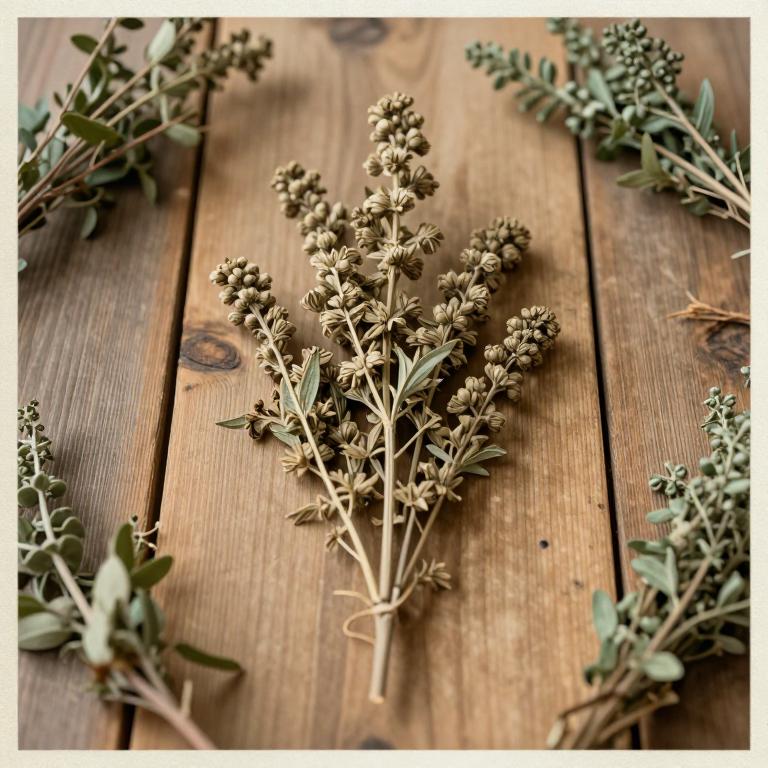
Names and Synonyms
Common Names
- Annual Asphodel
Scientific Names
Accepted name
Asphodelus tenuifoliusSynonyms
- Asphodelus fistulosus subsp. tenuifolius
- Asphodelus fistulosus subsp. tenuifolius
- Asphodelus serrulatifolius
- Verinea tenuifolia
- Asphodelus serrulatus
- Asphodelus fistulosus subsp. tenuifolius
- Asphodelus fistulosus var. tenuifolius
- Asphodelus maroccanus
- Asphodelus fistulosus subsp. nilotica
- Asphodelus fistulosus subsp. faurei
- Asphodelus tenuifolius var. micranthus
- Asphodelus tenuifolius f. micranthus
- Asphodelus bornmuelleri
- Asphodelus canariensis
- Ornithogalum flavum
- Asphodelus clavatus
Regional and Traditional Names
German:
- Dünnblättriger Affodill
French:
- Asphodèle à petites feuilles
Sources: Wikidata, Catalogue of Life
Taxonomical Classification
This plant belongs to the kingdom Plantae and the phylum Streptophyta, situated within the class Equisetopsida and subclass Magnoliidae. It is further classified under the order Asparagales and the family Asphodelaceae. Finally, it is identified by its specific genus, Asphodelus.
| Rank | Classification |
|---|---|
| Kingdom | Plantae |
| Phylum | Streptophyta |
| Class | Equisetopsida |
| Subclass | Magnoliidae |
| Order | Asparagales |
| Family | Asphodelaceae |
| Genus | Asphodelus |
Sources: The World Checklist of Vascular Plants (WCVP)
Distribution
This plant exhibits a broad distribution across several distinct Mediterranean regions. In Southwestern Europe, it is notably found within the borders of Spain. Its presence extends into Southeastern Europe, where it inhabits parts of Greece and Italy. Additionally, the species can be located on the island of Sicilia. Finally, its range reaches into Northern Africa, specifically within Algeria.
| Region | Area |
|---|---|
| Southwestern Europe | Spain |
| Southeastern Europe | Greece |
| Southeastern Europe | Italy |
| Southeastern Europe | Sicilia |
| Northern Africa | Algeria |
| Northern Africa | Egypt |
| Northern Africa | Libya |
| Northern Africa | Morocco |
| Northern Africa | Tunisia |
| Northern Africa | Western Sahara |
Sources: The World Checklist of Vascular Plants (WCVP)
Botanical Identification
Ecology
The ecology of Asphodelus tenuifolius is defined by its ability to inhabit a diverse range of altitudinal gradients, typically occurring from sea level up to a maximum elevation of 800 m AMSL. This broad elevational range, spanning from 0 to 800 m AMSL, indicates that the species is well-adapted to lowland and foothills environments. Within this vertical distribution, the plant thrives in varied topographical settings, often occupying habitats that support its specific physiological requirements across different thermal and atmospheric pressures found within these low-to-mid altitude zones.
- Elevational range max:
- 800 m AMSL
- Elevational range min:
- 0 m AMSL
Life history
The life history of Asphodelus tenuifolius is characterized by its classification as an annual species, completing its entire developmental cycle—from germination and vegetative growth to flowering and seed production—within a single growing season. As a therophyte, its survival strategy relies on the production of seeds that remain dormant in the soil during unfavorable conditions, allowing the plant to emerge rapidly when environmental triggers are met. This life cycle ensures that the species can exploit ephemeral resources and quickly colonize suitable habitats before the onset of seasonal stress.
- Life form :
- therophyte
- Lifecycle :
- annual
Morphology
The morphology of Asphodelus tenuifolius is characterized by its growth form as a non-woody herb, specifically classified as a forb. This plant is a self-supporting species that does not exhibit climbing behavior and functions as an independent organism, neither acting as a parasite nor as an epiphyte, as it maintains a terrestrial habit. In terms of stature, it is a relatively small plant, with a height ranging from a minimum of 0.1 m to a maximum of 0.5 m.
- Aquatic :
- terrestrial
- Climber :
- self-supporting
- Epiphyte :
- terrestrial
- Growth form :
- herb
- Parasite :
- independent
- Plant height max:
- 0.5 m
- Plant height min:
- 0.1 m
- Woodiness :
- non-woody
Physiology
The physiology of Asphodelus tenuifolius is characterized by a specialized vegetative structure and a specific metabolic framework adapted to its environment. The plant utilizes a C3 photosynthetic pathway to facilitate carbon fixation and energy production. Its morphological physiology is defined by highly elongated, linear leaves that exhibit significant variation in size; individual leaves typically range in length from a minimum of 7 cm to a maximum of 20 cm. Complementing this length, the leaves are remarkably narrow, with a width that fluctuates between a minimum of 0.1 cm and a maximum of 0.4 cm, a structural adaptation that influences its transpiration rates and light interception capabilities.
- Leaf length max:
- 20 cm
- Leaf length min:
- 7 cm
- Leaf width max:
- 0.4 cm
- Leaf width min:
- 0.1 cm
- Photosynthetic pathway :
- C3
Reproduction
The reproduction of Asphodelus tenuifolius is characterized by a specific flowering period that typically begins in February and concludes in April. During this reproductive phase, the plant produces pink flowers arranged in a raceme inflorescence. These individual flowers are relatively small, with lengths ranging from a minimum of 0.55 cm to a maximum of 0.75 cm. Following pollination, the plant develops brown fruits categorized as capsules. These capsules are quite compact, measuring between 0.3 cm and 0.4 cm in both length and width. The fruit is dehiscence, meaning it opens at maturity to release its seeds. The seeds themselves are minute, with a mean mass of approximately 0.00199625 g, though they vary in weight from a minimum of 0.00138 g to a maximum of 0.00294 g.
- Dehiscence :
- dehiscent
- Flower colour :
- pink
- Flower length max:
- 0.75 cm
- Flower length min:
- 0.55 cm
- Flowering time :
- Feb
- Flowering time :
- Apr
- Fruit colour :
- brown
- Fruit length max:
- 0.4 cm
- Fruit length min:
- 0.3 cm
- Fruit type :
- capsule
- Fruit width max:
- 0.4 cm
- Fruit width min:
- 0.3 cm
- Inflorescence :
- raceme
- Seed mass max:
- 0.00294 g
- Seed mass mean:
- 0.00199625 g
- Seed mass min:
- 0.00138 g
Sources: Global Inventory of Floras and Traits (GIFT)
Chemicals
Asphodelus tenuifolius has 6 reported phytochemicals identified across 0 scientific publications and several other databases. The most consistently reported chemicals include Flavonoid, Flavonoids, Saponins, Steroids, Tannin.
| Chemical | Supporting sources | Consensus |
|---|---|---|
| Flavonoid | 2 supporting sources | ★☆☆☆☆ |
| Flavonoids | 1 supporting sources | ★☆☆☆☆ |
| Saponins | 1 supporting sources | ★☆☆☆☆ |
| Steroids | 1 supporting sources | ★☆☆☆☆ |
| Tannin | 1 supporting sources | ★☆☆☆☆ |
| ascorbic acid | 1 supporting sources | ★☆☆☆☆ |
Flavonoid
- Antioxidants (Basel, Switzerland)
- BMC complementary and alternative medicine
Flavonoids
- BioMed research international
Saponins
- BioMed research international
Steroids
- BioMed research international
Tannin
- BioMed research international
ascorbic acid
- BMC complementary and alternative medicine
Activities
Asphodelus tenuifolius has 4 reported activities identified across 0 scientific publications and several other databases. The most consistently reported activities include Antibacterial, Antifungal, Antioxidant, Antiviral.
| Activity | Supporting sources | Consensus |
|---|---|---|
| Antibacterial | 1 supporting sources | ★☆☆☆☆ |
| Antifungal | 1 supporting sources | ★☆☆☆☆ |
| Antioxidant | 1 supporting sources | ★☆☆☆☆ |
| Antiviral | 1 supporting sources | ★☆☆☆☆ |
Antibacterial
- Antioxidants (Basel, Switzerland)
Antifungal
- Antioxidants (Basel, Switzerland)
Antioxidant
- Antioxidants (Basel, Switzerland)
Antiviral
- Antioxidants (Basel, Switzerland)
Conditions
Asphodelus tenuifolius has 1 reported investigations on conditions identified across 0 scientific publications and several other databases. The most consistently reported conditions include Alzheimer's disease.
| Condition | Supporting sources | Consensus |
|---|---|---|
| Alzheimer's disease | 1 supporting sources | ★☆☆☆☆ |
Alzheimer's disease
- Natural product research
Preparations
Asphodelus tenuifolius has 2 reported preparations identified across 0 scientific publications and several other databases. The most consistently reported preparations include Methanol (50%) extracts, aqueous extracts.
| Preparation | Supporting sources | Consensus |
|---|---|---|
| Methanol (50%) extracts | 1 supporting sources | ★☆☆☆☆ |
| Aqueous extracts | 1 supporting sources | ★☆☆☆☆ |
Methanol (50%) extracts
- BMC complementary and alternative medicine
Aqueous extracts
- BioMed research international