Wild asparagus
Asparagus suaveolens · Accepted scientific name
Scientific literature: Very Sparse (8 studies) · ★☆☆☆☆
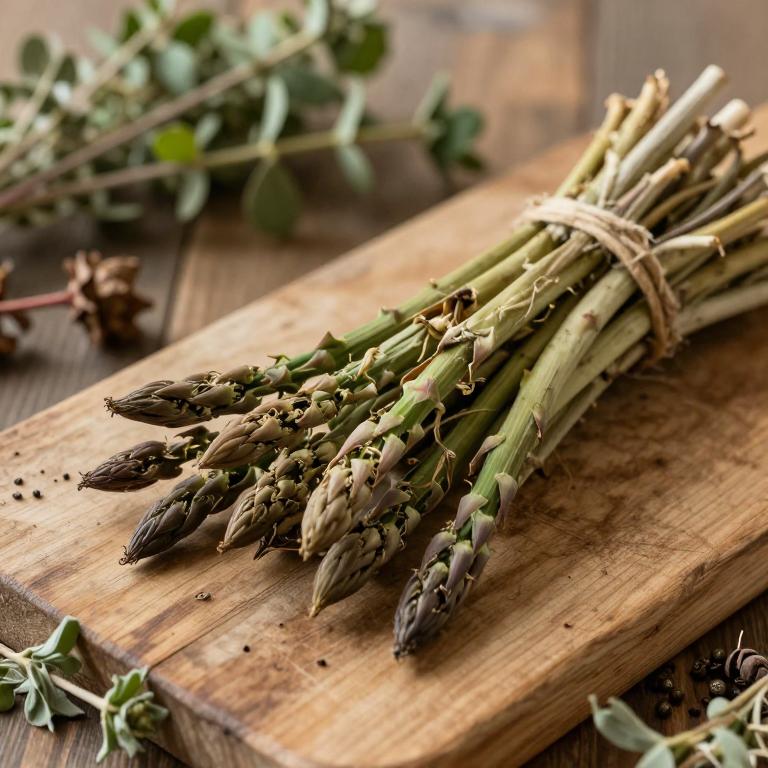
Wild asparagus, scientifically known as Asparagus suaveolens, is a versatile medicinal plant native to various tropical regions. Renowned for its nutritional profile and therapeutic properties, it is traditionally used to support digestive health, reduce inflammation, and act as a diuretic, making it a valuable resource in herbal medicine.
Names and Synonyms
Common Names
- Bushveld Asparagus
- Catthorn Asparagus
- Wild asparagus
Scientific Names
Accepted name
Asparagus suaveolensSynonyms
- Asparagus stipulaceus var. spinescens
- Protasparagus suaveolens
- Asparagus omahekensis
- Asparagopsis suaveolens
- Asparagopsis spinescens
- Asparagopsis triacantha
- Asparagopsis zeyheri
- Asparagus intangibilis
Sources: Wikidata, Catalogue of Life
Taxonomical Classification
This plant belongs to the kingdom Plantae and the phylum Streptophyta, falling under the class Equisetopsida and subclass Magnoliidae. Within the order Asparagales, it is classified under the family Asparagaceae. Finally, it is identified by the genus Asparagus.
| Rank | Classification |
|---|---|
| Kingdom | Plantae |
| Phylum | Streptophyta |
| Class | Equisetopsida |
| Subclass | Magnoliidae |
| Order | Asparagales |
| Family | Asparagaceae |
| Genus | Asparagus |
Sources: The World Checklist of Vascular Plants (WCVP)
Distribution
This plant is widely distributed across several regions within the African continent. In East Tropical Africa, it can be found growing in the countries of Kenya and Tanzania. Its presence also extends into South Tropical Africa, where it inhabits Malawi and Mozambique. Furthermore, the species is documented to occur within the borders of Zimbabwe. Collectively, these locations highlight a significant range spanning both eastern and southern tropical zones.
| Region | Area |
|---|---|
| East Tropical Africa | Kenya |
| East Tropical Africa | Tanzania |
| South Tropical Africa | Malawi |
| South Tropical Africa | Mozambique |
| South Tropical Africa | Zimbabwe |
| Southern Africa | Botswana |
| Southern Africa | Cape Provinces |
| Southern Africa | Lesotho |
| Southern Africa | Namibia |
| Southern Africa | KwaZulu-Natal |
Sources: The World Checklist of Vascular Plants (WCVP)
Botanical Identification
Life history
The life history of Asparagus suaveolens is characterized by its status as a perennial plant, allowing it to persist through multiple growing seasons and establish long-term presence in its habitat. Regarding its structural life form, the species is classified as a hemicryptophyte, a growth habit where the perennating buds are located at the soil surface or just below it, protected by leaf litter or soil during unfavorable conditions. This hemicryptophytic nature ensures its survival and ability to regenerate seasonally, maintaining its biological continuity over time.
- Life form :
- hemicryptophyte
- Lifecycle :
- perennial
Morphology
The morphology of Asparagus suaveolens is characterized by a woody growth form, specifically presenting as a shrub. This plant functions as a self-supporting climber and is an independent species, neither acting as a parasite nor as an epiphyte, as it maintains a strictly terrestrial existence. In terms of stature, the plant exhibits a variable height ranging from a minimum of 0.2 m to a maximum of 1 m, with an average plant height of approximately 1 m.
- Aquatic :
- terrestrial
- Climber :
- self-supporting
- Epiphyte :
- terrestrial
- Growth form :
- shrub
- Parasite :
- independent
- Plant height mean:
- 1 m
- Plant height min:
- 0.2 m
- Woodiness :
- woody
Physiology
The physiology of Asparagus suaveolens is characterized by its specialized metabolic processes and structural adaptations that facilitate survival in diverse environments. As a member of the Asparagaceae family, its physiological functions are centered around efficient nutrient uptake and water management within its climbing or sprawling growth habit. Regarding its interaction with soil chemistry and nutrient cycling, the plant does not function as a nitrogen fixer; it lacks the symbiotic relationship with diazotrophic bacteria, such as Rhizobium, required to convert atmospheric nitrogen into bioavailable forms. Consequently, its nitrogen acquisition is entirely dependent on the uptake of nitrates and ammonium present in the soil through its root system. The plant's metabolic pathways are optimized for photosynthesis within its modified stem segments, often referred to as cladodes, which serve a dual purpose of reducing transpiration while maintaining photosynthetic efficiency. These physiological mechanisms allow the plant to maintain osmotic balance and drive the carbon assimilation necessary for its vegetative expansion and reproductive success.
- Nitrogen fixer :
- no
Reproduction
The reproduction of Asparagus suaveolens is primarily driven by sexual processes facilitated by its floral structures, though the mechanisms of pollination and fertilization are specific to its reproductive biology. In terms of its breeding system, self-fertilization is notably absent, indicating that the plant relies on cross-pollination to ensure genetic diversity. This lack of self-fertilization suggests a dependence on external agents, such as insects or other pollinators, to transfer pollen between different individuals. Following successful pollination, the plant produces fleshy berries that serve as the primary means of seed dispersal, often aided by fauna that consume the fruit and distribute the seeds across new habitats.
- Self fertilization :
- absent
Sources: Global Inventory of Floras and Traits (GIFT)
Chemicals
Asparagus suaveolens has 1 reported phytochemicals identified across 0 scientific publications and several other databases. The most consistently reported chemicals include Palmitone.
| Chemical | Supporting sources | Consensus |
|---|---|---|
| Palmitone | 1 supporting sources | ★☆☆☆☆ |
Palmitone
- Natural product communications
Activities
Asparagus suaveolens has 3 reported activities identified across 0 scientific publications and several other databases. The most consistently reported activities include Antiepileptic, Antigonorrhea, Antimicrobial.
| Activity | Supporting sources | Consensus |
|---|---|---|
| Antiepileptic | 1 supporting sources | ★☆☆☆☆ |
| Antigonorrhea | 1 supporting sources | ★☆☆☆☆ |
| Antimicrobial | 1 supporting sources | ★☆☆☆☆ |
Antiepileptic
- Natural product communications
Antigonorrhea
- Natural product communications
Antimicrobial
- Natural product communications
Conditions
Asparagus suaveolens has 2 reported investigations on conditions identified across 0 scientific publications and several other databases. The most consistently reported conditions include epilepsy, gonorrhea.
| Condition | Supporting sources | Consensus |
|---|---|---|
| Epilepsy | 2 supporting sources | ★☆☆☆☆ |
| Gonorrhea | 1 supporting sources | ★☆☆☆☆ |
Epilepsy
- Journal of ethnopharmacology
- Natural product communications
Gonorrhea
- Natural product communications
Preparations
Asparagus suaveolens has 4 reported preparations identified across 0 scientific publications and several other databases. The most consistently reported preparations include Aqueous extract, ethanol extract, ethanol extract of all six plants extracted together, n-Hexane Fraction.
| Preparation | Supporting sources | Consensus |
|---|---|---|
| Aqueous extract | 1 supporting sources | ★☆☆☆☆ |
| Ethanol extract | 1 supporting sources | ★☆☆☆☆ |
| Ethanol extract of all six plants extracted together | 1 supporting sources | ★☆☆☆☆ |
| N-hexane fraction | 1 supporting sources | ★☆☆☆☆ |
Aqueous extract
- Journal of ethnopharmacology
Ethanol extract
- Journal of ethnopharmacology
Ethanol extract of all six plants extracted together
- Journal of ethnopharmacology
N-hexane fraction
- Natural product communications