Asparagus albus
Asparagus albus · Accepted scientific name
Scientific literature: Very Sparse (5 studies) · ★☆☆☆☆
Asparagus albus, scientifically known as Asparagus albus, is a perennial climbing shrub native to Southern Africa. Renowned for its medicinal properties, this plant is traditionally used in various herbal remedies to treat ailments ranging from digestive issues to inflammatory conditions, offering a rich source of bioactive compounds.
- Family
- Asparagaceae
- Native range
- Europe
- Parts used
- Leaf
- Common names
- Not available
- Scientific synonyms
- Asparagus Pallidus · Asparagopsis Alba
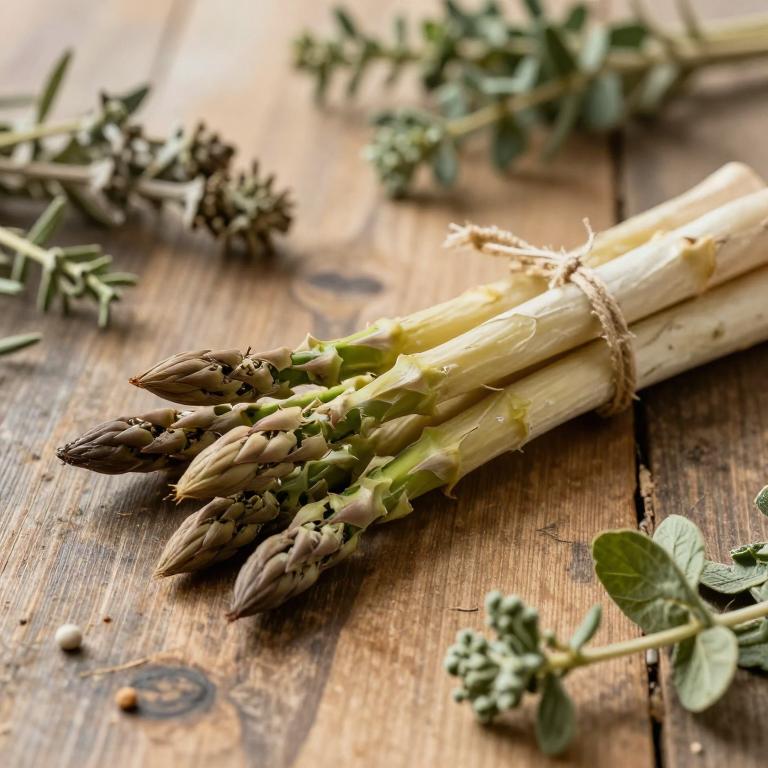
Names and Synonyms
Scientific Names
Accepted name
Asparagus albusSynonyms
- Asparagus pallidus
- Asparagopsis alba
Regional and Traditional Names
Spanish:
- Esparraguera amarguera
- Esparraguera española
- Esparraguera peñera
- Esparraguera peñonera
- Espárrago blanco
- Espárrago de piedra
- Espárragos bordes
- Asparagus pallidus
- Asparagopsis alba
- Esparrago de piedra
- Esparrago blanco
- Esparragos bordes
- Esparraguera espanola
- Esparraguera penera
- Esparraguera penonera
- Espárrago
- Esparraguera blanca
French:
- Asperge Blanche
Sources: Wikidata, Catalogue of Life
Taxonomical Classification
This plant belongs to the kingdom Plantae and is classified under the phylum Streptophyta and class Equisetopsida. Within the subclass Magnoliidae, it is placed in the order Asparagales and the family Asparagaceae. Finally, it is identified by the genus Asparagus, with its specific species designation being Asparagus albus.
| Rank | Classification |
|---|---|
| Kingdom | Plantae |
| Phylum | Streptophyta |
| Class | Equisetopsida |
| Subclass | Magnoliidae |
| Order | Asparagales |
| Family | Asparagaceae |
| Genus | Asparagus |
Sources: The World Checklist of Vascular Plants (WCVP)
Distribution
This plant is primarily distributed across various regions of Southwestern Europe. It can be found growing in the Balearic Islands, which are part of the Baleares archipelago. Additionally, its presence extends to the island of Corsica and the coastal areas of France. The species is also documented within the territory of Portugal. Finally, its geographical range includes the Mediterranean island of Sardinia.
| Region | Area |
|---|---|
| Southwestern Europe | Baleares |
| Southwestern Europe | Corse |
| Southwestern Europe | France |
| Southwestern Europe | Portugal |
| Southwestern Europe | Sardegna |
| Southwestern Europe | Spain |
| Southeastern Europe | Italy |
| Southeastern Europe | Sicilia |
| Northern Africa | Algeria |
| Northern Africa | Libya |
Sources: The World Checklist of Vascular Plants (WCVP)
Botanical Identification
Life history
The life history of Asparagus albus is characterized by a perennial growth strategy where its survival and regenerative capabilities are closely tied to its specific life form classifications. The plant functions primarily as a hemicryptophyte, meaning its perennating buds are located at the soil surface, protected by leaf litter or the upper layers of the substrate, which allows it to endure seasonal fluctuations. Additionally, its development exhibits traits of a chamaephyte, as it maintains low-growing structures with buds positioned just above the ground level, providing a resilient architecture against environmental stressors. This combination of growth habits enables the species to establish stable, long-term presence within its ecological niche, utilizing its specialized bud positioning to facilitate seasonal regrowth and persistence.
- Life form :
- hemicryptophyte
- Life form :
- chamaephyte
Morphology
The morphology of Asparagus albus is characterized by its growth form as a subshrub, exhibiting a non-woody structure throughout its stems. It functions as an independent plant, meaning it does not rely on a host for nutrients, and is strictly terrestrial in its ecological habit rather than being an epiphyte. In terms of its climbing mechanism, the plant is categorized as an obligatory climber, utilizing its habit to ascend, yet it also possesses characteristics of a self-supporting liana or vine.
- Climber :
- self-supporting
- Climber :
- obligatory
- Epiphyte :
- terrestrial
- Growth form :
- subshrub
- Parasite :
- independent
- Woodiness :
- non-woody
Physiology
The physiology of Asparagus albus is characterized by a metabolic framework governed by the C3 photosynthetic pathway, which dictates its carbon fixation processes and resource utilization strategies. As a C3 plant, it utilizes the enzyme Rubisco to fix atmospheric carbon dioxide directly into three-carbon compounds during the Calvin cycle, a process most efficient under temperate or moderate environmental conditions where photorespiration is minimized. This physiological reliance on the C3 pathway influences its water-use efficiency and transpiration rates, as the plant must maintain open stomata for gas exchange, subsequently managing internal water potential through its specialized underground rhizomatous structures. These rhizomes serve as vital physiological storage organs, facilitating nutrient translocation and energy reserves that support seasonal growth cycles and recovery from environmental stressors.
- Photosynthetic pathway :
- C3
Reproduction
The reproduction of Asparagus albus is characterized by the production of fleshy, indehiscent fruits classified as berries. These fruits possess average dimensions of approximately 0.58 cm in length and 0.65 cm in width. Within these berries, the seeds exhibit a highly consistent mass, with a recorded mean of 0.02721 g and a specific measurement of 0.02842 g for both the minimum and maximum values. The dispersal of the species follows a zoochorous syndrome, meaning the seeds are spread via animals, which is facilitated by the fleshy nature of the fruit.
- Dehiscence :
- indehiscent
- Dispersal syndrome :
- zoochorous
- Fruit length mean:
- 0.58 cm
- Fruit type :
- berry
- Fruit width mean:
- 0.65 cm
- Seed mass max:
- 0.02842 g
- Seed mass mean:
- 0.02721 g
Sources: Global Inventory of Floras and Traits (GIFT)
Plant Parts
Asparagus albus has 1 reported plant parts identified across 1 scientific publications and several other databases that are studied for medicinal purposes. The most consistently reported plant part include leaf.
| Plant part | Supporting sources | Consensus |
|---|---|---|
| Leaf | 1 supporting sources | ★☆☆☆☆ |
Leaf
- International journal of environmental health research
Activities
Asparagus albus has 2 reported activities identified across 1 scientific publications and several other databases. The most consistently reported activities include Antidiabetic, Antioxidant.
| Activity | Supporting sources | Consensus |
|---|---|---|
| Antidiabetic | 1 supporting sources | ★☆☆☆☆ |
| Antioxidant | 1 supporting sources | ★☆☆☆☆ |
Antidiabetic
- International journal of environmental health research
Antioxidant
- International journal of environmental health research
Conditions
Asparagus albus has 2 reported investigations on conditions identified across 1 scientific publications and several other databases. The most consistently reported conditions include antidiabetic, antioxidant.
| Condition | Supporting sources | Consensus |
|---|---|---|
| Antidiabetic | 1 supporting sources | ★☆☆☆☆ |
| Antioxidant | 1 supporting sources | ★☆☆☆☆ |
Antidiabetic
- International journal of environmental health research
Antioxidant
- International journal of environmental health research