Asimina angustifolia
Asimina angustifolia · Accepted scientific name
Scientific literature: Very Sparse (14 studies) · ★☆☆☆☆
Asimina angustifolia, scientifically known as Asimina angustifolia, is a remarkable North American perennial celebrated for its medicinal versatility. Often called pawpaw, this plant offers potent antioxidant properties and bioactive compounds. Traditionally used to treat various ailments, it continues to fascinate modern researchers exploring its diverse pharmacological potential and benefits.
- Family
- Annonaceae
- Native range
- Northern America
- Parts used
- Leaf
- Common names
- Not available
- Scientific synonyms
- Pityothamnus Angustifolius · Asimina Longifolia Var. Spatulata · 2 more
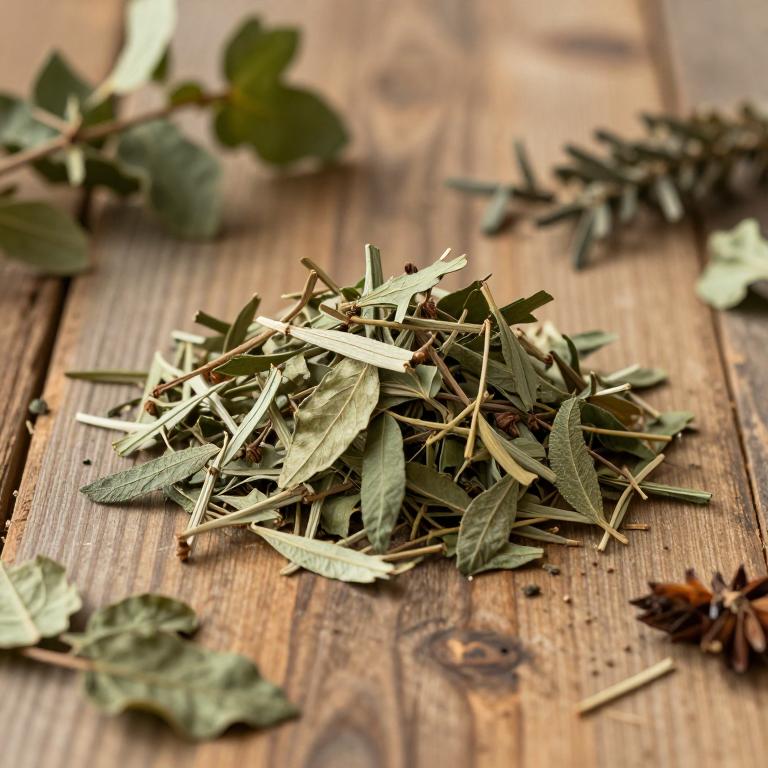
Names and Synonyms
Scientific Names
Accepted name
Asimina angustifoliaSynonyms
- Pityothamnus angustifolius
- Asimina longifolia var. spatulata
- Asimina spatulata
- Asimina longifolia
Sources: Wikidata, Catalogue of Life
Taxonomical Classification
This plant, Asimina angustifolia, belongs to the kingdom Plantae and the phylum Streptophyta. It is classified within the class Equisetopsida and the subclass Magnoliidae under the order Magnoliales. Finally, it is a member of the family Annonaceae and the genus Asimina.
| Rank | Classification |
|---|---|
| Kingdom | Plantae |
| Phylum | Streptophyta |
| Class | Equisetopsida |
| Subclass | Magnoliidae |
| Order | Magnoliales |
| Family | Annonaceae |
| Genus | Asimina |
Sources: The World Checklist of Vascular Plants (WCVP)
Distribution
This plant exhibits a specific range within the Southeastern United States. Its geographical presence is primarily concentrated in a few key states. Specifically, it can be found growing in the forests of Alabama. Additionally, the species is distributed throughout the state of Georgia. Finally, its habitat extends further south into Florida.
| Region | Area |
|---|---|
| Southeastern U.S.A. | Alabama |
| Southeastern U.S.A. | Florida |
| Southeastern U.S.A. | Georgia |
Sources: The World Checklist of Vascular Plants (WCVP)
Botanical Identification
Life history
The life history of Asimina angustifolia is characterized by its status as a perennial species, allowing it to persist in its environment over multiple growing seasons. As a long-lived plant, it follows a developmental cycle that involves establishing a robust root system to support its continued growth and survival through various seasonal shifts. This perennial nature enables the plant to undergo repeated cycles of vegetative expansion and reproductive effort, contributing to its long-term presence within its natural habitat.
- Lifecycle :
- perennial
Morphology
The morphology of Asimina angustifolia is characterized by a woody growth form, specifically manifesting as a shrub or subshrub. In terms of its ecological habit, the plant is classified as terrestrial, lacking aquatic or semiaquatic tendencies, and it functions as an independent organism rather than a parasite. It does not exhibit epiphytic behavior, remaining firmly rooted in the ground. While some species in similar categories may display climbing tendencies, this plant is categorized as a self-supporting structure, lacking the liana, vine, or obligatory climbing habits often seen in other taxa, and instead maintaining a sturdy, woody architecture.
- Aquatic :
- terrestrial
- Climber :
- self-supporting
- Epiphyte :
- terrestrial
- Growth form :
- shrub
- Parasite :
- independent
- Woodiness :
- woody
Sources: Global Inventory of Floras and Traits (GIFT)
Plant Parts
Asimina angustifolia has 1 reported plant parts identified across 2 scientific publications and several other databases that are studied for medicinal purposes. The most consistently reported plant part include leaf.
| Plant part | Supporting sources | Consensus |
|---|---|---|
| Leaf | 2 supporting sources | ★☆☆☆☆ |
Leaf
- Bioorganic & medicinal chemistry
- Journal of natural products
Chemicals
Asimina angustifolia has 7 reported phytochemicals identified across 2 scientific publications and several other databases. The most consistently reported chemicals include Annonacin, Goniothalamicin, Isoannonacin, Longicin, Longicoricin.
| Chemical | Supporting sources | Consensus |
|---|---|---|
| Annonacin | 1 supporting sources | ★☆☆☆☆ |
| Goniothalamicin | 1 supporting sources | ★☆☆☆☆ |
| Isoannonacin | 1 supporting sources | ★☆☆☆☆ |
| Longicin | 1 supporting sources | ★☆☆☆☆ |
| Longicoricin | 1 supporting sources | ★☆☆☆☆ |
| Longifolicin | 1 supporting sources | ★☆☆☆☆ |
| xylomaticin | 1 supporting sources | ★☆☆☆☆ |
Annonacin
- Journal of natural products
Goniothalamicin
- Journal of natural products
Isoannonacin
- Journal of natural products
Longicin
- Journal of natural products
Longicoricin
- Bioorganic & medicinal chemistry
Longifolicin
- Bioorganic & medicinal chemistry
xylomaticin
- Journal of natural products
Preparations
Asimina angustifolia has 1 reported preparations identified across 2 scientific publications and several other databases. The most consistently reported preparations include ethanol extract.
| Preparation | Supporting sources | Consensus |
|---|---|---|
| Ethanol extract | 1 supporting sources | ★☆☆☆☆ |
Ethanol extract
- Journal of medicinal chemistry