long-tailed wild ginger
Asarum caudatum · Accepted scientific name
Scientific literature: Very Sparse (2 studies) · ★☆☆☆☆
Long-tailed wild ginger, scientifically known as Asarum caudatum, is a perennial herb native to North American forests. Renowned for its aromatic rhizomes, this plant has historically been used in traditional medicine to treat digestive ailments and respiratory issues. It remains a significant subject in ethnobotanical studies regarding natural remedies.
- Family
- Aristolochiaceae
- Native range
- Northern America
- Parts used
- Not available
- Common names
- Long-Tailed Wild Ginger · Western Wild Ginger · 2 more
- Scientific synonyms
- Asarum Caudatum F. Chloroleucum · Asarum Hookeri
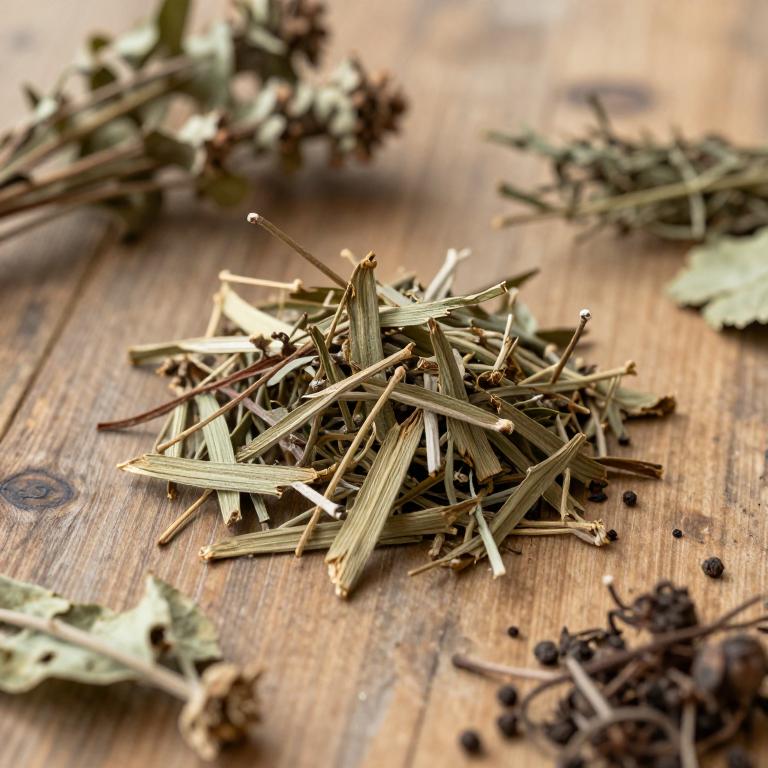
Names and Synonyms
Common Names
- long-tailed wild ginger
- western wild ginger
- wild ginger
- Longtail Wild Ginger
Scientific Names
Accepted name
Asarum caudatumSynonyms
- Asarum caudatum f. chloroleucum
- Asarum hookeri
Regional and Traditional Names
German:
- geschwänzte Haselwurz
French:
- asaret caudé
Sources: Wikidata, Catalogue of Life
Taxonomical Classification
This plant belongs to the kingdom Plantae and is classified under the phylum Streptophyta within the class Equisetopsida. It falls under the subclass Magnoliidae and the order Piperales, specifically being a member of the family Aristolochiaceae. Ultimately, the medicinal species is identified by the genus Asarum and the specific epithet caudatum.
| Rank | Classification |
|---|---|
| Kingdom | Plantae |
| Phylum | Streptophyta |
| Class | Equisetopsida |
| Subclass | Magnoliidae |
| Order | Piperales |
| Family | Aristolochiaceae |
| Genus | Asarum |
Sources: The World Checklist of Vascular Plants (WCVP)
Distribution
This plant, Asarum caudatum, exhibits a specific distribution across the western regions of North America. In Western Canada, its presence is primarily noted within the province of British Columbia. The species also extends into the Northwestern United States, where it can be found in Idaho. Furthermore, it inhabits the mountainous landscapes of Montana. Finally, its range continues through the Northwestern U.S.A. states of Oregon and Washington.
| Region | Area |
|---|---|
| Western Canada | British Columbia |
| Northwestern U.S.A. | Idaho |
| Northwestern U.S.A. | Montana |
| Northwestern U.S.A. | Oregon |
| Northwestern U.S.A. | Washington |
| Southwestern U.S.A. | California |
Sources: The World Checklist of Vascular Plants (WCVP)
Botanical Identification
Life history
The life history of Asarum caudatum is characterized by its status as a perennial plant, meaning it survives for multiple years and undergoes repeated cycles of growth and dormancy. As a long-lived species, it establishes a stable presence within its ecological niche, typically emerging from underground rhizomes to produce foliage and reproductive structures during the growing season. This perennial nature allows the plant to invest energy into robust root systems and storage organs, which provide the necessary resources to endure unfavorable environmental conditions and re-emerge in subsequent seasons. Its developmental pattern is consistent with other perennial herbs, focusing on long-term persistence rather than the rapid, single-season completion seen in annual or biennial species.
- Lifecycle :
- perennial
Morphology
The morphology of Asarum caudatum is characterized by a growth form categorized as both a herb and a forb, manifesting as a non-woody organism. It functions as an independent plant, neither acting as a parasite nor as an epiphyte, as it maintains a primarily terrestrial existence. Although its habitat can vary across aquatic, semiaquatic, and terrestrial environments, its structural habit is defined as self-supporting, lacking the climbing mechanisms of a liana or vine.
- Aquatic :
- terrestrial
- Climber :
- self-supporting
- Epiphyte :
- terrestrial
- Growth form :
- herb
- Growth form :
- forb
- Parasite :
- independent
- Woodiness :
- non-woody
Sources: Global Inventory of Floras and Traits (GIFT)
Chemicals
Asarum caudatum has 1 reported phytochemicals identified across 0 scientific publications and several other databases. The most consistently reported chemicals include Aristolochic acid I.
| Chemical | Supporting sources | Consensus |
|---|---|---|
| Aristolochic acid I | 1 supporting sources | ★☆☆☆☆ |
Aristolochic acid I
- Die Pharmazie
Preparations
Asarum caudatum has 1 reported preparations identified across 0 scientific publications and several other databases. The most consistently reported preparations include whole plant.
| Preparation | Supporting sources | Consensus |
|---|---|---|
| Whole plant | 1 supporting sources | ★☆☆☆☆ |
Whole plant
- Journal of ethnopharmacology