Arundo donax
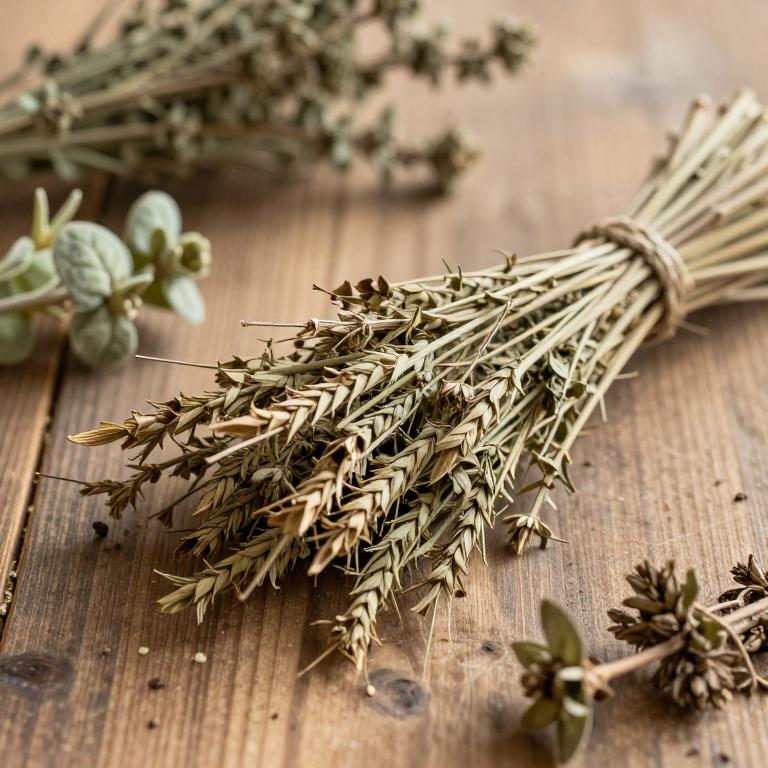
What's the taxonomical classification of Arundo donax?
Arundo donax belongs to the kingdom Plantae and is classified under the phylum Streptophyta. Within the class Equisetopsida, it falls under the subclass Magnoliidae and is categorized under the order Poales. This plant is a member of the family Poaceae, which places it within the genus Arundo, and it is specifically identified by its species name, donaax.
| Taxonomic Rank | Classification |
|---|---|
| Kingdom | Plantae |
| Phylum | Streptophyta |
| Class | Equisetopsida |
| Subclass | Magnoliidae |
| Order | Poales |
| Family | Poaceae |
| Genus | Arundo |
| Species | donax |
What are the morphological characteristics of this plant?
Arundo donax has tall, perennial, rhizomatous stalks that reach heights of up to 6 meters and feature thick, woody stems with prominent nodes. These stems are hollow and cylindrical, often reaching diameters of several centimeters as they grow in dense clumps. The leaves are long, linear, and lanceolate, measuring up to 1 meter in length with a distinct midrib and parallel venation. Large, feathery panicles emerge at the top of the culms to produce numerous small, cream-colored flowers. The entire plant is characterized by a robust, grass-like appearance supported by a vigorous underground spreading system.
What is the geographical distribution of this plant?
This plant is native to the Mediterranean Basin, including regions across Southern Europe, North Africa, and Western Asia. While its natural range is centered around these warm climates, it has become widely established in many other parts of the world. It frequently colonizes riparian zones and wetlands in subtropical and temperate areas of the Americas, Australia, and South Africa. These invasive populations often thrive in disturbed habitats near water sources where they can spread rapidly. Consequently, its distribution has expanded globally due to human activity and its ability to adapt to various moist environments.
How is this plant cultivated?
This plant, Arundo donax, is cultivated by planting rhizomes or stem cuttings in well-drained, moist soils with high nutrient availability and full sun exposure.
It grows rapidly in riparian zones or areas with consistent access to water sources. Growers often manage this species as a biomass crop or for ornamental purposes due to its tall, bamboo-like stalks. Because it is highly invasive in many ecosystems, careful containment and monitoring are required during the cultivation process.
Regular pruning can help maintain its structure and encourage vigorous regrowth.
What parts of this plant are used medicinally?
This plant Arundo donax is primarily utilized for its medicinal properties through the application of its rhizome. The underground stems contain various bioactive compounds that can be processed for therapeutic use. These rhizomes are often dried and ground into powders to treat inflammatory conditions or digestive issues. In some traditional practices, extracts from these root-like structures are applied topically to soothe skin irritations. Researchers continue to study the chemical constituents within these parts to unlock further healing potential.
According to a study published by "Zhongguo Zhong yao za zh𝘪 = Zhongguo zhongyao zazhi = China journal of Chinese materia medica", the research explores the main differential characteristics of the rhizomes of Arundo donax. This study aims to provide an experimental basis for the reasonable applications of gramineous plants through system research. The investigation involves a comparison of plant morphogenesis, character, transverse organization characteristics and powder microscopic characteristics. The study specifically focuses on the identification of Arundo donax and its counterfeit rhizomes.
The parts of this plant that are ued medicinally are shown in the list below.
- rhizome
What traditional systems uses this plant?
This plant, Arundo donax, has been traditionally utilized as a versatile raw material for crafting various functional objects like musical instruments, fishing rods, and thatched roofing.
Throughout history, various Mediterranean and Asian cultures harvested its large, hollow canes to construct lightweight scaffolding and temporary shelters. The sturdy stems were frequently split and woven into mats or used as structural components in traditional basketry. In certain regions, the plant also served as a primitive tool for making pipes and flutes due to its natural resonance.
These historical applications highlight its importance as a readily available resource for essential daily implements.
What are the pharmacological activities of Arundo donax?
This plant has various pharmacological activities including anthelmintic, antimicrobial, antipyretic, antitussive, and carminative properties. Its anthelmintic action allows it to be used in treating intestinal worm infestations. The presence of antimicrobial compounds helps the plant combat diverse bacterial and fungal infections. It also functions as an antipyretic to reduce fever and as an antitussive to suppress coughing. Additionally, its carminative effects assist in relieving gastrointestinal discomfort and gas.
According to a study published by "Revista brasileira de parasitologia veterinaria = Brazilian journal of veterinary parasitology : Orgao Oficial do Colegio Brasileiro de Parasitolologia Veterinaria", the anthelmintic activities of Arundo donax L. were determined using in vitro and in vivo tests. The research utilized an egg hatch assay (EHA), an adult motility assay (AMA), and a faecal egg count reduction test (FECRT) against the Haemoncchus contortus model. In the EHA, Arundo donax L. was identified as an ovicide, following the potency of Areca catechu and Ferula assa-foetida. Results from the FECRT indicated that the extract of Arundo donax L. was less effective than the extract of Ferula assa-foetida L. against gastrointestinal parasitic nematodes. Additionally, the crude aqueous methanol extracts (CAME) of the plant were better than its crude powders in vivo.
The primary pharmacological activities of this plant are shown in the list below.
- anthelmintic
- antimicrobial
- antipyretic
- antitussive
- carminative
What medicinal compounds this plant contains?
This plant contains various bioactive compounds including flavonoids, phenols, tannins, saponins, and alkaloids that contribute to its medicinal properties. These chemical constituents are often studied for their potential antioxidant and anti-inflammatory activities in biological systems. Specific phenolic compounds found within the stalks and rhizomes may also exhibit antimicrobial effects against certain pathogens. Researchers investigate these phytochemicals to understand how they might be utilized in developing new therapeutic agents. The complex mixture of secondary metabolites makes Arundo donax a subject of interest in ethnopharmacological studies.
What health conditions is this plant used for?
This plant is used for treating cough, fever, gastrointestinal parasitic nematodes, helminthiasis, and worm infestation. It contains bioactive compounds that help reduce inflammation and soothe respiratory distress. The medicinal properties of the plant are specifically effective in eliminating various intestinal parasites. Patients often utilize it to combat the discomfort associated with different types of worm infestation. By targeting these specific ailments, the plant serves as a traditional remedy for multiple digestive and systemic issues.
According to a study published by "Journal of ethnobiology and ethnomedicine", Arundo donax is one of five grasses that showed a 100% FL value. This plant is used to treat diuretics, helminthiasis, digestive problems, fever, cough, worm infestation, indigestion, galactagogue, oral infections, and genital prolapse. The study involved a total of 114 plant species from 56 families to treat 16 different illnesses. Among the informants, N = 279 were interviewed to collect data regarding these medicinal applications.
The main health conditions this plant is used for are shown in the list below.
- cough
- fever
- digestive problems
- indigestion
- gastrointestinial parasitic nematodes
What are the herbal preparations of this plant?
This plant is Arundo donax, a species utilized in the development of medicinal herbal preparations including crude aqueous methanol extracts and chloroform fractions. Researchers focus on these specific extracts to isolate bioactive compounds that may possess therapeutic properties. The crude aqueous methanol extracts serve as a primary method for capturing a wide range of polar and semi-polar phytochemicals. In contrast, the chloroform fractions are used to target more lipophilic constituents within the plant material. Studying these diverse preparations helps determine the specific chemical profiles responsible for any potential pharmacological effects.
According to a study published by "Revista brasileira de parasitologia veterinaria = Brazilian journal of veterinary parasitology : Orgao Oficial do Colegio Brasileiro de Parasitologia Veterinaria", the anthelmintic activities of Arundo donax L. were determined using leaves in different solvent fractions. These leaves were subjected to in vitro egg hatch assay (EHA), adult motility assay (AMA), and in vivo faecal egg count reduction test (FECRT) using the Haemoncchus contortus model. In the EHA, Arundo donax L. was identified as a potent ovicide, though it followed other tested plants in potency. Results from the FECRT showed that the extract of Arundo donax L. was less effective than others against gastrointestinal parasitic nematodes. The study also noted that crude aqueous methanol extracts were better than crude powders in vivo.
The main herbal preparations of this plant are shown in the list below.
- chloroform fractions
- crude aqueous methanol extracts
What side effects this plant can have?
This plant can cause a variety of adverse health reactions including cough, cystitis, digestive problems, fever, and indigestion. Exposure to the plant may lead to respiratory distress manifested through a persistent cough. Some individuals might experience urinary tract irritation resulting in cystitis after contact. Gastrointestinal issues such as indigestion and various other digestive problems are also commonly reported side effects. Additionally, systemic reactions like a sudden fever may occur following ingestion or significant exposure.
According to a study published by "Journal of ethnobiology and ethnomedicine", Arundo donax is one of five grasses that showed a 100% FL value. This plant is utilized to treat diuretics, helminthiasis, digestive problems, fever, cough, worm infestation, indigestion, galactagogue, oral infections, and genital prolapse. The study involved a total of N = 279 informants to document 114 plant species from 56 families. While the study mentions a maximum disease cured level (DCL%) of 87.6% for endo- and ecto-parasitic ailments, it does not list specific negative health side effects for Arundo donax.
The main side effects this plant can have are shown in the list below.
- cough
- cystitis
- digestive problems
- fever
- indigestion
What herbs are paired with Arundo donax?
This plant Arundo donax pairs effectively with aromatic herbs like rosemary, lavender, and sage to enhance its structural role in landscape design.
Because the giant cane provides a dense and linear backdrop, these herbs offer a textural contrast through their fine leaves and varied heights. Using lavender alongside the stalks creates a striking visual balance between the tall, swaying canes and the low, flowering mounds. Integrating rosemary adds a woody scent and a deep green color that complements the golden hues of the dried grass.
These combinations help integrate the large scale of the cane into more intimate garden beds.