Arum palestinum
Arum palaestinum · Accepted scientific name
Scientific literature: Very Sparse (10 studies) · ★☆☆☆☆
Arum palestinum, scientifically known as Arum palaestinum, is a distinctive perennial herb native to the Mediterranean region. Characterized by its unique spadix and spathe, this plant holds significant ethnobotanical value. Historically used in traditional medicine, it requires careful handling due to the presence of irritating calcium oxalate crystals.
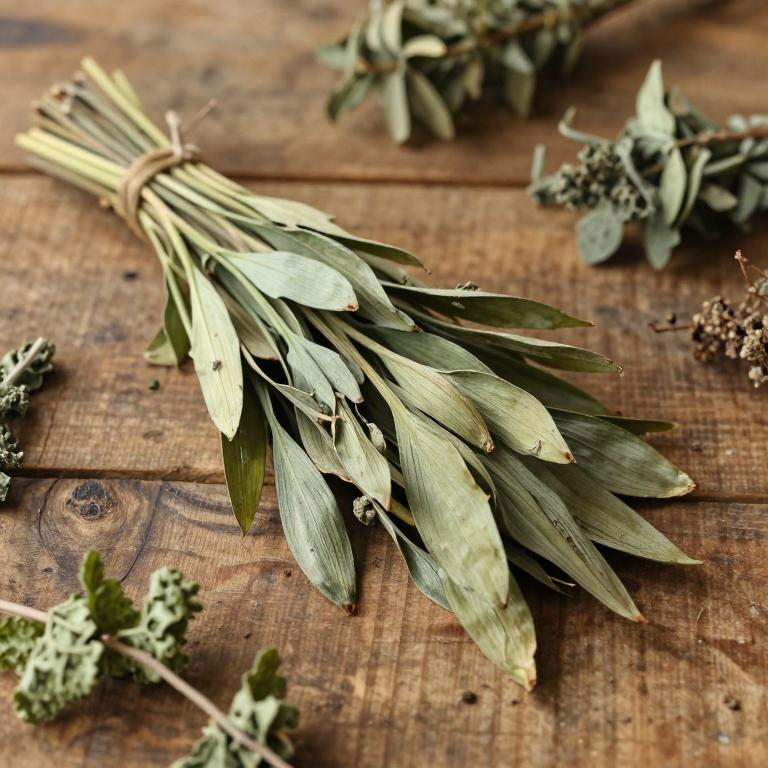
Names and Synonyms
Common Names
- Solomon's-lily
- black-calla
- Palestine arum
- black arum
- black calla
- solomon's lily
Scientific Names
Accepted name
Arum palaestinumSynonyms
- Arum magdalenae
- Arum sanctum
- Richardia sancta
Regional and Traditional Names
Spanish:
- Arum palestinum
German:
- Arum palestinum
French:
- Arum palestinum
Sources: Wikidata, Catalogue of Life
Taxonomical Classification
This plant belongs to the kingdom Plantae within the phylum Streptophyta and is classified under the class Equisetopsida. As a member of the subclass Magnoliidae and order Alismatales, it falls into the family Araceae. Finally, its taxonomic identity is defined by its placement within the genus Arum.
| Rank | Classification |
|---|---|
| Kingdom | Plantae |
| Phylum | Streptophyta |
| Class | Equisetopsida |
| Subclass | Magnoliidae |
| Order | Alismatales |
| Family | Araceae |
| Genus | Arum |
Sources: The World Checklist of Vascular Plants (WCVP)
Distribution
This plant exhibits a specific geographical distribution that spans across different continents. In Western Asia, it can be found growing within the regions of Lebanon and Syria. Its presence is also documented throughout Palestine in the same part of the world. Interestingly, the species extends its reach across the ocean to the Southwestern United States. Specifically, it has been identified as growing in the state of California.
| Region | Area |
|---|---|
| Western Asia | Lebanon-Syria |
| Western Asia | Palestine |
| Southwestern U.S.A. | California |
Sources: The World Checklist of Vascular Plants (WCVP)
Botanical Identification
Life history
The life history of Arum palaestinum is characterized by a perennial lifecycle, allowing the plant to persist in its habitat over multiple growing seasons. As a geophyte, it survives unfavorable environmental conditions by retreating into specialized underground storage organs, such as tubers or corms, which protect its vital structures from extreme temperatures or drought. This evolutionary strategy classifies it as a cryptophyte, as its essential regenerative parts remain concealed beneath the soil surface during its dormant periods.
- Life form :
- geophyte
- Life form :
- cryptophyte
- Lifecycle :
- perennial
Morphology
The morphology of Arum palaestinum is characterized by a growth form consisting of a non-woody herb and forb, which typically develops from a subterranean structure. As a terrestrial plant, it does not exhibit aquatic or semiaquatic tendencies, nor does it function as an epiphyte, instead maintaining a strictly terrestrial existence. The plant is an independent organism, lacking any parasitic nature, and it maintains a self-supporting structure rather than acting as a liana, vine, or any other form of climber. Its physical constitution is entirely non-woody, consistent with its herbaceous life cycle.
- Aquatic :
- terrestrial
- Climber :
- self-supporting
- Epiphyte :
- terrestrial
- Growth form :
- herb
- Growth form :
- forb
- Parasite :
- independent
- Woodiness :
- non-woody
Sources: Global Inventory of Floras and Traits (GIFT)
Plant Parts
Arum palaestinum has 1 reported plant parts identified across 2 scientific publications and several other databases that are studied for medicinal purposes. The most consistently reported plant part include leaf.
| Plant part | Supporting sources | Consensus |
|---|---|---|
| Leaf | 2 supporting sources | ★☆☆☆☆ |
Leaf
- Journal of complementary & integrative medicine
- Pakistan journal of biological sciences : PJBS
Chemicals
Arum palaestinum has 4 reported phytochemicals identified across 2 scientific publications and several other databases. The most consistently reported chemicals include Apigenin 8-C-glucoside, Isoorientin, Luteolin-6-C-glucoside, Vitexin.
| Chemical | Supporting sources | Consensus |
|---|---|---|
| Apigenin 8-C-glucoside | 1 supporting sources | ★☆☆☆☆ |
| Isoorientin | 1 supporting sources | ★☆☆☆☆ |
| Luteolin-6-C-glucoside | 1 supporting sources | ★☆☆☆☆ |
| Vitexin | 1 supporting sources | ★☆☆☆☆ |
Apigenin 8-C-glucoside
- Journal of ethnopharmacology
Isoorientin
- Journal of ethnopharmacology
Luteolin-6-C-glucoside
- Journal of ethnopharmacology
Vitexin
- Journal of ethnopharmacology
Activities
Arum palaestinum has 2 reported activities identified across 2 scientific publications and several other databases. The most consistently reported activities include Antioxidant, Antitumor.
| Activity | Supporting sources | Consensus |
|---|---|---|
| Antioxidant | 1 supporting sources | ★☆☆☆☆ |
| Antitumor | 1 supporting sources | ★☆☆☆☆ |
Antioxidant
- Pharmaceutical biology
Antitumor
- Pharmaceutical biology
Conditions
Arum palaestinum has 2 reported investigations on conditions identified across 2 scientific publications and several other databases. The most consistently reported conditions include COVID-19, cancer.
| Condition | Supporting sources | Consensus |
|---|---|---|
| Covid-19 | 1 supporting sources | ★☆☆☆☆ |
| Cancer | 1 supporting sources | ★☆☆☆☆ |
Covid-19
- Alternative therapies in health and medicine
Cancer
- Pharmaceuticals (Basel, Switzerland)
Preparations
Arum palaestinum has 1 reported preparations identified across 2 scientific publications and several other databases. The most consistently reported preparations include lipophilic fractions.
| Preparation | Supporting sources | Consensus |
|---|---|---|
| Lipophilic fractions | 1 supporting sources | ★☆☆☆☆ |
Lipophilic fractions
- Journal of complementary & integrative medicine