Artocarpus nanchuanensis
Artocarpus nanchuanensis · Accepted scientific name
Scientific literature: Very Sparse (11 studies) · ★☆☆☆☆
, scientifically known as Artocarpus nanchuanensis, is a remarkable medicinal plant belonging to the Moraceae family. Native to tropical regions, it holds significant ethnobotanical value. Researchers are increasingly exploring its bioactive compounds, which offer potential therapeutic benefits in treating inflammation and various ailments, highlighting its immense pharmacological importance.
- Family
- Moraceae
- Native range
- Asia-Temperate
- Parts used
- Fruit
- Common names
- Not available
- Scientific synonyms
- Not available
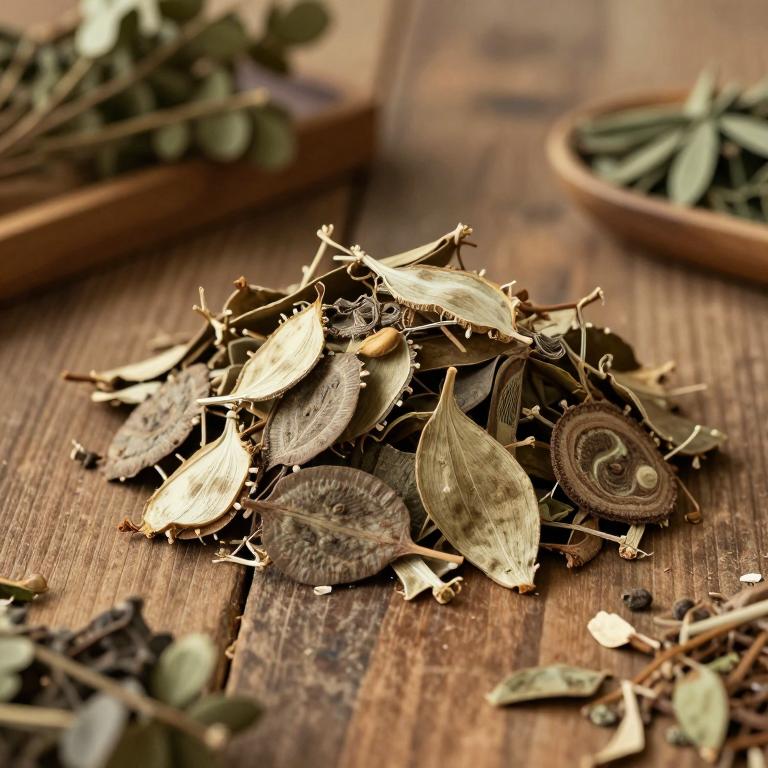
Names and Synonyms
Scientific Names
Accepted name
Artocarpus nanchuanensisSources: Wikidata, Catalogue of Life
Taxonomical Classification
This plant belongs to the kingdom Plantae and is classified under the phylum Streptophyta within the class Equisetopsida. As a member of the subclass Magnoliidae and the order Rosalales, it is situated in the family Moraceae. Ultimately, its taxonomic identity is defined by its placement within the genus Artocarpus.
| Rank | Classification |
|---|---|
| Kingdom | Plantae |
| Phylum | Streptophyta |
| Class | Equisetopsida |
| Subclass | Magnoliidae |
| Order | Rosales |
| Family | Moraceae |
| Genus | Artocarpus |
Sources: The World Checklist of Vascular Plants (WCVP)
Distribution
This plant, known scientifically as Artocarpus nanchuanensis, exhibits a specific geographical distribution within Asia. Its natural habitat is primarily located within the diverse ecosystems of China. More specifically, the species is found concentrated in the South-Central region of the country. This particular area provides the necessary environmental conditions required for its growth and survival. Consequently, its range remains localized to these specific southern provinces of China.
| Region | Area |
|---|---|
| China | China South-Central |
Sources: The World Checklist of Vascular Plants (WCVP)
Botanical Identification
Ecology
The ecology of Artocarpus nanchuanensis is characterized by a highly specific altitudinal niche, as the species is consistently documented at a precise elevation. Based on ecological data, the plant thrives at a singular elevation of 560 m AMSL, with both the minimum, maximum, and mean elevational ranges converging at this exact value of 560 m AMSL. This narrow vertical distribution suggests that the species is specialized to the particular environmental conditions, such as temperature, humidity, and atmospheric pressure, found at this specific altitude within its habitat.
- Elevational range max:
- 560 m AMSL
Life history
The life history of Artocarpus nanchuanenensis is characterized by a perennial lifecycle, meaning the plant persists for many years throughout its existence. As a long-lived woody species, it does not follow the rapid turnover of annual or biennial plants but instead invests in sustained structural growth and long-term survival within its ecosystem. This perennial nature allows the plant to establish a permanent presence, undergoing successive cycles of seasonal development, vegetative expansion, and reproductive phases over many years.
- Lifecycle :
- perennial
Morphology
The morphology of Artocarpus nanchuanenis is characterized by its robust growth form as a tree, exhibiting a primarily woody structure. This species typically reaches a substantial plant height with a mean measurement of approximately 25 m. In terms of its habit, the plant is classified as a self-supporting tree rather than a climber, maintaining its own structural integrity through its woody development.
- Climber :
- self-supporting
- Growth form :
- tree
- Plant height mean:
- 25 m
- Woodiness :
- woody
Physiology
The physiology of Artocarpus nanchuanenis is characterized by distinct morphological dimensions of its foliage, which play a critical role in its photosynthetic capacity and gas exchange processes. The leaf structure exhibits significant variability in size, with leaf lengths ranging from a minimum of 12 cm to a maximum of 18 cm, maintaining an average length of 15 cm. Complementing this longitudinal dimension, the leaf width demonstrates a specialized range, fluctuating between a minimum of 7 cm and a maximum of 11 cm, with a mean width recorded at 9 cm. These specific leaf dimensions contribute to the overall surface area optimization, facilitating efficient light interception and metabolic regulation essential for the plant's physiological development and medicinal potency.
- Leaf length max:
- 18 cm
- Leaf length mean:
- 15 cm
- Leaf length min:
- 12 cm
- Leaf width max:
- 11 cm
- Leaf width mean:
- 9 cm
- Leaf width min:
- 7 cm
Sources: Global Inventory of Floras and Traits (GIFT)
Plant Parts
Artocarpus nanchuanensis has 1 reported plant parts identified across 1 scientific publications and several other databases that are studied for medicinal purposes. The most consistently reported plant part include fruit.
| Plant part | Supporting sources | Consensus |
|---|---|---|
| Fruit | 1 supporting sources | ★☆☆☆☆ |
Fruit
- Frontiers in plant science
Chemicals
Artocarpus nanchuanensis has 9 reported phytochemicals identified across 1 scientific publications and several other databases. The most consistently reported chemicals include Anthriscifolcine A, Flavonoid, Flavonoids, Nepetin, Pterolactam.
| Chemical | Supporting sources | Consensus |
|---|---|---|
| Anthriscifolcine A | 1 supporting sources | ★☆☆☆☆ |
| Flavonoid | 1 supporting sources | ★☆☆☆☆ |
| Flavonoids | 1 supporting sources | ★☆☆☆☆ |
| Nepetin | 1 supporting sources | ★☆☆☆☆ |
| Pterolactam | 1 supporting sources | ★☆☆☆☆ |
| Tetrahydroharmol | 1 supporting sources | ★☆☆☆☆ |
| gingerol | 1 supporting sources | ★☆☆☆☆ |
| luteolin | 1 supporting sources | ★☆☆☆☆ |
| vitamin C | 1 supporting sources | ★☆☆☆☆ |
Anthriscifolcine A
- Frontiers in plant science
Flavonoid
- GigaScience
Flavonoids
- Frontiers in plant science
Nepetin
- Frontiers in plant science
Pterolactam
- Frontiers in plant science
Tetrahydroharmol
- Frontiers in plant science
gingerol
- GigaScience
luteolin
- Frontiers in plant science
vitamin C
- Frontiers in plant science