Artocarpus gomezianus
Artocarpus gomezianus · Accepted scientific name
Scientific literature: Very Sparse (6 studies) · ★☆☆☆☆
Artocarpus gomezianus, scientifically known as Artocarpus gomezianus, is a remarkable medicinal plant native to tropical regions. Valued in traditional medicine, its various parts, including bark and leaves, possess potent bioactive compounds. These properties offer significant therapeutic potential for treating diverse ailments, highlighting its importance in ethnobotanical research and pharmacology.
- Family
- Moraceae
- Native range
- Asia-Tropical
- Parts used
- Root
- Common names
- Not available
- Scientific synonyms
- Saccus Petiolaris · Artocarpus Pomiformis · 3 more
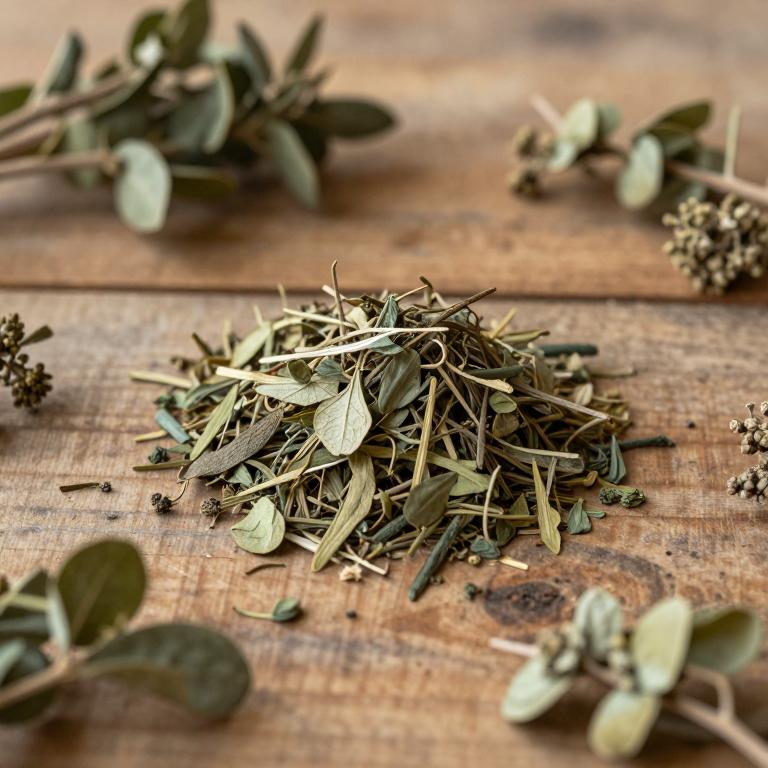
Names and Synonyms
Scientific Names
Accepted name
Artocarpus gomezianusSynonyms
- Saccus petiolaris
- Artocarpus pomiformis
- Saccus gomezianus
- Artocarpus petiolaris
- Artocarpus masticatus
Sources: Wikidata, Catalogue of Life
Taxonomical Classification
This plant belongs to the kingdom Plantae and the phylum Streptophyta, falling under the class Equisetopsida and subclass Magnoliidae. Within the order Rosales, it is classified under the family Moraceae and the genus Artocarpus. Specifically, its scientific identity is established as Artocarpus gomezianus.
| Rank | Classification |
|---|---|
| Kingdom | Plantae |
| Phylum | Streptophyta |
| Class | Equisetopsida |
| Subclass | Magnoliidae |
| Order | Rosales |
| Family | Moraceae |
| Genus | Artocarpus |
Sources: The World Checklist of Vascular Plants (WCVP)
Distribution
This plant exhibits a specific geographical distribution across parts of Asia. Within the Indian Subcontinent, it can be found in the region of Assam. Its presence extends into Indo-China, where it is located on the Andaman Islands. Furthermore, the species is distributed throughout Cambodia and Laos. Finally, its range includes the territory of Myanmar.
| Region | Area |
|---|---|
| Indian Subcontinent | Assam |
| Indo-China | Andaman Is. |
| Indo-China | Cambodia |
| Indo-China | Laos |
| Indo-China | Myanmar |
| Indo-China | Nicobar Is. |
| Indo-China | Thailand |
| Indo-China | Vietnam |
| Malesia | Jawa |
| Malesia | Malaya |
Sources: The World Checklist of Vascular Plants (WCVP)
Botanical Identification
Life history
The life history of Artocarpus gomezianus is characterized by its status as a perennial organism, meaning it maintains its biological functions and structure over many years rather than completing a single reproductive cycle in a short period. Throughout its long lifespan, the plant exhibits an evergreen habit, ensuring that its foliage remains lush and functional across successive growing seasons without the need for a period of seasonal leaf shedding. This continuous presence of green biomass allows for sustained photosynthetic activity, supporting its long-term growth and reproductive capabilities within its natural habitat.
- Deciduousness :
- evergreen
- Lifecycle :
- perennial
Morphology
The morphology of Artocarpus gomezianus is characterized by its massive growth form as a large, woody tree. It is a terrestrial species that functions as a self-supporting organism, neither acting as a climber (such as a liana or vine) nor as a parasite, maintaining an independent life cycle. The plant exhibits significant vertical scale, with an average height of approximately 35 m and the potential to reach a maximum height of up to 42 m. As a purely terrestrial plant, it does not exhibit epiphytic tendencies, such as being a hemi-epiphyte, and is adapted to stable ground environments rather than aquatic or semiaquatic habitats.
- Aquatic :
- terrestrial
- Climber :
- self-supporting
- Epiphyte :
- terrestrial
- Growth form :
- tree
- Parasite :
- independent
- Plant height max:
- 42 m
- Plant height mean:
- 35 m
- Woodiness :
- woody
Physiology
The physiology of Artocarpus gomezianus is characterized by a C3 photosynthetic pathway, a common mechanism in many woody tropical species where carbon fixation occurs directly via the enzyme Rubisco within the mesophyll cells. In terms of nutrient acquisition, this species is not a nitrogen fixer, meaning it relies on the uptake of available nitrogen from the soil through its root system rather than establishing symbiotic relationships with diazotrophic bacteria to convert atmospheric nitrogen into usable forms.
- Nitrogen fixer :
- no
- Photosynthetic pathway :
- C3
Reproduction
The reproduction of Artocarpus gomezianus is characterized by the development of fleshy fruits that serve as the primary vessel for seed dispersal. These fruits exhibit a fleshy texture, providing a nutrient-rich medium that facilitates the protection and distribution of the seeds. The seeds contained within these fruits are highly uniform in size, maintaining a consistent volume of 820 mm³. Specifically, both the minimum and maximum recorded seed volumes are 820 mm³, resulting in a precise mean seed volume of 820 mm³. This consistency in seed dimensions suggests a stabilized reproductive strategy within the species, ensuring that each offspring possesses a standardized volume for successful germination and early growth.
- Fruit dryness :
- fleshy
- Seed volume max:
- 820 mm³
Sources: Global Inventory of Floras and Traits (GIFT)
Plant Parts
Artocarpus gomezianus has 1 reported plant parts identified across 1 scientific publications and several other databases that are studied for medicinal purposes. The most consistently reported plant part include root.
| Plant part | Supporting sources | Consensus |
|---|---|---|
| Root | 1 supporting sources | ★☆☆☆☆ |
Root
- Journal of natural products
Chemicals
Artocarpus gomezianus has 5 reported phytochemicals identified across 1 scientific publications and several other databases. The most consistently reported chemicals include Artonin O, andalasin A, artobiloxanthone, artogomezianol, cycloartobiloxanthone.
| Chemical | Supporting sources | Consensus |
|---|---|---|
| Artonin O | 1 supporting sources | ★☆☆☆☆ |
| andalasin A | 1 supporting sources | ★☆☆☆☆ |
| artobiloxanthone | 1 supporting sources | ★☆☆☆☆ |
| artogomezianol | 1 supporting sources | ★☆☆☆☆ |
| cycloartobiloxanthone | 1 supporting sources | ★☆☆☆☆ |
Artonin O
- Journal of natural products
andalasin A
- Journal of natural products
artobiloxanthone
- Journal of natural products
artogomezianol
- Journal of natural products
cycloartobiloxanthone
- Journal of natural products