Artocarpus chama
Artocarpus chama · Accepted scientific name
Scientific literature: Very Sparse (8 studies) · ★☆☆☆☆
, scientifically known as Artocarpus chama, is a versatile medicinal plant native to tropical regions. Renowned for its diverse therapeutic properties, various parts of the tree, including its bark and fruit, are traditionally used to treat ailments ranging from digestive issues to skin inflammations, offering significant potential in ethnobotany.
- Family
- Moraceae
- Native range
- Asia-Temperate
- Parts used
- Leaf · Root
- Common names
- Not available
- Scientific synonyms
- Saccus Chaplasha · Urostigma Chrysopthalmum · 2 more
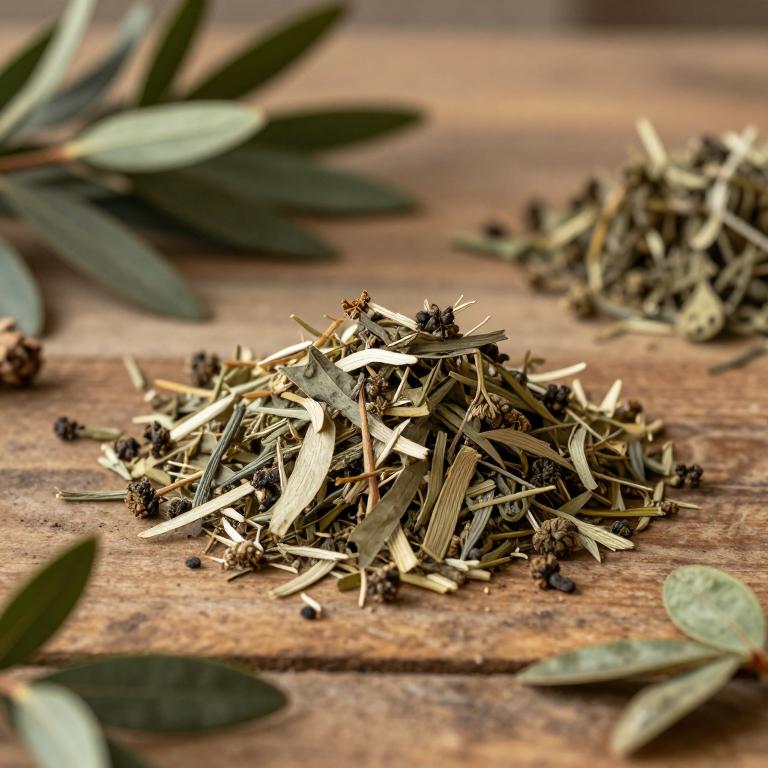
Names and Synonyms
Scientific Names
Accepted name
Artocarpus chamaSynonyms
- Saccus chaplasha
- Urostigma chrysopthalmum
- Ficus chrysopthalma
- Artocarpus chaplasha
Sources: Wikidata
Taxonomical Classification
This plant belongs to the kingdom Plantae and the phylum Streptophyta, falling under the class Equisetopsida and subclass Magnoliidae. Within the order Rosales and the family Moraceae, it is classified under the genus Artocarpus. Specifically, the medicinal species is known as Artocarpus chama.
| Rank | Classification |
|---|---|
| Kingdom | Plantae |
| Phylum | Streptophyta |
| Class | Equisetopsida |
| Subclass | Magnoliidae |
| Order | Rosales |
| Family | Moraceae |
| Genus | Artocarpus |
Sources: The World Checklist of Vascular Plants (WCVP)
Distribution
This plant is primarily distributed across several key regions within Asia. In China, its presence is noted specifically in the South-Central areas. Moving toward the Indian Subcontinent, it can be found growing in the state of Assam. The species also inhabits the territory of Bangladesh within the same subcontinent. Additionally, its range extends to the East Himalaya region of the Indian Subcontinent.
| Region | Area |
|---|---|
| China | China South-Central |
| Indian Subcontinent | Assam |
| Indian Subcontinent | Bangladesh |
| Indian Subcontinent | East Himalaya |
Sources: The World Checklist of Vascular Plants (WCVP)
Botanical Identification
Ecology
The ecology of Artocarpus chama is characterized by its preference for specific altitudinal gradients within tropical forest ecosystems. This species thrives across a distinct elevational range, establishing itself in environments situated between 300 m AMSL and a maximum of 1500 m AMSL. Within this vertical distribution, the plant occupies various niche layers of the forest, typically favoring humid, well-drained habitats that provide the necessary moisture and canopy structure consistent with its montane to sub-montane ecological requirements.
- Elevational range max:
- 1500 m AMSL
- Elevational range min:
- 300 m AMSL
Life history
The life history of Artocarpus chama is characterized by its existence as a perennial organism, allowing it to maintain a long-term presence within its ecological niche through multiple growing seasons. As a perennial species, it avoids the rapid turnover associated with annual or biennial cycles, instead investing in sustained structural growth and long-term survival. Complementing this enduring lifecycle is its deciduous nature, meaning the plant undergoes periodic shedding of its foliage. This deciduousness typically serves as an adaptive mechanism to manage seasonal environmental shifts, such as fluctuations in water availability or light intensity, by shedding leaves to conserve resources before entering a period of relative dormancy or regrowth.
- Deciduousness :
- deciduous
- Lifecycle :
- perennial
Morphology
The morphology of Artocarpus chama is characterized by its stature as a large, woody tree that typically reaches an average height of 37.5 m. As a self-supporting species, it does not function as a climber, liana, or vine, but rather maintains a robust, independent growth form. The plant is strictly terrestrial in its habitat, functioning as an independent organism rather than an epiphyte or a parasite. Its structural integrity is defined by its woody nature, supporting its significant vertical development within its ecosystem.
- Aquatic :
- terrestrial
- Climber :
- self-supporting
- Epiphyte :
- terrestrial
- Growth form :
- tree
- Parasite :
- independent
- Plant height mean:
- 37.5 m
- Woodiness :
- woody
Physiology
The physiology of Artocarpus chama is characterized by a C3 photosynthetic pathway, which dictates its metabolic carbon fixation processes. The plant's vegetative structure is defined by significant morphological variability in its foliage, with leaf dimensions ranging from a minimum length of 13 cm to a maximum of 37 cm, while the average leaf length is recorded at 25 cm. Similarly, the leaf width exhibits a broad spectrum, spanning from a minimum of 6 cm to a maximum of 21 cm, with a mean width of 13.5 cm. Furthermore, the species does not function as a nitrogen fixer, meaning it lacks the specialized symbiotic relationship required to convert atmospheric nitrogen into usable forms for its growth.
- Leaf length max:
- 37 cm
- Leaf length mean:
- 25 cm
- Leaf length min:
- 13 cm
- Leaf width max:
- 21 cm
- Leaf width mean:
- 13.5 cm
- Leaf width min:
- 6 cm
- Nitrogen fixer :
- no
- Photosynthetic pathway :
- C3
Reproduction
The reproduction of Artocarpus chama is characterized by specific morphological dimensions across its inflorescence, flowers, fruits, and seeds. The reproductive cycle begins with the inflorescence, which exhibits a length ranging from a minimum of 0.012 m to a maximum of 0.023 m. Within these structures, the individual flowers vary in size, with a minimum length of 1 cm and a maximum length reaching 1.8 cm. Following pollination, the development of the fruit results in a consistent length of 1 cm, as both the minimum and maximum recorded values for fruit length are measured at 1 cm. The reproductive process concludes with the production of seeds that show high uniformity in mass; the seed mass is recorded at a constant value of 0.58824 g, representing the minimum, mean, and maximum measurements.
- Flower length max:
- 1.8 cm
- Flower length min:
- 1 cm
- Fruit length max:
- 1 cm
- Inflorescence length max:
- 0.023 m
- Inflorescence length min:
- 0.012 m
- Seed mass mean:
- 0.58824 g
Sources: Global Inventory of Floras and Traits (GIFT)
Plant Parts
Artocarpus chama has 2 reported plant parts identified across 2 scientific publications and several other databases that are studied for medicinal purposes. The most consistently reported plant part include leaf, root.
| Plant part | Supporting sources | Consensus |
|---|---|---|
| Leaf | 1 supporting sources | ★☆☆☆☆ |
| Root | 1 supporting sources | ★☆☆☆☆ |
Leaf
- Food science & nutrition
Root
- Journal of natural products
Chemicals
Artocarpus chama has 3 reported phytochemicals identified across 2 scientific publications and several other databases. The most consistently reported chemicals include ARTOCARPIN, ARTOCHAMIN C, Artonin E.
| Chemical | Supporting sources | Consensus |
|---|---|---|
| ARTOCARPIN | 1 supporting sources | ★☆☆☆☆ |
| ARTOCHAMIN C | 1 supporting sources | ★☆☆☆☆ |
| Artonin E | 1 supporting sources | ★☆☆☆☆ |
ARTOCARPIN
- Journal of natural products
ARTOCHAMIN C
- Journal of natural products
Artonin E
- Journal of natural products
Conditions
Artocarpus chama has 3 reported investigations on conditions identified across 2 scientific publications and several other databases. The most consistently reported conditions include anxiety, depression, melanoma.
| Condition | Supporting sources | Consensus |
|---|---|---|
| Anxiety | 1 supporting sources | ★☆☆☆☆ |
| Depression | 1 supporting sources | ★☆☆☆☆ |
| Melanoma | 1 supporting sources | ★☆☆☆☆ |
Anxiety
- Food science & nutrition
Depression
- Food science & nutrition
Melanoma
- Journal of natural products