Artemisia stechmanniana
Artemisia stechmanniana · Accepted scientific name
Scientific literature: Very Sparse (1 studies) · ★☆☆☆☆
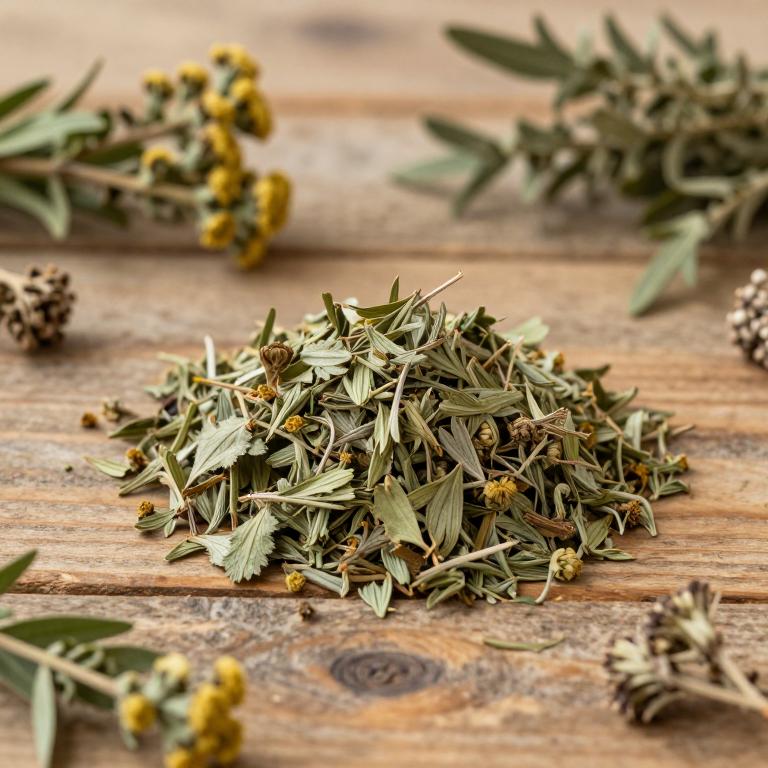
, scientifically known as Artemisia stechmanniana, is a perennial herb belonging to the Asteraceae family. Native to East Asia, this medicinal plant is valued in traditional practices for its bioactive compounds. It is frequently studied for its potential antioxidant and anti-inflammatory properties, offering promising insights into natural therapeutic applications.
- Family
- Asteraceae
- Native range
- Europe
- Parts used
- Not available
- Common names
- Not available
- Scientific synonyms
- Artemisia Santolinifolia · Artemisia Sacrorum Var. Santolinifolia · 3 more
Names and Synonyms
Scientific Names
Accepted name
Artemisia stechmannianaSynonyms
- Artemisia santolinifolia
- Artemisia sacrorum var. santolinifolia
- Artemisia gmelinii subsp. scheludjakoviae
- Artemisia santolinifolia subsp. stepposa
- Artemisia santolinifolia var. scheludjakoviae
Sources: Wikidata, Catalogue of Life
Taxonomical Classification
This plant belongs to the kingdom Plantae and the phylum Streptophyta, falling under the class Equisetopsida and subclass Magnoliidae. It is further classified within the order Asterales and the family Asteraceae. Finally, its taxonomic identity is defined by the genus Artemisia.
| Rank | Classification |
|---|---|
| Kingdom | Plantae |
| Phylum | Streptophyta |
| Class | Equisetopsida |
| Subclass | Magnoliidae |
| Order | Asterales |
| Family | Asteraceae |
| Genus | Artemisia |
Sources: The World Checklist of Vascular Plants (WCVP)
Distribution
This plant exhibits a specific geographical distribution across several regions of Northern Eurasia. It can be found in Eastern Europe, specifically within the territory of East European Russia. Moving eastward, its presence extends significantly into the vast landscapes of Siberia. Within this Siberian region, the species inhabits the Altai mountains and the Republic of Buryatia. Additionally, its range encompasses the Irkutsk and Krasnoyarsk regions, marking its widespread presence across these areas.
| Region | Area |
|---|---|
| Eastern Europe | East European Russia |
| Siberia | Altay |
| Siberia | Buryatiya |
| Siberia | Irkutsk |
| Siberia | Krasnoyarsk |
| Siberia | Tuva |
| Siberia | West Siberia |
| Siberia | Yakutiya |
| Russian Far East | Magadan |
| Central Asia | Kazakhstan |
Sources: The World Checklist of Vascular Plants (WCVP)
Botanical Identification
Ecology
The ecology of Artemisia stechmanniane is characterized by its preference for high-altitude environments, where it thrives within a specific elevational range spanning from 2,000 m to a maximum of 4,100 m AMSL. This species is typically found colonizing rugged mountainous terrains, specifically favoring stony places where it can establish itself amidst rocky substrates.
- Elevational range max:
- 4100 m AMSL
- Elevational range min:
- 2000 m AMSL
- Habitat :
- mountains, stony places
Life history
The life history of Artemisia stechmaniana is characterized by its status as a perennial plant, meaning it undergoes multiple years of growth and maintains its presence in the ecosystem through successive growing seasons. As a perennial, the plant typically establishes a robust root system that allows it to survive dormant periods, often during harsh winter months, before re-emerging to complete its reproductive cycle when environmental conditions become favorable. Its developmental stages involve a transition from vegetative growth, where it focuses on accumulating biomass and nutrient reserves, to a reproductive phase where it produces flowers and seeds to ensure the next generation. This long-term survival strategy allows the species to become a stable component of its native habitat, cycling through seasonal patterns of growth, flowering, and senescence over several years.
- Lifecycle :
- perennial
Morphology
The morphology of Artemisia stechmanniana is characterized by a self-supporting growth habit, functioning as a non-climbing, independent organism that does not rely on other plants for support or as a parasite. This species typically presents as a woody herb or small shrub, maintaining a terrestrial existence rather than being aquatic, semiaquatic, or epiphytic. Its stature is relatively modest, with a plant height ranging from a minimum of 0.12 m to a maximum of 0.8 m. The structural integrity of the plant is defined by its woody nature, supporting its development as a terrestrial herb within its natural habitat.
- Aquatic :
- terrestrial
- Climber :
- self-supporting
- Epiphyte :
- terrestrial
- Growth form :
- shrub
- Growth form :
- herb
- Parasite :
- independent
- Plant height max:
- 0.8 m
- Plant height min:
- 0.12 m
- Woodiness :
- woody
Physiology
The physiology of Artemisia stechmaniana is characterized by its adaptation to temperate environments, primarily driven by its metabolic processes and resource acquisition strategies. Most significantly, the plant utilizes the C3 photosynthetic pathway, a mechanism where carbon dioxide is fixed directly through the Calvin cycle via the enzyme RuBisCO, making it highly efficient in cooler, moist, or shaded habitats where photorespiration is minimized. This metabolic framework supports the plant's growth patterns and energy production, facilitating the synthesis of secondary metabolites that define its medicinal properties. Beyond carbon fixation, its physiological functions include complex transpiration rates regulated by stomatal conductance to manage water loss, and a robust root system designed for efficient nutrient uptake from the soil to support its vegetative development.
- Photosynthetic pathway :
- C3
Reproduction
The reproduction of Artemisia stechmanniana is characterized by a specific seasonal flowering pattern and specialized seed dispersal mechanisms. The flowering period for this species is concentrated in the month of August, with both the onset and the conclusion of the flowering stage occurring within this single month. Following fertilization, the plant utilizes an anemochorous dispersal syndrome, relying on wind currents to transport its seeds to new locations. This anemochorous strategy is the primary mode for both its initial and secondary dispersal mechanisms, ensuring that the offspring can be distributed across its habitat through aerodynamic movement.
- Dispersal syndrome :
- anemochorous
- Flowering time :
- Aug
Sources: Global Inventory of Floras and Traits (GIFT)
Chemicals
Artemisia stechmanniana has 1 reported phytochemicals identified across 0 scientific publications and several other databases. The most consistently reported chemicals include CALCIUM.
| Chemical | Supporting sources | Consensus |
|---|---|---|
| CALCIUM | 1 supporting sources | ★☆☆☆☆ |
CALCIUM
- Neuroscience letters
Preparations
Artemisia stechmanniana has 1 reported preparations identified across 0 scientific publications and several other databases. The most consistently reported preparations include SANT extract.
| Preparation | Supporting sources | Consensus |
|---|---|---|
| Sant extract | 1 supporting sources | ★☆☆☆☆ |
Sant extract
- Neuroscience letters