Asia minor wormwood
Artemisia splendens · Accepted scientific name
Scientific literature: Very Sparse (36 studies) · ★☆☆☆☆
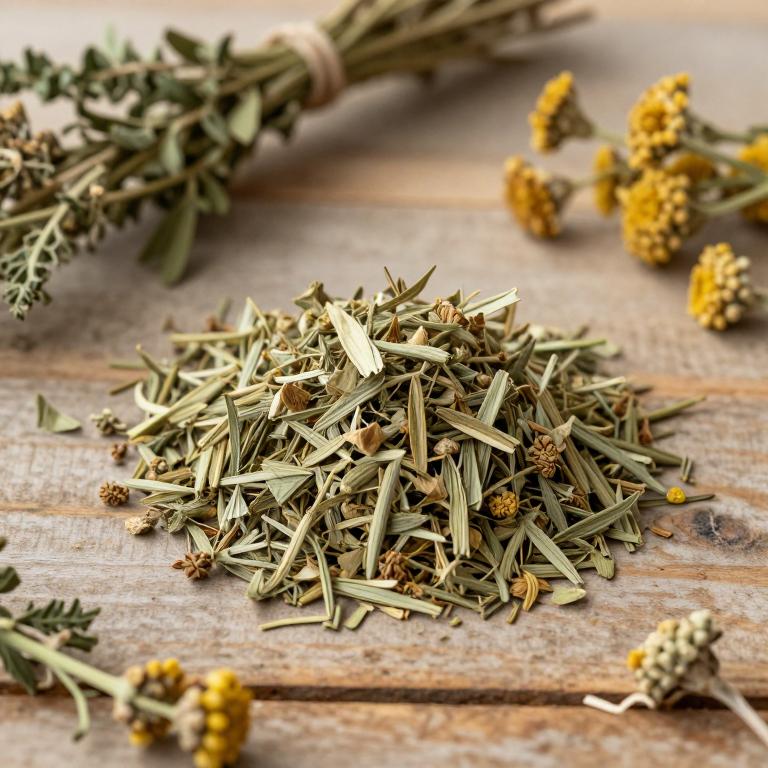
Asia minor wormwood, scientifically known as Artemisia splendens, is a resilient perennial herb renowned for its aromatic foliage and potent medicinal properties. Thriving in diverse terrains, this plant is traditionally utilized in herbal remedies to treat digestive ailments, skin conditions, and inflammatory issues, offering significant therapeutic potential in natural medicine.
- Family
- Asteraceae
- Native range
- Asia-Temperate
- Parts used
- Not available
- Common names
- Not available
- Scientific synonyms
- Artemisia Lasiocline · Artemisia Mutellina · 4 more
Names and Synonyms
Scientific Names
Accepted name
Artemisia splendensSynonyms
- Artemisia lasiocline
- Artemisia mutellina
- Absinthium pedunculare
- Artemisia pedunculata
- Absinthium splendens
- Artemisia peduncularis
Regional and Traditional Names
German:
- Edelraute
Sources: Wikidata, Catalogue of Life
Taxonomical Classification
This plant belongs to the kingdom Plantae within the phylum Streptophyta and is classified under the class Equisetopsida and subclass Magnoliidae. Following the order Asterales, it is a member of the Asteraceae family. Finally, it is categorized under the genus Artemisia, specifically identified as the species Artemisia splendens.
| Rank | Classification |
|---|---|
| Kingdom | Plantae |
| Phylum | Streptophyta |
| Class | Equisetopsida |
| Subclass | Magnoliidae |
| Order | Asterales |
| Family | Asteraceae |
| Genus | Artemisia |
Sources: The World Checklist of Vascular Plants (WCVP)
Distribution
This plant exhibits a specific geographical distribution concentrated across several key regions of Western Asia and the Caucasus. Within the Caucasus, it can be found growing in the North Caucasus as well as throughout the Transcaucasus. Its presence extends significantly into Western Asia, where it inhabits the landscapes of Iran and Iraq. Additionally, the species is widely distributed across the territory of Türkiye. Together, these locations define the natural range where this medicinal plant thrives.
| Region | Area |
|---|---|
| Caucasus | North Caucasus |
| Caucasus | Transcaucasus |
| Western Asia | Iran |
| Western Asia | Iraq |
| Western Asia | Türkiye |
Sources: The World Checklist of Vascular Plants (WCVP)
Botanical Identification
Ecology
The ecology of Artemisia splendens is characterized by its remarkable adaptability across diverse and often rugged landscapes. This species thrives in a variety of environments, ranging from the dense undergrowth of forests to the open, sun-drenched expanses of meadows. It is frequently found in montane regions, where it colonizes high-altitude mountain terrains, and shows a strong affinity for riparian zones near rivers. Furthermore, the plant is well-suited to colonizing stony places, demonstrating a resilience to rocky, nutrient-poor substrates where other vegetation might struggle to establish.
- Habitat :
- forest, meadows, mountains, rivers, stony places
Life history
The life history of Artemisia splendens is characterized by its status as a perennial plant, allowing it to persist through multiple growing seasons. In terms of its structural growth and survival strategy, it is classified as a chamaephyte, a life form where the majority of the plant's regenerative buds are located near or just above the soil surface. This specific growth habit, consistent with its designation as both a chamaephyte in its primary life form classification and its functional ecological role, enables the species to withstand environmental stressors while maintaining its perennial lifecycle.
- Life form :
- chamaephyte
- Lifecycle :
- perennial
Morphology
The morphology of Artemisia splendens is characterized by a low-growing, self-supporting growth form, functioning primarily as a woody subshrub. It maintains a diminutive stature, with a plant height ranging from a minimum of 0.05 m to a maximum of 0.25 m. As an independent organism, it does not exhibit parasitic behavior and is classified as a terrestrial plant rather than an aquatic, semiaquatic, or epiphytic species. Furthermore, the plant lacks any climbing tendencies, such as liana or vine characteristics, remaining entirely self-supporting through its woody structure.
- Aquatic :
- terrestrial
- Climber :
- self-supporting
- Epiphyte :
- terrestrial
- Growth form :
- shrub
- Growth form :
- subshrub
- Parasite :
- independent
- Plant height max:
- 0.25 m
- Plant height min:
- 0.05 m
- Woodiness :
- woody
Reproduction
The reproduction of Artemisia splendens is characterized by a specific flowering window and the production of highly uniform, minute seeds. The flowering period is concentrated in the month of August, marking a distinct seasonal phase for the plant's reproductive cycle. Regarding its seed characteristics, the species produces extremely lightweight seeds with a consistent mass; the mean, maximum, and minimum seed mass are all recorded at 0.00023 g, indicating a lack of variance in the weight of the individual seeds produced.
- Flowering time :
- Aug
- Seed mass mean:
- 0.00023 g
Sources: Global Inventory of Floras and Traits (GIFT)
Chemicals
Artemisia splendens has 26 reported phytochemicals identified across 0 scientific publications and several other databases. The most consistently reported chemicals include Rupestonic acid, Artemetin, Chrysosplenetin B, Flavonoids, luteolin.
| Chemical | Supporting sources | Consensus |
|---|---|---|
| Rupestonic acid | 5 supporting sources | ★★★☆☆ |
| Artemetin | 2 supporting sources | ★☆☆☆☆ |
| Chrysosplenetin B | 2 supporting sources | ★☆☆☆☆ |
| Flavonoids | 2 supporting sources | ★☆☆☆☆ |
| luteolin | 2 supporting sources | ★☆☆☆☆ |
| 3,4-Dicaffeoylquinic acid | 1 supporting sources | ★☆☆☆☆ |
| 3,5-Dicaffeoylquinic acid | 1 supporting sources | ★☆☆☆☆ |
| 4,5-Dicaffeoylquinic acid | 1 supporting sources | ★☆☆☆☆ |
| CHLOROGENIC ACID | 1 supporting sources | ★☆☆☆☆ |
| Fatty acids | 1 supporting sources | ★☆☆☆☆ |
Rupestonic acid
- Biomedical chromatography : BMC
- Zhongguo Zhong yao za zhi = Zhongguo zhongyao zazhi = China journal of Chinese materia medica
- Journal of ethnopharmacology
- Molecular diversity
- RSC advances
Artemetin
- Zhongguo Zhong yao za zhi = Zhongguo zhongyao zazhi = China journal of Chinese materia medica
- Journal of ethnopharmacology
Chrysosplenetin B
- Molecules (Basel, Switzerland)
- Zhongguo Zhong yao za zhi = Zhongguo zhongyao zazhi = China journal of Chinese materia medica
Flavonoids
- Zhongguo Zhong yao za zhi = Zhongguo zhongyao zazhi = China journal of Chinese materia medica
- Journal of chromatography. B, Analytical technologies in the biomedical and life sciences
luteolin
- Molecules (Basel, Switzerland)
- Zhongguo Zhong yao za zhi = Zhongguo zhongyao zazhi = China journal of Chinese materia medica
3,4-Dicaffeoylquinic acid
- Molecules (Basel, Switzerland)
3,5-Dicaffeoylquinic acid
- Molecules (Basel, Switzerland)
4,5-Dicaffeoylquinic acid
- Molecules (Basel, Switzerland)
CHLOROGENIC ACID
- Molecules (Basel, Switzerland)
Fatty acids
- Journal of chromatography. B, Analytical technologies in the biomedical and life sciences
Preparations
Artemisia splendens has 3 reported preparations identified across 0 scientific publications and several other databases. The most consistently reported preparations include 75% ethanol extract, dried whole plants, whole plants.
| Preparation | Supporting sources | Consensus |
|---|---|---|
| 75% ethanol extract | 1 supporting sources | ★☆☆☆☆ |
| Dried whole plants | 1 supporting sources | ★☆☆☆☆ |
| Whole plants | 1 supporting sources | ★☆☆☆☆ |
75% ethanol extract
- Zhongguo Zhong yao za zhi = Zhongguo zhongyao zazhi = China journal of Chinese materia medica
Dried whole plants
- Journal of natural products
Whole plants
- Bioorganic & medicinal chemistry letters