Artemisia spicigera
Artemisia spicigera · Accepted scientific name
Scientific literature: Very Sparse (15 studies) · ★☆☆☆☆
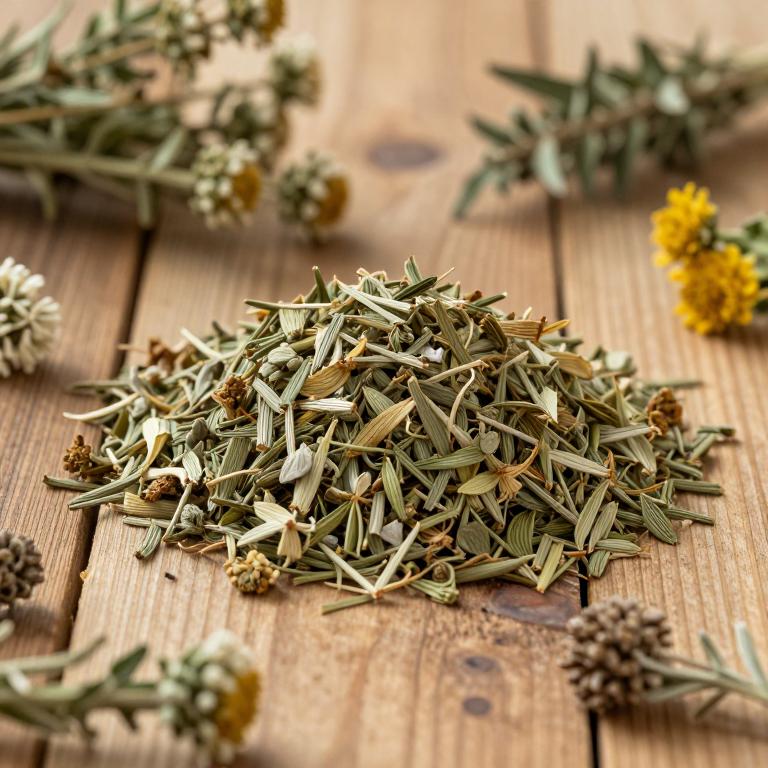
Artemisia spicigera, is a resilient perennial herb native to arid regions, celebrated for its potent therapeutic properties. Renowned in traditional medicine, this plant contains bioactive compounds with antimicrobial and antioxidant effects. Its aromatic foliage is frequently utilized to support digestive health and manage inflammatory conditions through various herbal applications.
- Family
- Asteraceae
- Native range
- Asia-Temperate
- Parts used
- Not available
- Common names
- Not available
- Scientific synonyms
- Artemisia Macra · Seriphidium Spicigerum
Names and Synonyms
Scientific Names
Accepted name
Artemisia spicigeraSynonyms
- Artemisia macra
- Seriphidium spicigerum
Sources: Wikidata, Catalogue of Life
Taxonomical Classification
This plant belongs to the kingdom Plantae and the phylum Streptophyta within the class Equisetopsida. It is further classified under the subclass Magnoliidae and the order Asterales. Finally, it is a member of the family Asteraceae and falls under the genus Artemisia.
| Rank | Classification |
|---|---|
| Kingdom | Plantae |
| Phylum | Streptophyta |
| Class | Equisetopsida |
| Subclass | Magnoliidae |
| Order | Asterales |
| Family | Asteraceae |
| Genus | Artemisia |
Sources: The World Checklist of Vascular Plants (WCVP)
Distribution
This plant exhibits a specific geographical distribution centered within the region of Western Asia. Its presence is notably documented across the territory of Iran. Additionally, it can be found growing within the borders of Türkiye. These locations represent the primary areas where the species is naturally established. Therefore, its range is concentrated in these two key Western Asian countries.
| Region | Area |
|---|---|
| Western Asia | Iran |
| Western Asia | Türkiye |
Sources: The World Checklist of Vascular Plants (WCVP)
Botanical Identification
Ecology
The ecology of Artemisia spicigera is defined by its adaptation to rugged and demanding environments, specifically thriving within mountainous regions and stony places. These habitats typically offer well-drained, nutrient-poor substrates where the plant can establish itself among rocky outcrops and scree slopes. By occupying these high-elevation or disturbed mineral soils, the species avoids competition from more aggressive vegetation that requires deeper, more fertile loams. Its presence in such terrains suggests a high tolerance for varying thermal fluctuations and periodic moisture stress common to stony, high-altitude landscapes.
- Habitat :
- mountains, stony places
Life history
The life history of Artemisia spicigera is characterized by a perennial lifecycle, allowing the plant to persist across multiple growing seasons. As a hardy member of its genus, it typically establishes itself through seed dispersal or vegetative means, developing a robust root system that supports its long-term survival. Throughout its life, the plant undergoes seasonal cycles of vegetative growth and reproductive phases, often flowering in response to specific environmental cues such as day length or temperature shifts. This perennial nature enables it to inhabit stable ecological niches where it can recover from seasonal dormancy and continue its biological processes year after year.
- Lifecycle :
- perennial
Morphology
The morphology of Artemisia spicigera is characterized by its growth form as a herb, exhibiting a non-woody structure. The plant maintains a relatively low stature, with a height that typically ranges from a minimum of 0.25 m to a maximum of 0.35 m.
- Growth form :
- herb
- Plant height max:
- 0.35 m
- Plant height min:
- 0.25 m
- Woodiness :
- non-woody
Sources: Global Inventory of Floras and Traits (GIFT)
Chemicals
Artemisia spicigera has 9 reported phytochemicals identified across 0 scientific publications and several other databases. The most consistently reported chemicals include 1,8-Cineole, camphor, Bicyclogermacrene, CAMPHENE, Germacrene D.
| Chemical | Supporting sources | Consensus |
|---|---|---|
| 1,8-Cineole | 2 supporting sources | ★☆☆☆☆ |
| camphor | 2 supporting sources | ★☆☆☆☆ |
| Bicyclogermacrene | 1 supporting sources | ★☆☆☆☆ |
| CAMPHENE | 1 supporting sources | ★☆☆☆☆ |
| Germacrene D | 1 supporting sources | ★☆☆☆☆ |
| P-CYMENE | 1 supporting sources | ★☆☆☆☆ |
| Sesquiterpene Derivatives | 1 supporting sources | ★☆☆☆☆ |
| Spathulenol | 1 supporting sources | ★☆☆☆☆ |
| cis-Thujone | 1 supporting sources | ★☆☆☆☆ |
1,8-Cineole
- Pharmaceutical biology
- Plants (Basel, Switzerland)
camphor
- Pharmaceutical biology
- Plants (Basel, Switzerland)
Bicyclogermacrene
- Plants (Basel, Switzerland)
CAMPHENE
- Pharmaceutical biology
Germacrene D
- Plants (Basel, Switzerland)
P-CYMENE
- Pharmaceutical biology
Sesquiterpene Derivatives
- Plants (Basel, Switzerland)
Spathulenol
- Plants (Basel, Switzerland)
cis-Thujone
- Plants (Basel, Switzerland)
Conditions
Artemisia spicigera has 4 reported investigations on conditions identified across 0 scientific publications and several other databases. The most consistently reported conditions include Bacillus megaterium, Enterobacter aerogenes, Serratia marcescens, Staphylococcus aureus.
| Condition | Supporting sources | Consensus |
|---|---|---|
| Bacillus megaterium | 1 supporting sources | ★☆☆☆☆ |
| Enterobacter aerogenes | 1 supporting sources | ★☆☆☆☆ |
| Serratia marcescens | 1 supporting sources | ★☆☆☆☆ |
| Staphylococcus aureus | 1 supporting sources | ★☆☆☆☆ |
Bacillus megaterium
- Pharmaceutical biology
Enterobacter aerogenes
- Pharmaceutical biology
Serratia marcescens
- Pharmaceutical biology
Staphylococcus aureus
- Pharmaceutical biology