Artemisia sieberi
Artemisia sieberi · Accepted scientific name
Scientific literature: Very Sparse (46 studies) · ★☆☆☆☆
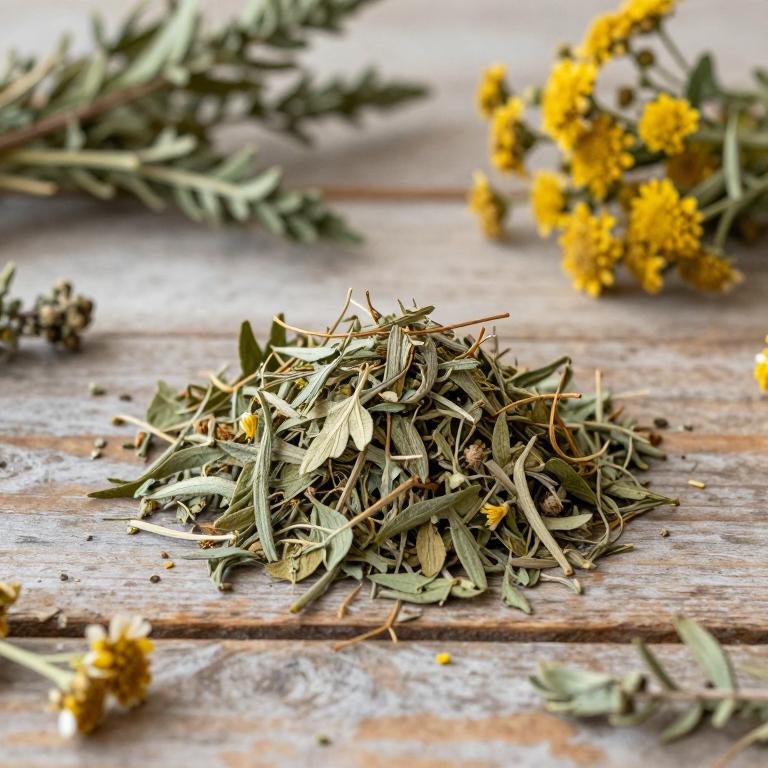
Artemisia sieberi, scientifically known as Artemisia sieberi, is a resilient perennial shrub native to the arid regions of Southern Africa. Renowned for its aromatic foliage, this medicinal plant is traditionally utilized in various cultures to treat ailments ranging from digestive issues to respiratory infections, showcasing its significant ethnobotanical importance.
- Family
- Asteraceae
- Native range
- Africa
- Parts used
- Leaf · Stem
- Common names
- Not available
- Scientific synonyms
- Artemisia Herba-Alba Var. Laxiflora · Seriphidium Sieberi · 2 more
Names and Synonyms
Scientific Names
Accepted name
Artemisia sieberiSynonyms
- Artemisia herba-alba var. laxiflora
- Seriphidium sieberi
- Artemisia inculta var. laxiflora
- Artemisia glomerulata
Sources: Wikidata, Catalogue of Life
Taxonomical Classification
This plant belongs to the kingdom Plantae and is classified under the phylum Streptophyta and class Equisetopsida. Within the subclass Magnoliidae, it falls under the order Asterales and the family Asteraceae. Specifically, Artemisia sieberi is identified by its genus, Artemisia.
| Rank | Classification |
|---|---|
| Kingdom | Plantae |
| Phylum | Streptophyta |
| Class | Equisetopsida |
| Subclass | Magnoliidae |
| Order | Asterales |
| Family | Asteraceae |
| Genus | Artemisia |
Sources: The World Checklist of Vascular Plants (WCVP)
Distribution
This plant exhibits a diverse geographical distribution across several distinct regions. In Northern Africa, its presence is specifically noted within the borders of Egypt. Moving into Western Asia, the species can be found inhabiting the landscapes of Afghanistan. It also maintains a significant range throughout Iran and Iraq. Finally, the distribution extends across the Levant, covering the areas of Lebanon and Syria.
| Region | Area |
|---|---|
| Northern Africa | Egypt |
| Western Asia | Afghanistan |
| Western Asia | Iran |
| Western Asia | Iraq |
| Western Asia | Lebanon-Syria |
| Western Asia | Palestine |
| Western Asia | Sinai |
| Western Asia | Türkiye |
| Arabian Peninsula | Gulf States |
| Arabian Peninsula | Oman |
Sources: The World Checklist of Vascular Plants (WCVP)
Botanical Identification
Ecology
The ecology of Artemisia sieberi is characterized by its specialized adaptation to rugged, high-altitude terrains. This species thrives in diverse mountainous environments, showing a particular preference for stony places where it can establish itself amidst rocky substrates. Its distribution is defined by a significant altitudinal gradient, spanning an elevational range that begins at 400 m AMSL and extends up to a maximum of 1600 m AMSL. This wide vertical range allows the plant to inhabit various montane microclimates, ranging from lower slopes to higher, more exposed rocky outcrops.
- Elevational range max:
- 1600 m AMSL
- Elevational range min:
- 400 m AMSL
- Habitat :
- mountains, stony places
Life history
The life history of Artemisia sieberi is characterized by its status as a perennial plant, allowing it to persist through multiple growing seasons and maintain its presence within its ecological niche. In terms of its structural growth strategy, the species exhibits a chamaephyte life form, meaning its permanent buds are located near or just above the soil surface, which often aids in survival against environmental stressors. This classification is consistently identified through its chamaephyte morphology, defining its specialized habit of maintaining low-growing vegetation that can withstand varying climatic conditions.
- Life form :
- chamaephyte
- Lifecycle :
- perennial
Morphology
The morphology of Artemisia sieberi is characterized by its growth form as a woody subshrub and herb. This self-supporting plant is non-parasitic, functioning as an independent organism within its ecosystem. It typically maintains a low profile, with a plant height ranging from a minimum of 0.2 m to a maximum of 0.35 m. Regarding its habitat preference, the species is classified as terrestrial, though it can exist across a spectrum including semiaquatic and aquatic environments.
- Aquatic :
- terrestrial
- Climber :
- self-supporting
- Growth form :
- herb
- Growth form :
- subshrub
- Parasite :
- independent
- Plant height max:
- 0.35 m
- Plant height min:
- 0.2 m
- Woodiness :
- woody
Reproduction
The reproduction of Artemisia sieberi is characterized by a specific seasonal flowering cycle that dictates its reproductive success. The flowering process is concentrated within a narrow temporal window, with the flowering start occurring in May. This reproductive phase concludes within the same month, as the flowering end is also recorded in May. This condensed period of anthesis suggests a highly synchronized flowering pattern, which is a critical aspect of the plant's life cycle for ensuring pollination and subsequent seed development.
- Flowering time :
- May
Sources: Global Inventory of Floras and Traits (GIFT)
Plant Parts
Artemisia sieberi has 2 reported plant parts identified across 3 scientific publications and several other databases that are studied for medicinal purposes. The most consistently reported plant part include leaf, stem.
| Plant part | Supporting sources | Consensus |
|---|---|---|
| Leaf | 2 supporting sources | ★☆☆☆☆ |
| Stem | 1 supporting sources | ★☆☆☆☆ |
Leaf
- Frontiers in veterinary science
- Tropical animal health and production
Stem
- Molecules (Basel, Switzerland)
Chemicals
Artemisia sieberi has 7 reported phytochemicals identified across 3 scientific publications and several other databases. The most consistently reported chemicals include 1,8-Cineole, 3'-hydroxygenkwanin, Davanone, Gallic acid, artemisinin.
| Chemical | Supporting sources | Consensus |
|---|---|---|
| 1,8-Cineole | 2 supporting sources | ★☆☆☆☆ |
| 3'-hydroxygenkwanin | 1 supporting sources | ★☆☆☆☆ |
| Davanone | 1 supporting sources | ★☆☆☆☆ |
| Gallic acid | 1 supporting sources | ★☆☆☆☆ |
| artemisinin | 1 supporting sources | ★☆☆☆☆ |
| cis-crysanthenyl acetate | 1 supporting sources | ★☆☆☆☆ |
| quercetin | 1 supporting sources | ★☆☆☆☆ |
1,8-Cineole
- Journal of ethnopharmacology
- Natural product research
3'-hydroxygenkwanin
- Journal of Asian natural products research
Davanone
- Journal of ethnopharmacology
Gallic acid
- Metabolites
artemisinin
- Metabolites
cis-crysanthenyl acetate
- Journal of ethnopharmacology
quercetin
- Metabolites
Activities
Artemisia sieberi has 4 reported activities identified across 3 scientific publications and several other databases. The most consistently reported activities include Antibacterial, Antimicrobial, Antifungal, Antioxidant.
| Activity | Supporting sources | Consensus |
|---|---|---|
| Antibacterial | 2 supporting sources | ★☆☆☆☆ |
| Antimicrobial | 2 supporting sources | ★☆☆☆☆ |
| Antifungal | 1 supporting sources | ★☆☆☆☆ |
| Antioxidant | 1 supporting sources | ★☆☆☆☆ |
Antibacterial
- Pakistan journal of biological sciences : PJBS
- Bulletin of emergency and trauma
Antimicrobial
- Journal of Asian natural products research
- Molecules (Basel, Switzerland)
Antifungal
- Technology and health care : official journal of the European Society for Engineering and Medicine
Antioxidant
- Pakistan journal of biological sciences : PJBS
Conditions
Artemisia sieberi has 20 reported investigations on conditions identified across 3 scientific publications and several other databases. The most consistently reported conditions include breast cancer, Acinetobacter baumannii, Bacillus subtilis, Candida tropicalis, Escherichia coli.
| Condition | Supporting sources | Consensus |
|---|---|---|
| Breast cancer | 2 supporting sources | ★☆☆☆☆ |
| Acinetobacter baumannii | 1 supporting sources | ★☆☆☆☆ |
| Bacillus subtilis | 1 supporting sources | ★☆☆☆☆ |
| Candida tropicalis | 1 supporting sources | ★☆☆☆☆ |
| Escherichia coli | 1 supporting sources | ★☆☆☆☆ |
| Phytoplasma infection | 1 supporting sources | ★☆☆☆☆ |
| Pseudomonas aeruginosa | 1 supporting sources | ★☆☆☆☆ |
| Staphylococcus aureus | 1 supporting sources | ★☆☆☆☆ |
| Cancer | 1 supporting sources | ★☆☆☆☆ |
| Denture stomatitis | 1 supporting sources | ★☆☆☆☆ |
Breast cancer
- Journal of evidence-based integrative medicine
- Journal of ethnopharmacology
Acinetobacter baumannii
- Bulletin of emergency and trauma
Bacillus subtilis
- Molecules (Basel, Switzerland)
Candida tropicalis
- Molecules (Basel, Switzerland)
Escherichia coli
- Molecules (Basel, Switzerland)
Phytoplasma infection
- The plant pathology journal
Pseudomonas aeruginosa
- Molecules (Basel, Switzerland)
Staphylococcus aureus
- Molecules (Basel, Switzerland)
Cancer
- Journal of ethnopharmacology
Denture stomatitis
- Technology and health care : official journal of the European Society for Engineering and Medicine
Preparations
Artemisia sieberi has 10 reported preparations identified across 3 scientific publications and several other databases. The most consistently reported preparations include essential oil, essential oils, Artemisia sieberi extracts, Sesquiterpene fractions, essential oil from aerial parts.
| Preparation | Supporting sources | Consensus |
|---|---|---|
| Essential oil | 3 supporting sources | ★★☆☆☆ |
| Essential oils | 3 supporting sources | ★★☆☆☆ |
| Artemisia sieberi extracts | 1 supporting sources | ★☆☆☆☆ |
| Sesquiterpene fractions | 1 supporting sources | ★☆☆☆☆ |
| Essential oil from aerial parts | 1 supporting sources | ★☆☆☆☆ |
| Extracts | 1 supporting sources | ★☆☆☆☆ |
| Leaves | 1 supporting sources | ★☆☆☆☆ |
| Methanolic extracts | 1 supporting sources | ★☆☆☆☆ |
| Stems | 1 supporting sources | ★☆☆☆☆ |
| Volatile oil extracted via hydrodistillation (hd) | 1 supporting sources | ★☆☆☆☆ |
Essential oil
- Biomarkers : biochemical indicators of exposure, response, and susceptibility to chemicals
- Journal de mycologie medicale
- Journal of ethnopharmacology
Essential oils
- Jundishapur journal of microbiology
- Natural product research
- Journal de mycologie medicale
Artemisia sieberi extracts
- Technology and health care : official journal of the European Society for Engineering and Medicine
Sesquiterpene fractions
- Iranian journal of basic medical sciences
Essential oil from aerial parts
- Natural product research
Extracts
- Journal of evidence-based integrative medicine
Leaves
- Tropical animal health and production
Methanolic extracts
- Pakistan journal of biological sciences : PJBS
Stems
- Molecules (Basel, Switzerland)
Volatile oil extracted via hydrodistillation (hd)
- Natural product research