Artemisia salsoloides
Artemisia salsoloides · Accepted scientific name
Scientific literature: Very Extensive (232 studies) · ★★★★★
Artemisia salsoloides, scientifically known as Artemisia salsoloides, is a resilient perennial herb native to various arid regions. Belonging to the Asteraceae family, this plant is characterized by its aromatic foliage and silver-green hues. It holds significant ethnobotanical value, traditionally utilized in folk medicine for its diverse therapeutic properties.
- Family
- Not available
- Native range
- Europe
- Parts used
- Not available
- Common names
- Not available
- Scientific synonyms
- Not available
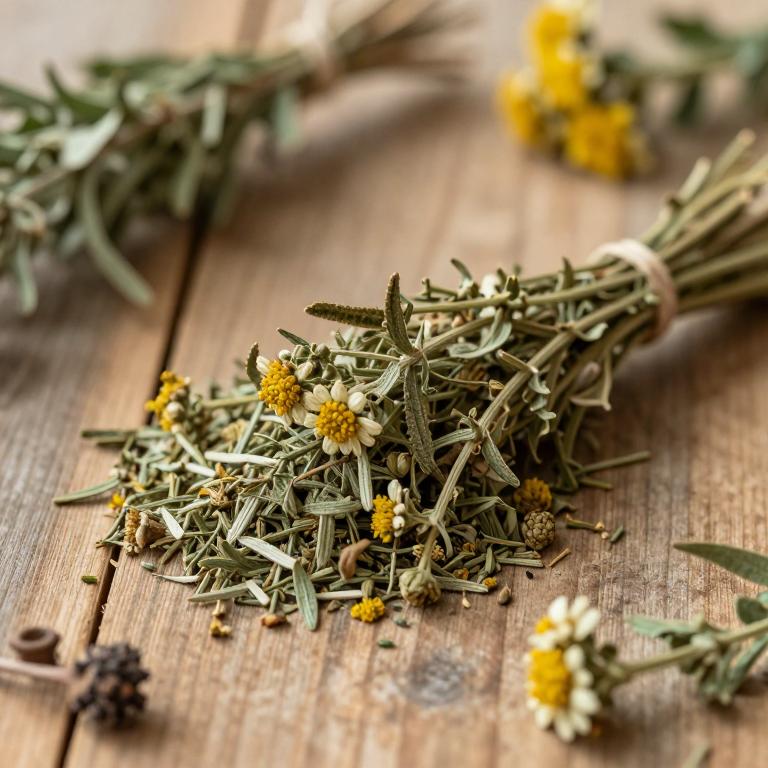
Names and Synonyms
Scientific Names
Accepted name
Artemisia salsoloidesDistribution
This plant exhibits a broad distribution across several key regions of the European continent. In Middle Europe, its presence is notably documented within Germany. Moving toward the east, the species is widespread throughout Central European Russia. It also extends its reach into East European Russia, covering significant territories in that direction. Finally, the plant can be found spanning across South European Russia and Ukraine.
| Region | Area |
|---|---|
| Middle Europe | Germany |
| Eastern Europe | Central European Russia |
| Eastern Europe | East European Russia |
| Eastern Europe | South European Russia |
| Eastern Europe | Ukraine |
| Central Asia | Kazakhstan |
| Caucasus | North Caucasus |
| Indian Subcontinent | West Himalaya |
Sources: The World Checklist of Vascular Plants (WCVP)
Botanical Identification
Ecology
The ecology of Artemisia salsoloides is characterized by its specialization in rugged, well-drained environments, primarily flourishing within limestone-rich substrates. It is most commonly found inhabiting mountainous terrains and stony places, where it thrives in the crevices and sparse soils typical of rocky outcrops. This preference for calcareous landscapes suggests an adaptation to alkaline soil conditions and the high-exposure environments found in montane ecosystems, where the plant must contend with thin soil layers and the physical challenges of steep, stony topography.
- Habitat :
- limestone, mountains, stony places
Life history
The life history of Artemisia salsoloides is characterized by its classification as a perennial plant, allowing it to persist through multiple growing seasons. As a perennial, it establishes a stable root system that enables the species to survive dormant periods and re-emerge annually. Its developmental cycle involves a period of vegetative growth where it accumulates resources, followed by a reproductive phase where it produces flowering structures to facilitate seed dispersal. This long-term survival strategy enables the plant to maintain a presence in its habitat over many years, contrasting with annual or biennial species that complete their entire life cycle in a single or dual season.
- Lifecycle :
- perennial
Morphology
The morphology of Artemisia salsoloides is characterized by its stature as a low-growing, terrestrial plant, typically reaching a height ranging from a minimum of 0.2 m to a maximum of 0.45 m. As a terrestrial species, it grows directly in the soil rather than occupying an epiphytic niche, and it functions as an independent organism, lacking any obligatory parasitic relationship with other plants.
- Epiphyte :
- terrestrial
- Parasite :
- obligatory
- Plant height max:
- 0.45 m
- Plant height min:
- 0.2 m
Reproduction
The reproduction of Artemisia salsoloides is characterized by a specific seasonal phenology centered around its flowering period. The plant's reproductive cycle reaches its peak during the month of August, which serves as both the flowering start and the flowering end for the species. This concentrated period of anthesis indicates a highly synchronized reproductive window, occurring within the late summer months.
- Flowering time :
- Aug
Sources: Global Inventory of Floras and Traits (GIFT)
Chemicals
Artemisia salsoloides has 83 reported phytochemicals identified across 0 scientific publications and several other databases. The most consistently reported chemicals include (-)-Camphor, (-)-Terpinen-4-ol, (E)-Methyl cinnamate, (E)-Ocimene, (E)-Propyl cinnamate.
| Chemical | Supporting sources | Consensus |
|---|---|---|
| (-)-Camphor | 1 supporting sources | ★☆☆☆☆ |
| (-)-Terpinen-4-ol | 1 supporting sources | ★☆☆☆☆ |
| (E)-Methyl cinnamate | 1 supporting sources | ★☆☆☆☆ |
| (E)-Ocimene | 1 supporting sources | ★☆☆☆☆ |
| (E)-Propyl cinnamate | 1 supporting sources | ★☆☆☆☆ |
| (E)-cinnamyl isovalerate | 1 supporting sources | ★☆☆☆☆ |
| (E)-ethyl cinnamate | 1 supporting sources | ★☆☆☆☆ |
| (Z)-Ethyl cinnamate | 1 supporting sources | ★☆☆☆☆ |
| (Z)-Jasmone | 1 supporting sources | ★☆☆☆☆ |
| (Z)-Methyl cinnamate | 1 supporting sources | ★☆☆☆☆ |
(-)-Camphor
- Dr. Duke
(-)-Terpinen-4-ol
- Dr. Duke
(E)-Methyl cinnamate
- Dr. Duke
(E)-Ocimene
- Dr. Duke
(E)-Propyl cinnamate
- Dr. Duke
(E)-cinnamyl isovalerate
- Dr. Duke
(E)-ethyl cinnamate
- Dr. Duke
(Z)-Ethyl cinnamate
- Dr. Duke
(Z)-Jasmone
- Dr. Duke
(Z)-Methyl cinnamate
- Dr. Duke
Activities
Artemisia salsoloides has 149 reported activities identified across 0 scientific publications and several other databases. The most consistently reported activities include (-)-Chronotropic, (-)-Inotropic, ACE-Inhibitor, Abortifacient, Acaricide.
| Activity | Supporting sources | Consensus |
|---|---|---|
| (-)-Chronotropic | 1 supporting sources | ★☆☆☆☆ |
| (-)-Inotropic | 1 supporting sources | ★☆☆☆☆ |
| ACE-Inhibitor | 1 supporting sources | ★☆☆☆☆ |
| Abortifacient | 1 supporting sources | ★☆☆☆☆ |
| Acaricide | 1 supporting sources | ★☆☆☆☆ |
| Aldose-Reductase-Inhibitor | 1 supporting sources | ★☆☆☆☆ |
| Allelochemic | 1 supporting sources | ★☆☆☆☆ |
| Allelopathic | 1 supporting sources | ★☆☆☆☆ |
| Allergenic | 1 supporting sources | ★☆☆☆☆ |
| Analgesic | 1 supporting sources | ★☆☆☆☆ |
(-)-Chronotropic
- Dr. Duke
(-)-Inotropic
- Dr. Duke
ACE-Inhibitor
- Dr. Duke
Abortifacient
- Dr. Duke
Acaricide
- Dr. Duke
Aldose-Reductase-Inhibitor
- Dr. Duke
Allelochemic
- Dr. Duke
Allelopathic
- Dr. Duke
Allergenic
- Dr. Duke
Analgesic
- Dr. Duke