Artemisia richardsoniana
Artemisia richardsoniana · Accepted scientific name
Scientific literature: Very Sparse (4 studies) · ★☆☆☆☆
Artemisia richardsoniana, is a resilient perennial herb native to North American prairies and sagebrush steppes. Often recognized by its aromatic, silvery-green foliage, this member of the Asteraceae family plays a vital role in its ecosystem. Historically, various Artemisia species have been utilized for their diverse medicinal properties.
- Family
- Asteraceae
- Native range
- Asia-Temperate
- Parts used
- Not available
- Common names
- Not available
- Scientific synonyms
- Draconia Henriettae · Oligosporus Henriettae · 4 more
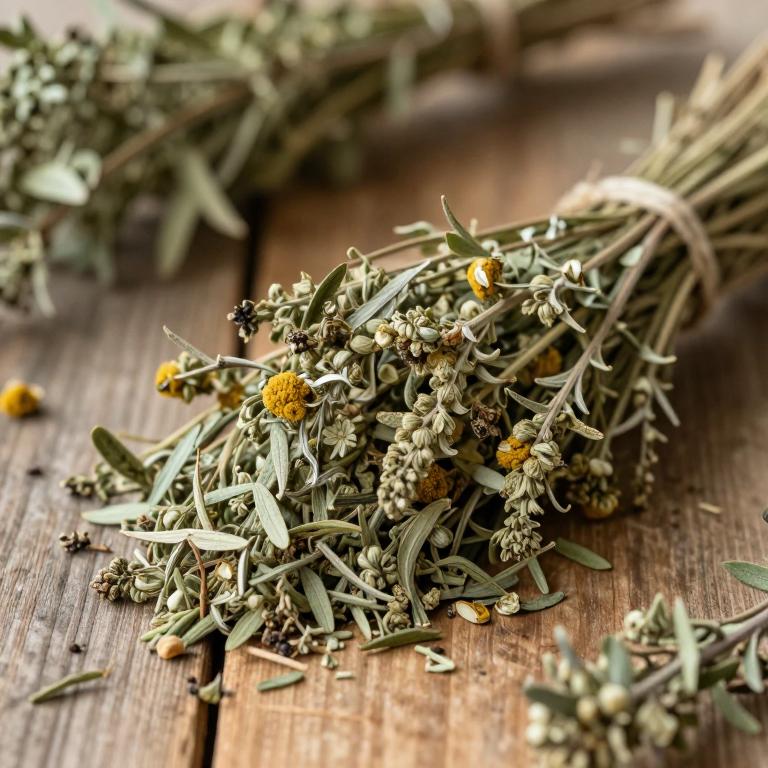
Names and Synonyms
Scientific Names
Accepted name
Artemisia richardsonianaSynonyms
- Draconia henriettae
- Oligosporus henriettae
- Artemisia caespitosa
- Artemisia borealis subsp. richardsoniana
- Artemisia campestris subsp. richardsoniana
- Artemisia henriettae
Sources: Wikidata
Taxonomical Classification
This plant belongs to the kingdom Plantae and the phylum Streptophyta, falling under the class Equisetopsida and subclass Magnoliidae. Within the order Asterales, it is classified under the family Asteraceae. It is specifically identified by the genus Artemisia, with its species designation being richardsoniana.
| Rank | Classification |
|---|---|
| Kingdom | Plantae |
| Phylum | Streptophyta |
| Class | Equisetopsida |
| Subclass | Magnoliidae |
| Order | Asterales |
| Family | Asteraceae |
| Genus | Artemisia |
Sources: The World Checklist of Vascular Plants (WCVP)
Distribution
This plant exhibits a broad geographical distribution across much of the northern hemisphere's cold climates. In Russia, its presence is widespread throughout Siberia, specifically within the regions of Krasnoyarsk, West Siberia, and Yakutiya. The species also extends into the Russian Far East, where it can be found in Magadan. Moving across the Pacific, the plant's range continues into the Subarctic regions of North America. Ultimately, this distribution highlights its ability to thrive in the rugged environments of Alaska and various Siberian territories.
| Region | Area |
|---|---|
| Siberia | Krasnoyarsk |
| Siberia | West Siberia |
| Siberia | Yakutiya |
| Russian Far East | Magadan |
| Subarctic America | Alaska |
| Subarctic America | Nunavut |
| Subarctic America | Northwest Territories |
| Subarctic America | Yukon |
Sources: The World Checklist of Vascular Plants (WCVP)
Botanical Identification
Ecology
The ecology of Artemisia richardsoniane is fundamentally defined by its adaptation to arctic environments, where it thrives in extreme, high-latitude conditions. This species is specialized for life in the tundra, frequently colonizing open, treeless landscapes such as rocky slopes, coastal barrens, and alluvial plains. Within these arctic habitats, the plant is often found in well-drained, nutrient-poor soils where it must withstand intense wind exposure, seasonal frost heave, and a short, compressed growing season. Its presence is typically associated with low-growing vegetation communities that can tolerate the physiological stresses of cold temperatures and high solar radiation characteristic of polar regions.
- Habitat :
- arctic
Life history
The life history of Artemisia richardsoniana is characterized by its status as a perennial species, allowing it to persist in its environment over multiple growing seasons. As a perennial, the plant maintains a stable presence in its habitat, often utilizing underground structures to survive dormant periods and re-emerge annually. Its development follows a seasonal pattern where it allocates resources toward vegetative growth and the establishment of a robust root system before transitioning into its reproductive phase. During the reproductive stage, the plant produces flowering structures that facilitate sexual reproduction through seed production, ensuring genetic diversity and the colonization of new areas. This perennial lifecycle enables the plant to endure environmental fluctuations, providing it with a competitive advantage in its native ecological niches.
- Lifecycle :
- perennial
Morphology
The morphology of Artemisia richardsoniana is characterized by its growth form as a non-woody herb. This species is categorized as a self-supporting plant rather than a climber, maintaining its structure independently. In terms of stature, it is a diminutive plant, with a height ranging from a minimum of 0.01 m to a maximum of 0.07 m.
- Climber :
- self-supporting
- Growth form :
- herb
- Plant height max:
- 0.07 m
- Plant height min:
- 0.01 m
- Woodiness :
- non-woody
Reproduction
The reproduction of Artemisia richardsoniana is characterized by a specific phenological cycle centered around its flowering period. The plant initiates its reproductive phase with the flowering start occurring in August, a timing that is critical for its seasonal development. This flowering period is relatively concentrated, as the flowering end also takes place in August, marking a brief but distinct window for pollination and subsequent seed production. This synchronized timing within the month of August dictates the reproductive success and the timing of seed dispersal for the species.
- Flowering time :
- Aug
Sources: Global Inventory of Floras and Traits (GIFT)
Chemicals
Artemisia richardsoniana has 3 reported phytochemicals identified across 0 scientific publications and several other databases. The most consistently reported chemicals include Esculetin, Luteolin 7-O-rutinoside, cineole.
| Chemical | Supporting sources | Consensus |
|---|---|---|
| Esculetin | 1 supporting sources | ★☆☆☆☆ |
| Luteolin 7-O-rutinoside | 1 supporting sources | ★☆☆☆☆ |
| cineole | 1 supporting sources | ★☆☆☆☆ |
Esculetin
- Archives of pharmacal research
Luteolin 7-O-rutinoside
- Archives of pharmacal research
cineole
- Yakushigaku zasshi
Preparations
Artemisia richardsoniana has 1 reported preparations identified across 0 scientific publications and several other databases. The most consistently reported preparations include methanol extract.
| Preparation | Supporting sources | Consensus |
|---|---|---|
| Methanol extract | 1 supporting sources | ★☆☆☆☆ |
Methanol extract
- Archives of pharmacal research