Artemisia pubescens var. pubescens
Artemisia pubescens var. pubescens · Accepted scientific name
Scientific literature: Very Sparse (3 studies) · ★☆☆☆☆
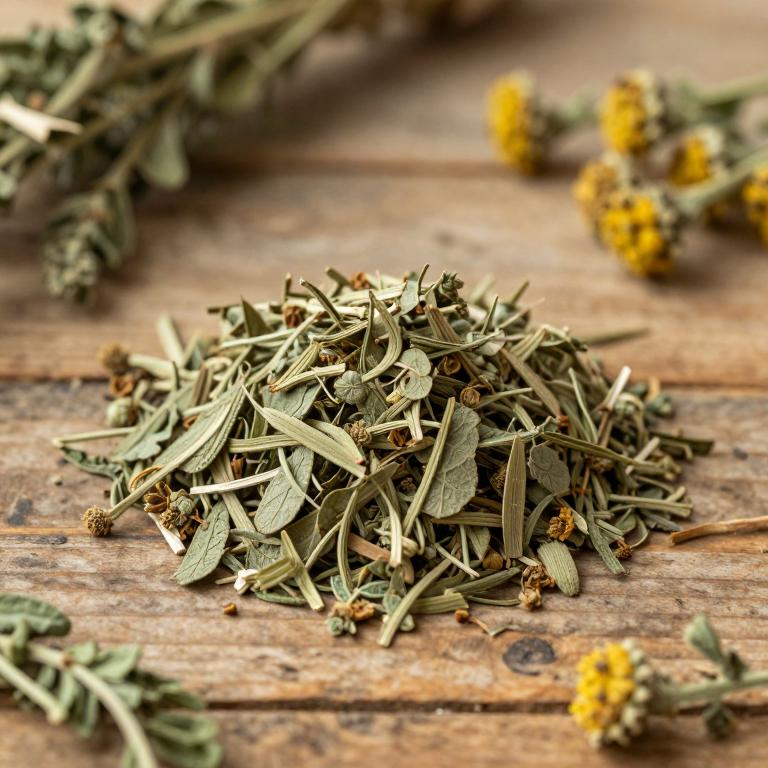
, scientifically known as Artemisia pubescens var. pubescens, is a resilient perennial herb native to various mountainous regions. Renowned for its aromatic foliage, this plant holds significant ethnobotanical value. Traditionally utilized in folk medicine, it possesses diverse bioactive properties that are currently being studied for their potential therapeutic applications.
- Family
- Asteraceae
- Native range
- Europe
- Parts used
- Not available
- Common names
- Not available
- Scientific synonyms
- Draconia Commutata · Oligosporus Commutatus · 10 more
Names and Synonyms
Scientific Names
Accepted name
Artemisia pubescens var. pubescensSynonyms
- Draconia commutata
- Oligosporus commutatus
- Artemisia pubescens var. pumila
- Artemisia commutata
- Artemisia commutata f. compacta
- Artemisia commutata f. elongata
- Artemisia commutata var. pumila
- Artemisia commutata var. acutiloba
- Artemisia commutata var. rotundifolia
- Artemisia pubescens var. taheensis
- Oligosporus adfinis
- Artemisia commutata f. altaica
Sources: Wikidata
Taxonomical Classification
This plant belongs to the kingdom Plantae and the phylum Streptophyta, falling under the class Equisetopsida and subclass Magnoliidae. Within the order Asterales, it is classified under the family Asteraceae and the genus Artemisia. Specifically, it is identified by the variety name pubescens.
| Rank | Classification |
|---|---|
| Kingdom | Plantae |
| Phylum | Streptophyta |
| Class | Equisetopsida |
| Subclass | Magnoliidae |
| Order | Asterales |
| Family | Asteraceae |
| Genus | Artemisia |
Sources: The World Checklist of Vascular Plants (WCVP)
Distribution
This plant exhibits a widespread presence across several key regions of Eastern Europe and Siberia. In the European territories, its range extends through Central European Russia, East European Russia, and South European Russia. Moving eastward into the Siberian landscape, the species is also well-established in the Altay region. Furthermore, its distribution continues into the Republic of Buryatiya within Siberia. Together, these locations define the specific geographical footprint of Artemisia pubescens var. pubescens.
| Region | Area |
|---|---|
| Eastern Europe | Central European Russia |
| Eastern Europe | East European Russia |
| Eastern Europe | South European Russia |
| Siberia | Altay |
| Siberia | Buryatiya |
| Siberia | Chita |
| Siberia | Irkutsk |
| Siberia | Krasnoyarsk |
| Siberia | Tuva |
| Siberia | West Siberia |
Sources: The World Checklist of Vascular Plants (WCVP)
Chemicals
Artemisia pubescens var. pubescens has 1 reported phytochemicals identified across 0 scientific publications and several other databases. The most consistently reported chemicals include 5,2',4'-trihydroxy-6,7,5'-trimethoxyflavone.
| Chemical | Supporting sources | Consensus |
|---|---|---|
| 5,2',4'-trihydroxy-6,7,5'-trimethoxyflavone | 1 supporting sources | ★☆☆☆☆ |
5,2',4'-trihydroxy-6,7,5'-trimethoxyflavone
- Molecules (Basel, Switzerland)