davana
Artemisia pallens · Accepted scientific name
Scientific literature: Extensive (156 studies) · ★★★★☆
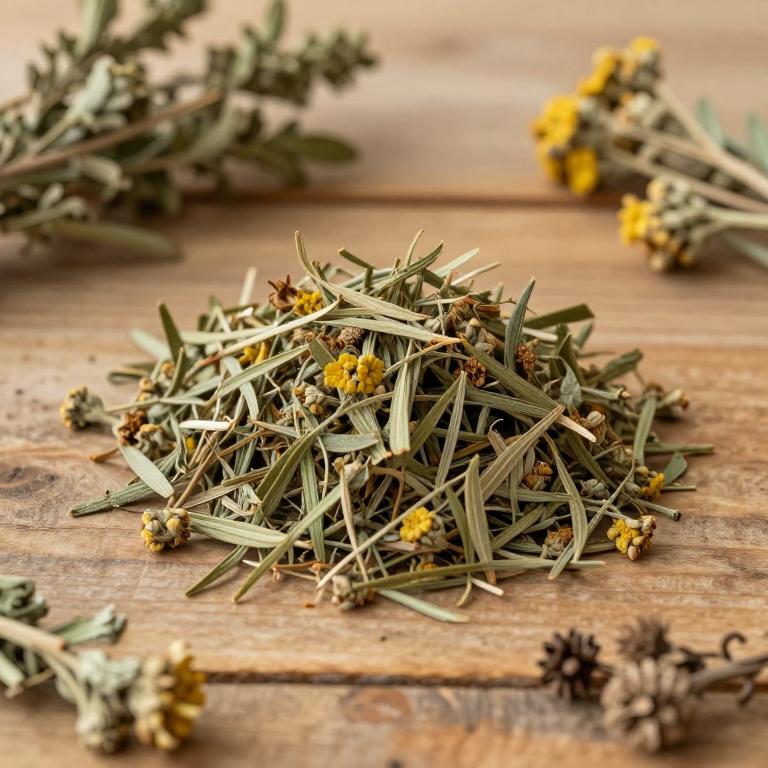
Davana, scientifically known as Artemisia pallens, is a fragrant, perennial herb celebrated in traditional medicine. Native to various regions, this aromatic plant contains essential oils with potent antimicrobial and antioxidant properties. It is widely utilized for its therapeutic potential in treating skin ailments, digestive issues, and inflammatory conditions.
- Family
- Asteraceae
- Native range
- Asia-Tropical
- Parts used
- Root · Leaf
- Common names
- Not available
- Scientific synonyms
- Not available
Names and Synonyms
Scientific Names
Accepted name
Artemisia pallensSources: Wikidata
Taxonomical Classification
This plant belongs to the kingdom Plantae and the phylum Streptophyta, falling under the class Equisetopsida and subclass Magnoliidae. Within the order Asterales, it is classified under the family Asteraceae. Specifically, Artemisia pallens is categorized within the genus Artemisia.
| Rank | Classification |
|---|---|
| Kingdom | Plantae |
| Phylum | Streptophyta |
| Class | Equisetopsida |
| Subclass | Magnoliidae |
| Order | Asterales |
| Family | Asteraceae |
| Genus | Artemisia |
Sources: The World Checklist of Vascular Plants (WCVP)
Distribution
This plant, known scientifically as Artemisia pallens, has a specific and localized geographical range. Its distribution is primarily concentrated within the Indian Subcontinent. Specifically, the species is found growing across various regions of India. This indicates that the plant is native to the unique climatic conditions of this particular South Asian territory. Consequently, its natural habitat is closely tied to the ecological landscape of the Indian subcontinent.
| Region | Area |
|---|---|
| Indian Subcontinent | India |
Sources: The World Checklist of Vascular Plants (WCVP)
Plant Parts
Artemisia pallens has 3 reported plant parts identified across 4 scientific publications and several other databases that are studied for medicinal purposes. The most consistently reported plant part include root, leaf, stem.
| Plant part | Supporting sources | Consensus |
|---|---|---|
| Root | 2 supporting sources | ★☆☆☆☆ |
| Leaf | 1 supporting sources | ★☆☆☆☆ |
| Stem | 1 supporting sources | ★☆☆☆☆ |
Root
- Planta
- 3 Biotech
Leaf
- 3 Biotech
Stem
- 3 Biotech
Chemicals
Artemisia pallens has 53 reported phytochemicals identified across 4 scientific publications and several other databases. The most consistently reported chemicals include Bicyclogermacrene, Davanone, Spathulenol, Davana ether, EO.
| Chemical | Supporting sources | Consensus |
|---|---|---|
| Bicyclogermacrene | 3 supporting sources | ★★☆☆☆ |
| Davanone | 3 supporting sources | ★★☆☆☆ |
| Spathulenol | 3 supporting sources | ★★☆☆☆ |
| Davana ether | 2 supporting sources | ★☆☆☆☆ |
| EO | 2 supporting sources | ★☆☆☆☆ |
| trans-Davanone | 2 supporting sources | ★☆☆☆☆ |
| (E)-Methyl cinnamate | 1 supporting sources | ★☆☆☆☆ |
| (E)-ethyl cinnamate | 1 supporting sources | ★☆☆☆☆ |
| (Z)-Methyl cinnamate | 1 supporting sources | ★☆☆☆☆ |
| 2-Acetyl-5-methyl-furan | 1 supporting sources | ★☆☆☆☆ |
Bicyclogermacrene
- Dr. Duke
- Chemistry & biodiversity
- Journal of agricultural and food chemistry
Davanone
- Dr. Duke
- Journal of agricultural and food chemistry
- International microbiology : the official journal of the Spanish Society for Microbiology
Spathulenol
- Dr. Duke
- Chemistry & biodiversity
- Molecules (Basel, Switzerland)
Davana ether
- Dr. Duke
- Journal of agricultural and food chemistry
EO
- Dr. Duke
- Planta
trans-Davanone
- Chemistry & biodiversity
- Phytochemistry
(E)-Methyl cinnamate
- Journal of agricultural and food chemistry
(E)-ethyl cinnamate
- Journal of agricultural and food chemistry
(Z)-Methyl cinnamate
- Journal of agricultural and food chemistry
2-Acetyl-5-methyl-furan
- Dr. Duke
Activities
Artemisia pallens has 74 reported activities identified across 4 scientific publications and several other databases. The most consistently reported activities include Aldose-Reductase-Inhibitor, Allelopathic, Allergenic, Analgesic, Anesthetic.
| Activity | Supporting sources | Consensus |
|---|---|---|
| Aldose-Reductase-Inhibitor | 1 supporting sources | ★☆☆☆☆ |
| Allelopathic | 1 supporting sources | ★☆☆☆☆ |
| Allergenic | 1 supporting sources | ★☆☆☆☆ |
| Analgesic | 1 supporting sources | ★☆☆☆☆ |
| Anesthetic | 1 supporting sources | ★☆☆☆☆ |
| Anhydrotic | 1 supporting sources | ★☆☆☆☆ |
| AntiEBV | 1 supporting sources | ★☆☆☆☆ |
| Antiacetylcholinesterase | 1 supporting sources | ★☆☆☆☆ |
| Antiacne | 1 supporting sources | ★☆☆☆☆ |
| Antiallergic | 1 supporting sources | ★☆☆☆☆ |
Aldose-Reductase-Inhibitor
- Dr. Duke
Allelopathic
- Dr. Duke
Allergenic
- Dr. Duke
Analgesic
- Dr. Duke
Anesthetic
- Dr. Duke
Anhydrotic
- Dr. Duke
AntiEBV
- Dr. Duke
Antiacetylcholinesterase
- Dr. Duke
Antiacne
- Dr. Duke
Antiallergic
- Dr. Duke
Conditions
Artemisia pallens has 8 reported investigations on conditions identified across 4 scientific publications and several other databases. The most consistently reported conditions include Parkinson's disease, cancer, cardiovascular disease, chronic diseases, diabetes mellitus.
| Condition | Supporting sources | Consensus |
|---|---|---|
| Parkinson's disease | 1 supporting sources | ★☆☆☆☆ |
| Cancer | 1 supporting sources | ★☆☆☆☆ |
| Cardiovascular disease | 1 supporting sources | ★☆☆☆☆ |
| Chronic diseases | 1 supporting sources | ★☆☆☆☆ |
| Diabetes mellitus | 1 supporting sources | ★☆☆☆☆ |
| Malaria | 1 supporting sources | ★☆☆☆☆ |
| Neuroinflammation | 1 supporting sources | ★☆☆☆☆ |
| Parkinsonism | 1 supporting sources | ★☆☆☆☆ |
Parkinson's disease
- Biochemical and biophysical research communications
Cancer
- Journal of pharmacy & bioallied sciences
Cardiovascular disease
- Journal of pharmacy & bioallied sciences
Chronic diseases
- Journal of pharmacy & bioallied sciences
Diabetes mellitus
- Journal of ethnopharmacology
Malaria
- 3 Biotech
Neuroinflammation
- Chemistry & biodiversity
Parkinsonism
- Biochemical and biophysical research communications
Preparations
Artemisia pallens has 7 reported preparations identified across 4 scientific publications and several other databases. The most consistently reported preparations include aerial part, aqueous extract, dried aerial extract, ethanol extract, ethanolic extract.
| Preparation | Supporting sources | Consensus |
|---|---|---|
| Aerial part | 1 supporting sources | ★☆☆☆☆ |
| Aqueous extract | 1 supporting sources | ★☆☆☆☆ |
| Dried aerial extract | 1 supporting sources | ★☆☆☆☆ |
| Ethanol extract | 1 supporting sources | ★☆☆☆☆ |
| Ethanolic extract | 1 supporting sources | ★☆☆☆☆ |
| Hairy roots | 1 supporting sources | ★☆☆☆☆ |
| Methanolic extract | 1 supporting sources | ★☆☆☆☆ |
Aerial part
- 3 Biotech
Aqueous extract
- 3 Biotech
Dried aerial extract
- 3 Biotech
Ethanol extract
- Molecules (Basel, Switzerland)
Ethanolic extract
- 3 Biotech
Hairy roots
- 3 Biotech
Methanolic extract
- 3 Biotech