Artemisia montana
Artemisia montana · Accepted scientific name
Scientific literature: Very Sparse (1 studies) · ★☆☆☆☆
Artemisia montana is a botanical species that has garnered significant scientific interest due to its unique chemical profile. Researchers have specifically focused on its methanol extract to investigate its diverse biological potential. This preparation is rich in important phytochemicals, most notably esculetin and luteolin 7-O-rutinoside. Preliminary studies highlight that these compounds contribute to the plant's notable antioxidant activities. Understanding these properties provides valuable insight into the therapeutic possibilities offered by this plant.
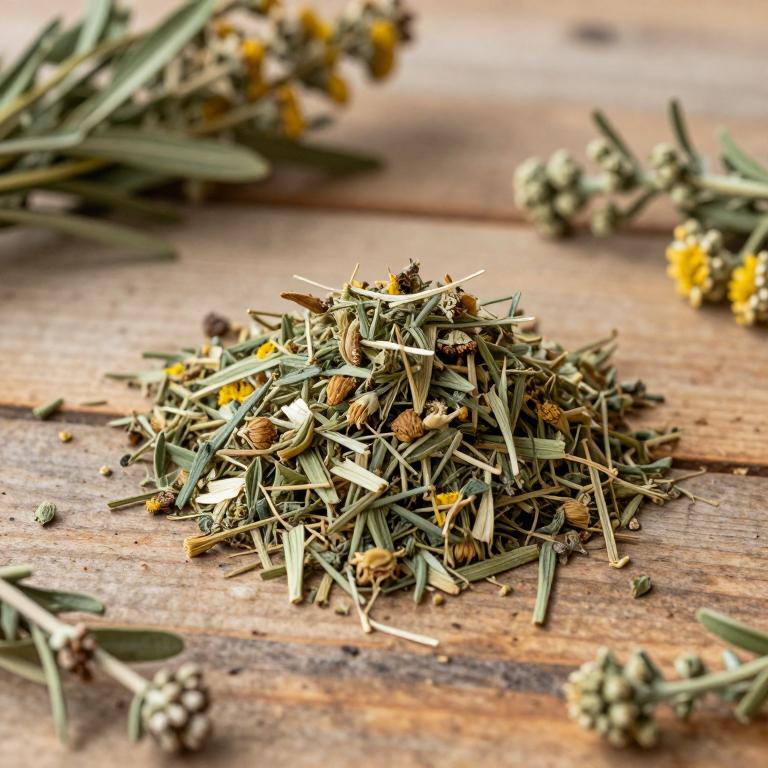
- Synonyms
- Artemisia Gigantea F. Montana · Artemisia Vulgaris Var. Yezoana · 8 more
- Common names
- Not available
- Family
- Asteraceae
- Distribution
- Not available
- Plant Parts
- Not available
Classification
Synonyms
Artemisia montana is a taxonomically complex species that is closely linked to several botanical synonyms. It is widely recognized as being synonymous with Artemisia gigantea, a relationship that extends to various specific forms. This connection includes the designations of Artemisia gigantea f. montana and Artemisia gigantea f. shikotaensis. Furthermore, the plant is identified under the synonymous name Artemisia gigantea var. shikotaensis in certain botanical records. Finally, the classification also encompasses Artemisia montana f. septentrionalis, reflecting the intricate web of its scientific naming history.
Sources: The World Checklist of Vascular Plants (WCVP)
Taxonomy
Artemisia montana is a unique botanical specimen that belongs to the kingdom Plantae. Within this vast biological realm, the plant is classified under the class Equisetopsida. It further belongs to the order Asterales, showcasing its specific evolutionary lineage. As a member of the Asteraceae family, it shares characteristics with a diverse group of flowering plants. Ultimately, this species is defined by its placement within the genus Artemisia.
| Rank | Classification |
|---|---|
| Kingdom | Plantae |
| Phylum | Streptophyta |
| Class | Equisetopsida |
| Subclass | Magnoliidae |
| Order | Asterales |
| Family | Asteraceae |
| Genus | Artemisia |
Sources: The World Checklist of Vascular Plants (WCVP)
Distribution
Geographic Regions
Artemisia montana is a resilient species widely distributed throughout the Asia-Temperate region. Its presence is prominently noted across China, specifically within the southeastern territories. The plant also thrives in the Eastern Asian landscapes of both Japan and Korea. Moving further north, it can be found in the Russian Far East, spanning from Khabarovsk to the Kuril Islands. This broad geographical range highlights the plant's ability to adapt to diverse temperate environments.
Sources: The World Checklist of Vascular Plants (WCVP)
Identification
Morphology
Artemisia montana is a self-supporting herb that maintains a structured presence in its natural habitat. This plant typically reaches a modest stature, with heights ranging from a minimum of 0.8 m to a maximum of 0.95 m. Its growth form allows it to stand firmly without the need for external support. Consequently, this species occupies a specific vertical niche within its ecosystem.
Sources: Global Inventory of Floras and Traits (GIFT)
Biological Activities
Artemisia montana exhibits significant antioxidant activity, as demonstrated through its ability to scavenge DPPH radicals and inhibit free radical generation in hepatocytes. Research into the plant's methanol extract revealed a potent radical scavenging effect even at low concentrations. Through the process of solvent extraction and fractionation, scientists were able to isolate specific active principles from the aerial parts of the plant. These key compounds, identified as esculetin and luteolin 7-O-rutinoside, serve as the primary drivers of this antioxidant capacity. Remarkably, the effectiveness of these isolated molecules was found to be comparable to the standard antioxidant, L-ascorbic acid.
Compounds
Artemisia montana serves as a rich source of bioactive compounds found within its aerial parts. Research has successfully identified that this plant contains the significant chemical constituents esculetin and luteolin 7-O-rutinoside. These specific compounds were isolated from the plant's methanol extract through various solvent extraction processes. Once isolated, both esculetin and luteolin 7-O-rutinoside demonstrated potent antioxidant activities. Notably, the effectiveness of these active principles was found to be comparable to that of L-ascorbic acid.
Conditions
Artemisia montana exhibits significant antioxidant properties through its ability to treat 1,1-diphenyl-2-picrylhydrazyl (DPPH) radicals. The plant also functions to treat the free radical generation of hepatocytes (AC2F) by providing inhibitory activity. Research indicates that the methanol extract of this species demonstrates strong radical scavenging capabilities at a concentration of 10.1 microg/ml. These specific biological actions are driven by active principles such as esculetin and luteolin 7-O-rutinoside. The effectiveness of these plant-based treatments is found to be comparable to the standard antioxidant L-ascorbic acid.
Preparations
Artemisia montana is prepared as a methanol extract to evaluate its biological properties. This specific preparation was used to assess the plant's radical scavenging effects and its ability to inhibit free radical generation in hepatocytes. The resulting methanol extract demonstrated significant antioxidant activity at a concentration of 10.1 microg/ml. Following this extraction, the substance underwent further fractionation through solvent extraction to isolate its active principles. Through this process, researchers were able to identify specific compounds like esculetin and luteolin 7-O-rutinoside.