Artemisia marschalliana
Artemisia marschalliana · Accepted scientific name
Scientific literature: Very Sparse (5 studies) · ★☆☆☆☆
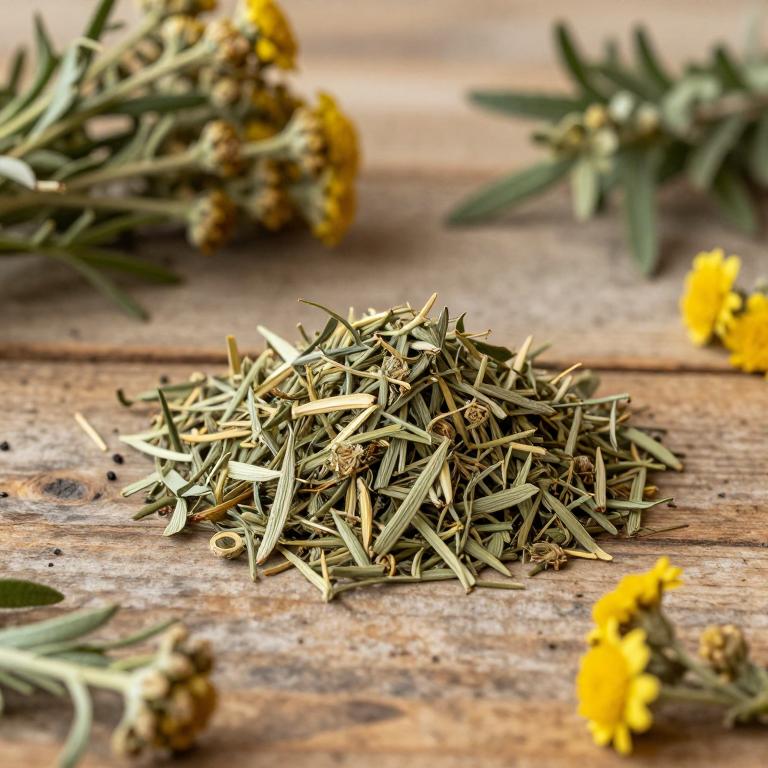
Artemisia marschalliana, scientifically known as Artemisia marschalliana, is a resilient perennial herb native to various temperate regions. Often referred to as marsh wormwood, this plant is valued in traditional medicine for its diverse bioactive compounds, which offer potential therapeutic properties, including anti-inflammatory and antioxidant effects in herbal remedies.
- Family
- Asteraceae
- Native range
- Europe
- Parts used
- Not available
- Common names
- Not available
- Scientific synonyms
- Artemisia Campestris Subsp. Marschalliana · Artemisia Campestris Var. Marschalliana
Names and Synonyms
Scientific Names
Accepted name
Artemisia marschallianaSynonyms
- Artemisia campestris subsp. marschalliana
- Artemisia campestris var. marschalliana
Sources: Wikidata, Catalogue of Life
Taxonomical Classification
This plant belongs to the kingdom Plantae and is classified under the phylum Streptophyta and class Equisetopsida. Within the subclass Magnoliidae, it falls under the order Asterales and is a member of the Asteraceae family. It is specifically identified by its genus, Artemisia.
| Rank | Classification |
|---|---|
| Kingdom | Plantae |
| Phylum | Streptophyta |
| Class | Equisetopsida |
| Subclass | Magnoliidae |
| Order | Asterales |
| Family | Asteraceae |
| Genus | Artemisia |
Sources: The World Checklist of Vascular Plants (WCVP)
Distribution
This plant exhibits a broad distribution across several regions of the European continent. In Middle Europe, its presence is notably documented in Germany and Poland. Moving toward the southeastern part of the continent, the species can be found within the borders of Bulgaria and Romania. Additionally, its range extends into the European portion of Türkiye. Together, these locations highlight the diverse habitats where the plant thrives.
| Region | Area |
|---|---|
| Middle Europe | Germany |
| Middle Europe | Poland |
| Southeastern Europe | Bulgaria |
| Southeastern Europe | Romania |
| Southeastern Europe | Türkiye-in-Europe |
| Eastern Europe | Belarus |
| Eastern Europe | Baltic States |
| Eastern Europe | Krym |
| Eastern Europe | Central European Russia |
| Eastern Europe | East European Russia |
Sources: The World Checklist of Vascular Plants (WCVP)
Botanical Identification
Ecology
The ecology of Artemisia marschalliana is characterized by its adaptability to diverse montane and steppe environments, occupying a broad altitudinal spectrum. This species is typically found across a significant vertical gradient, with its distribution ranging from a minimum elevation of 550 m AMSL to a maximum elevation of 2200 m AMSL. Within these habitats, the plant thrives most frequently at a mean elevation of approximately 1375 m AMSL, suggesting a preference for mid-to-high altitude ecosystems. This wide elevational range indicates a capacity to tolerate varying temperature regimes and atmospheric pressures, allowing it to establish itself in specialized ecological niches from lower slopes to higher mountainous terrains.
- Elevational range max:
- 2200 m AMSL
- Elevational range mean:
- 1375 m AMSL
- Elevational range min:
- 550 m AMSL
Life history
The life history of Artemisia marschalliana is characterized by its status as a perennial plant, allowing it to persist through multiple growing seasons and establish a stable presence in its habitat. In terms of its structural growth and survival strategy, the species is classified as a chamaephyte, a life form where the majority of the plant's vegetative buds are located close to or just above the soil surface, often protected by leaf litter or snow during unfavorable conditions. This chamaephyte classification, consistent across its biological categorization, ensures its resilience and ability to regenerate effectively within its ecological niche.
- Life form :
- chamaephyte
- Lifecycle :
- perennial
Morphology
The morphology of Artemisia marschalliana is characterized by its growth form as a non-woody herb, functioning as a self-supporting organism that does not require climbing structures. As an independent species, it does not exhibit parasitic behavior, thriving instead through its own metabolic processes. In terms of its ecological habitat and moisture preference, the plant displays a versatile range of environmental adaptations, being capable of existing in terrestrial, semiaquatic, or aquatic conditions.
- Aquatic :
- terrestrial
- Climber :
- self-supporting
- Growth form :
- herb
- Parasite :
- independent
- Woodiness :
- non-woody
Physiology
The physiological development of Artemisia marschalliana is characterized by distinct morphological variations in its foliar structures, which play a critical role in its metabolic processes. The leaves exhibit a significant range in dimensions, with an average leaf length of 6 cm, though they can vary from a minimum of 4 cm to a maximum of 8 cm. Complementing this longitudinal variation, the leaf width demonstrates a similar degree of plasticity, maintaining a mean width of 3.5 cm. The width of the foliage can fluctuate between a minimum of 2 cm and reach a maximum of 5 cm, reflecting the plant's adaptive capacity to its environmental conditions and its capacity for photosynthetic optimization through varying leaf surface area.
- Leaf length max:
- 8 cm
- Leaf length mean:
- 6 cm
- Leaf length min:
- 4 cm
- Leaf width max:
- 5 cm
- Leaf width mean:
- 3.5 cm
- Leaf width min:
- 2 cm
Reproduction
The reproduction of Artemisia marschalliana is characterized by a specific dispersal strategy primarily driven by environmental forces. The plant exhibits an anemochorous dispersal syndrome, meaning its seeds or reproductive structures are adapted for wind dispersal, allowing them to be carried across distances by air currents. This anemochorous mechanism serves as the primary method for colonizing new habitats and ensuring the spatial distribution of the species within its ecosystem.
- Dispersal syndrome :
- anemochorous
Sources: Global Inventory of Floras and Traits (GIFT)
Chemicals
Artemisia marschalliana has 2 reported phytochemicals identified across 0 scientific publications and several other databases. The most consistently reported chemicals include Coumarins, Fatty acids.
| Chemical | Supporting sources | Consensus |
|---|---|---|
| Coumarins | 1 supporting sources | ★☆☆☆☆ |
| Fatty acids | 1 supporting sources | ★☆☆☆☆ |
Coumarins
- Molecules (Basel, Switzerland)
Fatty acids
- Molecules (Basel, Switzerland)
Conditions
Artemisia marschalliana has 1 reported investigations on conditions identified across 0 scientific publications and several other databases. The most consistently reported conditions include breast cancer.
| Condition | Supporting sources | Consensus |
|---|---|---|
| Breast cancer | 1 supporting sources | ★☆☆☆☆ |
Breast cancer
- BMC complementary medicine and therapies
Preparations
Artemisia marschalliana has 5 reported preparations identified across 0 scientific publications and several other databases. The most consistently reported preparations include 80% fraction, dichloromethane extract, dichloromethane extract 60% fraction, essential oil, extracts.
| Preparation | Supporting sources | Consensus |
|---|---|---|
| 80% fraction | 1 supporting sources | ★☆☆☆☆ |
| Dichloromethane extract | 1 supporting sources | ★☆☆☆☆ |
| Dichloromethane extract 60% fraction | 1 supporting sources | ★☆☆☆☆ |
| Essential oil | 1 supporting sources | ★☆☆☆☆ |
| Extracts | 1 supporting sources | ★☆☆☆☆ |
80% fraction
- BMC complementary medicine and therapies
Dichloromethane extract
- BMC complementary medicine and therapies
Dichloromethane extract 60% fraction
- BMC complementary medicine and therapies
Essential oil
- BMC complementary medicine and therapies
Extracts
- BMC complementary medicine and therapies