Artemisia leucodes
Artemisia leucodes · Accepted scientific name
Scientific literature: Very Sparse (10 studies) · ★☆☆☆☆
Artemisia leucodes, is a distinctive medicinal plant belonging to the Asteraceae family. Renowned for its silvery foliage and aromatic properties, this species is frequently studied for its bioactive compounds. It holds significant traditional importance, offering potential therapeutic applications in treating various ailments through its unique phytochemical profile and antioxidant capabilities.
- Family
- Asteraceae
- Native range
- Asia-Temperate
- Parts used
- Not available
- Common names
- Not available
- Scientific synonyms
- Seriphidium Leucodes
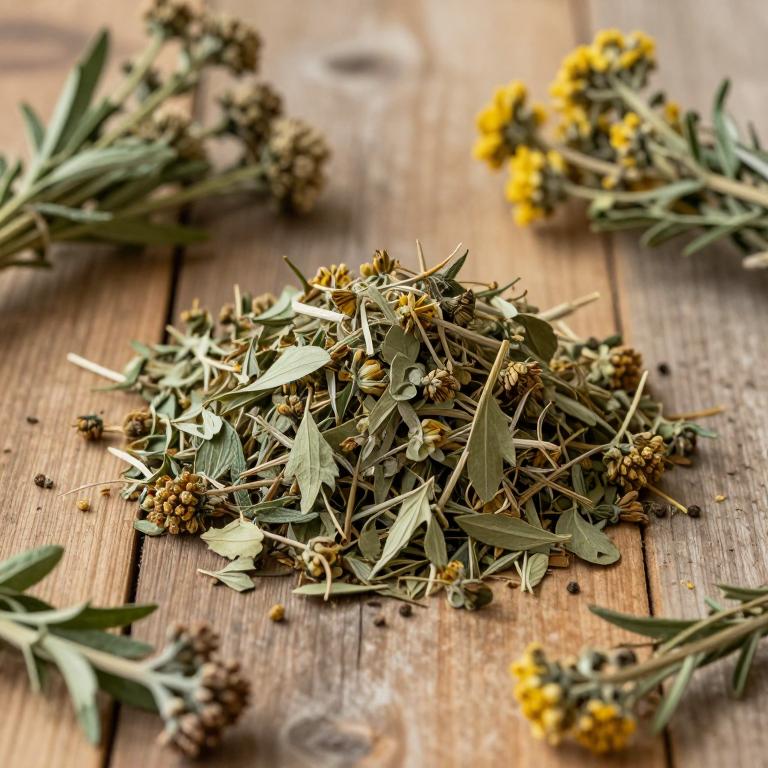
Names and Synonyms
Scientific Names
Accepted name
Artemisia leucodesSynonyms
- Seriphidium leucodes
Sources: Wikidata, Catalogue of Life
Taxonomical Classification
This plant belongs to the kingdom Plantae and the phylum Streptophyta, falling under the class Equisetopsida and subclass Magnoliidae. Within the order Asterales, it is classified under the family Asteraceae. Specifically, Artemisia leucodes is a member of the genus Artemisia.
| Rank | Classification |
|---|---|
| Kingdom | Plantae |
| Phylum | Streptophyta |
| Class | Equisetopsida |
| Subclass | Magnoliidae |
| Order | Asterales |
| Family | Asteraceae |
| Genus | Artemisia |
Sources: The World Checklist of Vascular Plants (WCVP)
Distribution
This plant is primarily distributed across the vast landscapes of Central Asia. It can be found growing within the borders of Kazakhstan. Additionally, its natural habitat extends into the territory of Kirgizstan. The species is also documented throughout Turkmenistan and Tadzhikistan. Finally, its geographical range includes the nation of Uzbekistan.
| Region | Area |
|---|---|
| Central Asia | Kazakhstan |
| Central Asia | Kirgizstan |
| Central Asia | Turkmenistan |
| Central Asia | Tadzhikistan |
| Central Asia | Uzbekistan |
Sources: The World Checklist of Vascular Plants (WCVP)
Botanical Identification
Ecology
The ecology of Artemisia leucodes is characterized by its specialized adaptation to arid and semi-arid environments, where it thrives in harsh, well-drained substrates. This species is primarily found inhabiting desert landscapes, specifically colonizing sandy and stony places that offer minimal competition from less resilient vegetation. By occupying these nutrient-poor, gravelly, and shifting soil environments, the plant has evolved to withstand high solar radiation and extreme temperature fluctuations typical of its xeric habitats. Its preference for such open, disturbed, or sparsely vegetated terrains allows it to exploit niches where moisture availability is intermittent and soil stability is low.
- Habitat :
- desert, sand, stony places
Life history
The life history of Artemisia leucodes is characterized by an annual lifecycle, meaning the plant completes its entire biological development—from germination and vegetative growth to flowering and seed production—within a single growing season. Following the arrival of favorable environmental conditions, seeds germinate to establish a primary root system and develop foliage suited to its specific habitat. As the season progresses, the plant transitions from its vegetative stage into its reproductive phase, producing inflorescences to facilitate pollination. Once fertilization is successful, the plant allocates its remaining energy toward the maturation of seeds, ultimately leading to the senescence and death of the individual organism. The survival of the species then relies on the dispersal of the produced seeds into the soil to await the next seasonal cycle.
- Lifecycle :
- annual
Morphology
The morphology of Artemisia leucodes is characterized by its growth form as a herb, exhibiting a non-woody structure throughout its development. The plant maintains a relatively low stature, with a height that typically ranges from a minimum of 0.3 m to a maximum of 0.7 m.
- Growth form :
- herb
- Plant height max:
- 0.7 m
- Plant height min:
- 0.3 m
- Woodiness :
- non-woody
Sources: Global Inventory of Floras and Traits (GIFT)
Chemicals
Artemisia leucodes has 5 reported phytochemicals identified across 0 scientific publications and several other databases. The most consistently reported chemicals include CAMPHENE, GROSSMIZIN, Leucomisin, Matricarin, l-Camphor.
| Chemical | Supporting sources | Consensus |
|---|---|---|
| CAMPHENE | 1 supporting sources | ★☆☆☆☆ |
| GROSSMIZIN | 1 supporting sources | ★☆☆☆☆ |
| Leucomisin | 1 supporting sources | ★☆☆☆☆ |
| Matricarin | 1 supporting sources | ★☆☆☆☆ |
| l-Camphor | 1 supporting sources | ★☆☆☆☆ |
CAMPHENE
- Fitoterapia
GROSSMIZIN
- Fitoterapia
Leucomisin
- Fitoterapia
Matricarin
- Fitoterapia
l-Camphor
- Fitoterapia
Activities
Artemisia leucodes has 1 reported activities identified across 0 scientific publications and several other databases. The most consistently reported activities include Antioxidant.
| Activity | Supporting sources | Consensus |
|---|---|---|
| Antioxidant | 1 supporting sources | ★☆☆☆☆ |
Antioxidant
- Molecules (Basel, Switzerland)