Artemisia jordanica
Artemisia jordanica · Accepted scientific name
Scientific literature: Very Sparse (11 studies) · ★☆☆☆☆
, scientifically known as Artemisia jordanica, is a distinctive medicinal shrub native to specific mountainous regions. Renowned for its aromatic properties, this plant belongs to the Asteraceae family. It is traditionally utilized in herbal medicine for its bioactive compounds, offering potential therapeutic benefits in treating various inflammatory and digestive ailments.
- Family
- Asteraceae
- Native range
- Asia-Temperate
- Parts used
- Leaf
- Common names
- Not available
- Scientific synonyms
- Not available
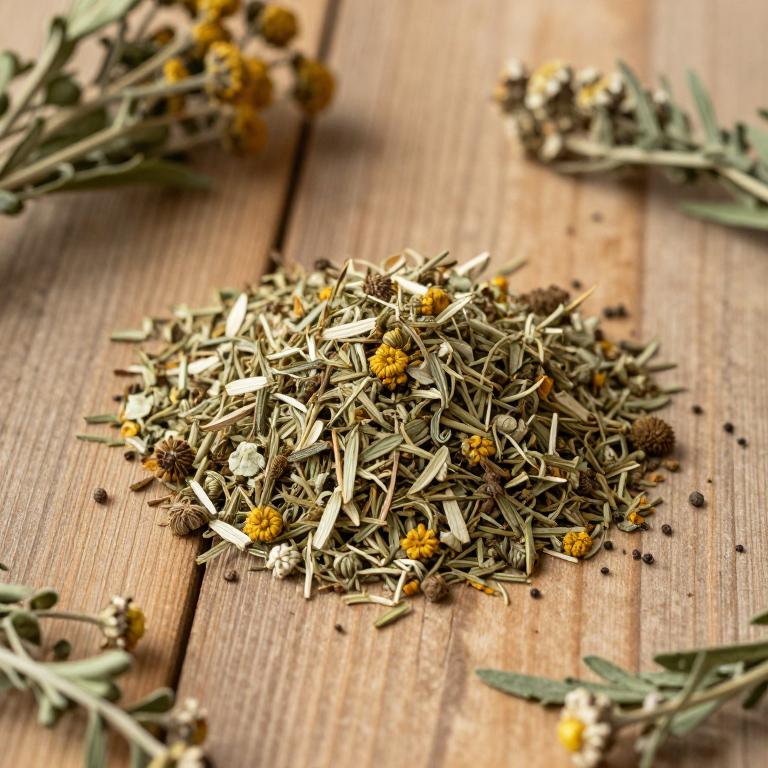
Names and Synonyms
Scientific Names
Accepted name
Artemisia jordanicaSources: Wikidata, Catalogue of Life
Taxonomical Classification
This plant, Artemisia jordanica, belongs to the kingdom Plantae and the phylum Streptophyta. Within the class Equisetopsida and subclass Magnoliidae, it is classified under the order Asterales and the family Asteraceae. Ultimately, it is identified by the genus Artemisia.
| Rank | Classification |
|---|---|
| Kingdom | Plantae |
| Phylum | Streptophyta |
| Class | Equisetopsida |
| Subclass | Magnoliidae |
| Order | Asterales |
| Family | Asteraceae |
| Genus | Artemisia |
Sources: The World Checklist of Vascular Plants (WCVP)
Distribution
This plant, known as Artemisia jordanica, exhibits a specific distribution across several key regions in the Middle East. Within Western Asia, its presence is documented in the country of Iraq. The species also extends its range into Palestine, which is another notable part of Western Asia. Moving toward the Arabian Peninsula, the plant can be found growing in Saudi Arabia. Together, these locations define the primary geographical footprint of this medicinal species.
| Region | Area |
|---|---|
| Western Asia | Iraq |
| Western Asia | Palestine |
| Arabian Peninsula | Saudi Arabia |
Sources: The World Checklist of Vascular Plants (WCVP)
Botanical Identification
Morphology
The morphology of Artemisia jordanica is characterized by a growth form that functions as a subshrub, exhibiting a woody nature in its structural development. This plant is not a parasite, existing as an independent organism within its ecosystem. Regarding its habitat preference and moisture relationship, it is classified as terrestrial, though it may occupy niches spanning aquatic, semiaquatic, or terrestrial environments depending on local ecological conditions.
- Aquatic :
- terrestrial
- Growth form :
- shrub
- Growth form :
- subshrub
- Parasite :
- independent
- Woodiness :
- woody
Sources: Global Inventory of Floras and Traits (GIFT)
Plant Parts
Artemisia jordanica has 1 reported plant parts identified across 1 scientific publications and several other databases that are studied for medicinal purposes. The most consistently reported plant part include leaf.
| Plant part | Supporting sources | Consensus |
|---|---|---|
| Leaf | 1 supporting sources | ★☆☆☆☆ |
Leaf
- Molecules (Basel, Switzerland)
Chemicals
Artemisia jordanica has 2 reported phytochemicals identified across 1 scientific publications and several other databases. The most consistently reported chemicals include BORNYL ACETATE, endo-Borneol.
| Chemical | Supporting sources | Consensus |
|---|---|---|
| BORNYL ACETATE | 1 supporting sources | ★☆☆☆☆ |
| endo-Borneol | 1 supporting sources | ★☆☆☆☆ |
BORNYL ACETATE
- Molecules (Basel, Switzerland)
endo-Borneol
- Molecules (Basel, Switzerland)
Activities
Artemisia jordanica has 6 reported activities identified across 1 scientific publications and several other databases. The most consistently reported activities include Antibacterial, Antidiabetic, Antifungal, Antimicrobial, Antioxidant.
| Activity | Supporting sources | Consensus |
|---|---|---|
| Antibacterial | 1 supporting sources | ★☆☆☆☆ |
| Antidiabetic | 1 supporting sources | ★☆☆☆☆ |
| Antifungal | 1 supporting sources | ★☆☆☆☆ |
| Antimicrobial | 1 supporting sources | ★☆☆☆☆ |
| Antioxidant | 1 supporting sources | ★☆☆☆☆ |
| Cytotoxic | 1 supporting sources | ★☆☆☆☆ |
Antibacterial
- Molecules (Basel, Switzerland)
Antidiabetic
- Molecules (Basel, Switzerland)
Antifungal
- Molecules (Basel, Switzerland)
Antimicrobial
- Molecules (Basel, Switzerland)
Antioxidant
- Molecules (Basel, Switzerland)
Cytotoxic
- Molecules (Basel, Switzerland)
Conditions
Artemisia jordanica has 2 reported investigations on conditions identified across 1 scientific publications and several other databases. The most consistently reported conditions include inflammations, neurodegenerative diseases.
| Condition | Supporting sources | Consensus |
|---|---|---|
| Inflammations | 1 supporting sources | ★☆☆☆☆ |
| Neurodegenerative diseases | 1 supporting sources | ★☆☆☆☆ |
Inflammations
- Molecules (Basel, Switzerland)
Neurodegenerative diseases
- Molecules (Basel, Switzerland)
Preparations
Artemisia jordanica has 1 reported preparations identified across 1 scientific publications and several other databases. The most consistently reported preparations include Leaves Essential Oil.
| Preparation | Supporting sources | Consensus |
|---|---|---|
| Leaves essential oil | 1 supporting sources | ★☆☆☆☆ |
Leaves essential oil
- Molecules (Basel, Switzerland)