Oriental wormwood
Artemisia japonica · Accepted scientific name
Scientific literature: Very Sparse (4 studies) · ★☆☆☆☆
Oriental wormwood, scientifically known as Artemisia japonica, is a perennial herb native to East Asia. Valued in traditional medicine, this plant possesses notable anti-inflammatory and antioxidant properties. Often found in coastal or mountainous regions, it is utilized in various herbal remedies to treat skin ailments and digestive issues.
- Family
- Asteraceae
- Native range
- Asia-Temperate
- Parts used
- Not available
- Common names
- Not available
- Scientific synonyms
- Draconia Japonica · Oligosporus Japonicus
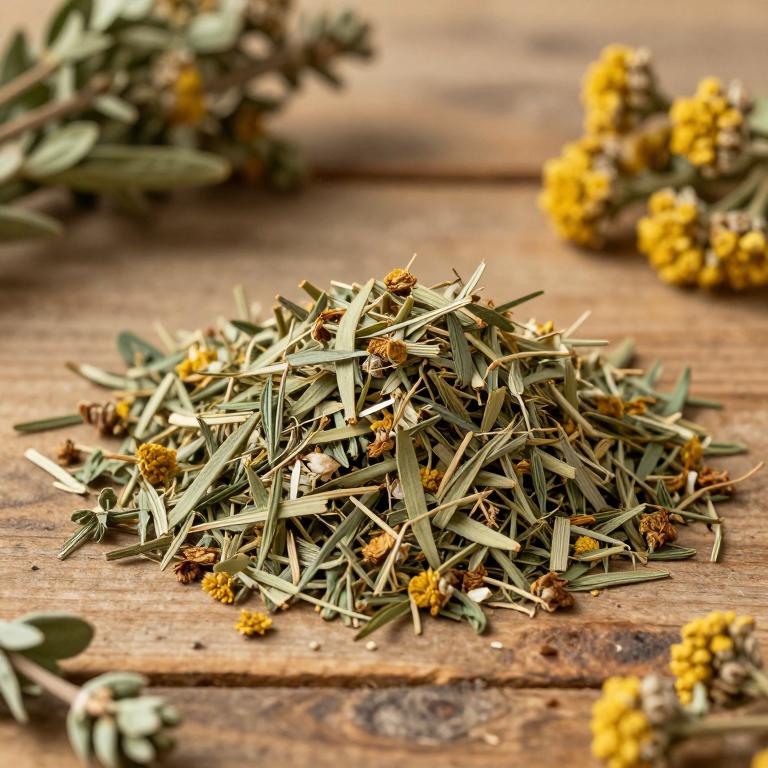
Names and Synonyms
Scientific Names
Accepted name
Artemisia japonicaSynonyms
- Draconia japonica
- Oligosporus japonicus
Sources: Wikidata, Catalogue of Life
Taxonomical Classification
This plant belongs to the kingdom Plantae and is classified under the phylum Streptophyta and class Equisetopsida. Within the subclass Magnoliidae, it is situated in the order Asterales and is a member of the Asteraceae family. Finally, its taxonomic identity is defined by the genus Artemisia, specifically as the species Artemisia japonica.
| Rank | Classification |
|---|---|
| Kingdom | Plantae |
| Phylum | Streptophyta |
| Class | Equisetopsida |
| Subclass | Magnoliidae |
| Order | Asterales |
| Family | Asteraceae |
| Genus | Artemisia |
Sources: The World Checklist of Vascular Plants (WCVP)
Distribution
This plant exhibits a broad geographical distribution spanning across several distinct regions. In the Russian Far East, it can be found inhabiting the Kuril Islands, Sakhalin, and the Primorye region. Its presence extends further into Western Asia, specifically within the territory of Afghanistan. Additionally, the species is recorded in the South-Central regions of China. Together, these locations illustrate the wide environmental range of Artemisia japonica.
| Region | Area |
|---|---|
| Russian Far East | Kuril Is. |
| Russian Far East | Primorye |
| Russian Far East | Sakhalin |
| Western Asia | Afghanistan |
| China | China South-Central |
| China | Hainan |
| China | Manchuria |
| China | China North-Central |
| China | China Southeast |
| China | Tibet |
Sources: The World Checklist of Vascular Plants (WCVP)
Botanical Identification
Ecology
The ecology of Artemisia japonica is characterized by its presence in diverse high-altitude landscapes, ranging from dense forests and expansive meadows to rugged mountain terrains, riverbanks, and shrubberies. This species is specifically adapted to montane environments, occupying an elevational range that begins at 2000 m AMSL and extends up to a maximum of 3000 m AMSL. Its ability to thrive across these varied habitats—from the moist margins of rivers to the open sunlight of mountain meadows—demonstrates a versatile ecological niche within these high-elevation ecosystems.
- Elevational range max:
- 3000 m AMSL
- Elevational range min:
- 2000 m AMSL
- Habitat :
- forest, meadows, mountains, rivers, shrubberies
Life history
The life history of Artemisia japonica is characterized by its classification as a perennial plant, allowing it to persist through multiple growing seasons. In terms of its structural growth and survival strategy, the species functions as a hemicryptophyte, a life form where the perennable buds are located at or just below the soil surface, protected by leaf litter or organic matter during unfavorable conditions. This hemicryptophytic nature ensures its ability to re-emerge and continue its development over several years, establishing a stable presence within its ecological niche.
- Life form :
- hemicryptophyte
- Lifecycle :
- perennial
Morphology
The morphology of Artemisia japonica is characterized by its growth form as a non-woody herb, appearing as a self-supporting plant that does not function as a climber, vine, or liana. It typically grows in a terrestrial manner, lacking aquatic or semiaquatic tendencies, and exists as an independent organism rather than a parasite or epiphyte. The plant maintains a relatively low stature, with a height ranging from a minimum of 0.65 m to a maximum of 0.9 m.
- Aquatic :
- terrestrial
- Climber :
- self-supporting
- Epiphyte :
- terrestrial
- Growth form :
- herb
- Parasite :
- independent
- Plant height max:
- 0.9 m
- Plant height min:
- 0.65 m
- Woodiness :
- non-woody
Physiology
The physiology of Artemisia japonica is characterized by a C3 photosynthetic pathway, which dictates its carbon fixation processes and metabolic efficiency. The leaf morphology plays a crucial role in its physiological capacity, featuring a mean leaf length of 5 cm, with dimensions ranging from a minimum of 4 cm to a maximum of 6 cm. Complementing this longitudinal growth, the leaf width maintains a mean of 2.25 cm, fluctuating between a minimum of 2 cm and a maximum of 2.5 cm. These specific leaf dimensions and the C3 metabolic framework collectively influence the plant's gas exchange, transpiration rates, and overall energy production.
- Leaf length max:
- 6 cm
- Leaf length mean:
- 5 cm
- Leaf length min:
- 4 cm
- Leaf width max:
- 2.5 cm
- Leaf width mean:
- 2.25 cm
- Leaf width min:
- 2 cm
- Photosynthetic pathway :
- C3
Reproduction
The reproduction of Artemisia japonica is characterized by a specific phenological cycle and precise seed morphology. The flowering period for this species is concentrated in August, marking both the beginning and the end of its primary blooming phase. During this reproductive stage, the plant produces seeds with highly consistent physical properties; the seed mass is uniform, with a mean, maximum, and minimum value all measured at 6e-05 g. This consistency in seed size suggests a highly stabilized reproductive strategy aimed at producing lightweight, standardized progeny.
- Flowering time :
- Aug
- Seed mass mean:
- 6e-05 g
Sources: Global Inventory of Floras and Traits (GIFT)
Activities
Artemisia japonica has 1 reported activities identified across 0 scientific publications and several other databases. The most consistently reported activities include Antioxidant.
| Activity | Supporting sources | Consensus |
|---|---|---|
| Antioxidant | 1 supporting sources | ★☆☆☆☆ |
Antioxidant
- Molecules (Basel, Switzerland)
Conditions
Artemisia japonica has 3 reported investigations on conditions identified across 0 scientific publications and several other databases. The most consistently reported conditions include Oxidative Stress, inflammation, oxidative stress.
| Condition | Supporting sources | Consensus |
|---|---|---|
| Oxidative stress | 1 supporting sources | ★☆☆☆☆ |
| Inflammation | 1 supporting sources | ★☆☆☆☆ |
| Oxidative stress | 1 supporting sources | ★☆☆☆☆ |
Oxidative stress
- Molecules (Basel, Switzerland)
Inflammation
- Molecules (Basel, Switzerland)
Oxidative stress
- Molecules (Basel, Switzerland)
Preparations
Artemisia japonica has 1 reported preparations identified across 0 scientific publications and several other databases. The most consistently reported preparations include extracts.
| Preparation | Supporting sources | Consensus |
|---|---|---|
| Extracts | 1 supporting sources | ★☆☆☆☆ |
Extracts
- Journal of pharmaceutical and biomedical analysis