Artemisia indica var. indica
Artemisia indica var. indica · Accepted scientific name
Scientific literature: Very Sparse (16 studies) · ★☆☆☆☆
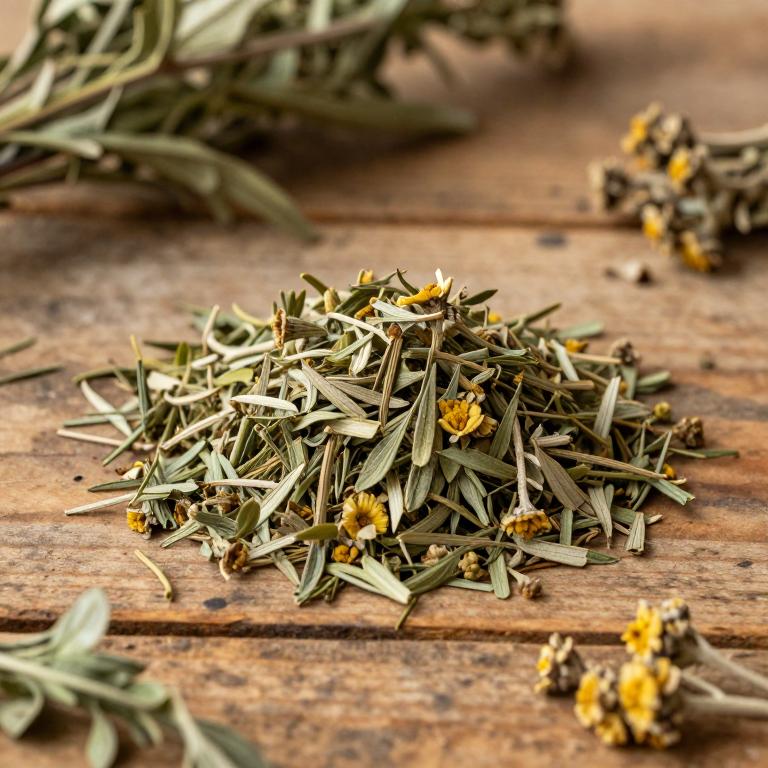
scientifically known as Artemisia indica var. indica, is a versatile perennial herb belonging to the Asteraceae family. Renowned for its aromatic foliage and medicinal properties, it is widely utilized in traditional medicine to treat various ailments, including digestive issues, fever, and skin infections, making it a vital botanical resource.
- Family
- Asteraceae
- Native range
- Asia-Temperate
- Parts used
- Not available
- Common names
- Not available
- Scientific synonyms
- Artemisia Indica Var. Orientalis · Artemisia Vulgaris Subsp. Flodmanii · 16 more
Names and Synonyms
Scientific Names
Accepted name
Artemisia indica var. indicaSynonyms
- Artemisia indica var. orientalis
- Artemisia vulgaris subsp. flodmanii
- Artemisia vulgaris var. flodmanii
- Artemisia dubia f. leptostachya
- Artemisia vulgaris var. glandulifera
- Artemisia dubia f. communis
- Artemisia dubia var. multiflora
- Absinthium moxa
- Artemisia asiatica
- Artemisia dubia var. orientalis
- Artemisia leptostachya
- Artemisia discolor var. glandulifera
- Artemisia flodmanii
- Artemisia dubia f. congesta
- Artemisia leptophylla
- Artemisia longiflora
- Artemisia vulgaris var. vulgatissima
- Artemisia princeps var. orientalis
Sources: Wikidata
Taxonomical Classification
This plant belongs to the kingdom Plantae and the phylum Streptophyta, falling under the class Equisetopsida and subclass Magnoliidae. Within the order Asterales, it is classified under the family Asteraceae and the genus Artemisia. Specifically, this medicinal variety is identified as Artemisia indica var. indica.
| Rank | Classification |
|---|---|
| Kingdom | Plantae |
| Phylum | Streptophyta |
| Class | Equisetopsida |
| Subclass | Magnoliidae |
| Order | Asterales |
| Family | Asteraceae |
| Genus | Artemisia |
Sources: The World Checklist of Vascular Plants (WCVP)
Distribution
This plant exhibits a wide geographical distribution across several distinct regions of China. It can be found growing in the South-Central part of the country as well as on the island of Hainan. Moving toward the northern territories, the species is also present in Inner Mongolia. Additionally, its range extends into the Manchuria region. Finally, the plant is recorded in the North-Central areas of China.
| Region | Area |
|---|---|
| China | China South-Central |
| China | Hainan |
| China | Inner Mongolia |
| China | Manchuria |
| China | China North-Central |
| China | China Southeast |
| China | Tibet |
| Eastern Asia | Japan |
| Eastern Asia | Korea |
| Eastern Asia | Nansei-shoto |
Sources: The World Checklist of Vascular Plants (WCVP)
Chemicals
Artemisia indica var. indica has 7 reported phytochemicals identified across 0 scientific publications and several other databases. The most consistently reported chemicals include 3,5-di-O-caffeoyl-muco-quinic acid, Cirsilineol, Flavonoids, Methyl 4,5-di-O-caffeoylquinate, Monoterpene.
| Chemical | Supporting sources | Consensus |
|---|---|---|
| 3,5-di-O-caffeoyl-muco-quinic acid | 1 supporting sources | ★☆☆☆☆ |
| Cirsilineol | 1 supporting sources | ★☆☆☆☆ |
| Flavonoids | 1 supporting sources | ★☆☆☆☆ |
| Methyl 4,5-di-O-caffeoylquinate | 1 supporting sources | ★☆☆☆☆ |
| Monoterpene | 1 supporting sources | ★☆☆☆☆ |
| Monoterpenes | 1 supporting sources | ★☆☆☆☆ |
| Steroids | 1 supporting sources | ★☆☆☆☆ |
3,5-di-O-caffeoyl-muco-quinic acid
- Archives of pharmacal research
Cirsilineol
- Endocrine, metabolic & immune disorders drug targets
Flavonoids
- Journal of ethnopharmacology
Methyl 4,5-di-O-caffeoylquinate
- Archives of pharmacal research
Monoterpene
- The Korean journal of gastroenterology = Taehan Sohwagi Hakhoe chi
Monoterpenes
- Journal of ethnopharmacology
Steroids
- Journal of ethnopharmacology
Activities
Artemisia indica var. indica has 5 reported activities identified across 0 scientific publications and several other databases. The most consistently reported activities include Gastroprotective, Antiproliferative, Cytoprotective, Hepatoprotective, Neuroprotective.
| Activity | Supporting sources | Consensus |
|---|---|---|
| Gastroprotective | 2 supporting sources | ★☆☆☆☆ |
| Antiproliferative | 1 supporting sources | ★☆☆☆☆ |
| Cytoprotective | 1 supporting sources | ★☆☆☆☆ |
| Hepatoprotective | 1 supporting sources | ★☆☆☆☆ |
| Neuroprotective | 1 supporting sources | ★☆☆☆☆ |
Gastroprotective
- Journal of ethnopharmacology
- Endocrine, metabolic & immune disorders drug targets
Antiproliferative
- Endocrine, metabolic & immune disorders drug targets
Cytoprotective
- Experimental and clinical transplantation : official journal of the Middle East Society for Organ Transplantation
Hepatoprotective
- Archives of pharmacal research
Neuroprotective
- Journal of ethnopharmacology
Preparations
Artemisia indica var. indica has 6 reported preparations identified across 0 scientific publications and several other databases. The most consistently reported preparations include extract, A. princeps extract (APO), DA-9601, ethanol extract, methanolic extract.
| Preparation | Supporting sources | Consensus |
|---|---|---|
| Extract | 2 supporting sources | ★☆☆☆☆ |
| A. princeps extract (apo) | 1 supporting sources | ★☆☆☆☆ |
| Da-9601 | 1 supporting sources | ★☆☆☆☆ |
| Ethanol extract | 1 supporting sources | ★☆☆☆☆ |
| Methanolic extract | 1 supporting sources | ★☆☆☆☆ |
| Smoke | 1 supporting sources | ★☆☆☆☆ |
Extract
- Pancreas
- Experimental and clinical transplantation : official journal of the Middle East Society for Organ Transplantation
A. princeps extract (apo)
- Mediators of inflammation
Da-9601
- Archives of pharmacal research
Ethanol extract
- Journal of ethnopharmacology
Methanolic extract
- Molecules and cells
Smoke
- The Korean journal of gastroenterology = Taehan Sohwagi Hakhoe chi