Artemisia glauca
Artemisia glauca · Accepted scientific name
Scientific literature: Very Sparse (4 studies) · ★☆☆☆☆
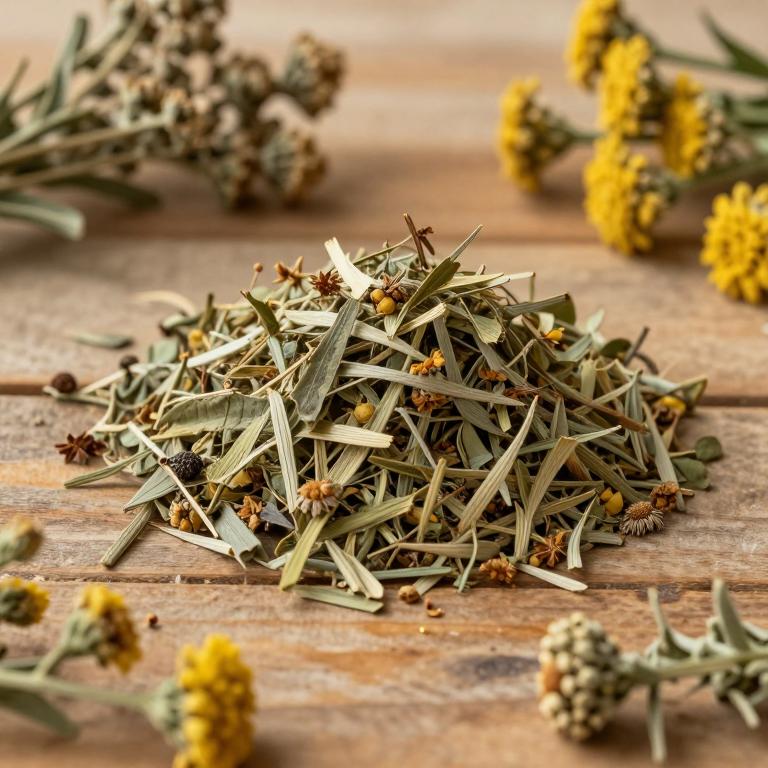
Artemisia glauca, scientifically known as Artemisia glauca, is a resilient perennial herb native to various arid regions. Renowned for its aromatic foliage, this medicinal plant has been utilized in traditional healing practices for centuries, offering potent bioactive compounds valued for their antimicrobial, anti-inflammatory, and restorative properties in herbal medicine.
- Family
- Asteraceae
- Native range
- Europe
- Parts used
- Not available
- Common names
- Not available
- Scientific synonyms
- Artemisia Glauca Var. Dracunculina · Artemisia Dracunculus Subsp. Glauca · 15 more
Names and Synonyms
Scientific Names
Accepted name
Artemisia glaucaSynonyms
- Artemisia glauca var. dracunculina
- Artemisia dracunculus subsp. glauca
- Artemisia gracillima
- Oligosporus glaucus
- Draconia glauca
- Artemisia glauca f. humilis
- Artemisia dracunculus subsp. dracunculina
- Oligosporus dracunculus subsp. dracunculinus
- Artemisia dracunculina
- Artemisia dracunculus var. glauca
- Artemisia dracunculoides var. dracunculina
- Artemisia nuttalliana
- Oligosporus dracunculus subsp. glaucus
- Artemisia dracunculus subsp. glauca
- Oligosporus nuttallianus
- Artemisia dracunculoides var. glauca
- Oligosporus dracunculinus
Sources: Wikidata
Taxonomical Classification
This plant belongs to the kingdom Plantae and is classified within the phylum Streptophyta and the class Equisetopsida. As a member of the subclass Magnoliidae and the order Asterales, it falls under the family Asteraceae. Finally, it is identified by its specific genus, Artemisia.
| Rank | Classification |
|---|---|
| Kingdom | Plantae |
| Phylum | Streptophyta |
| Class | Equisetopsida |
| Subclass | Magnoliidae |
| Order | Asterales |
| Family | Asteraceae |
| Genus | Artemisia |
Sources: The World Checklist of Vascular Plants (WCVP)
Distribution
This plant is distributed across several distinct regions within Eastern Europe. Its presence can be found throughout the Baltic States, extending into the vast territories of Central European Russia. The species also inhabits large stretches of East European Russia and North European Russia. Furthermore, its geographical range includes the country of Ukraine. Together, these locations define the specific environmental zones where the plant thrives.
| Region | Area |
|---|---|
| Eastern Europe | Baltic States |
| Eastern Europe | Central European Russia |
| Eastern Europe | East European Russia |
| Eastern Europe | North European Russia |
| Eastern Europe | Ukraine |
| Siberia | Altay |
| Siberia | Buryatiya |
| Siberia | Chita |
| Siberia | Irkutsk |
| Siberia | Krasnoyarsk |
Sources: The World Checklist of Vascular Plants (WCVP)
Botanical Identification
Ecology
The ecology of Artemisia glauca is characterized by its remarkable adaptability to diverse and often challenging environmental conditions. This species thrives across a wide range of landscapes, establishing itself in forest margins, open meadows, and old fields where sunlight availability is sufficient for growth. It demonstrates significant resilience by colonizing riparian zones near rivers and occupying the expansive, open stretches of the steppe. Furthermore, its ability to persist in stony places indicates a high tolerance for poor, rocky soils and nutrient-limited substrates. This broad ecological plasticity allows it to occupy various successional stages of land, from disturbed transitional habitats to more stable, semi-arid ecosystems.
- Habitat :
- forest, meadows, old fields, rivers, steppe, stony places
Life history
The life history of Artemia glauca is characterized by its classification as a perennial species, meaning it completes its life cycle over multiple years rather than dying after a single flowering season. As a perennial, the plant maintains a persistent vegetative presence, often utilizing established root systems to survive through unfavorable seasonal periods and regrow during optimal conditions. This enduring lifecycle allows the plant to accumulate resources over time, supporting robust reproductive efforts in subsequent years. While its growth patterns may exhibit some variability depending on environmental stressors or local ecological niches, its fundamental strategy is defined by long-term survival and continuous establishment within its habitat.
- Lifecycle :
- perennial
Morphology
The morphology of Artemisia glauca is characterized by its growth as a non-woody herb, appearing in both herb and forb growth forms. This self-supporting species reaches a modest plant height, typically ranging from a minimum of 0.15 m to a maximum of 0.2 m. Although it can inhabit various environments, its habitat profile includes aquatic, semiaquatic, and terrestrial conditions. As an independent organism, it does not function as a parasite, maintaining a non-woody structural composition throughout its development.
- Aquatic :
- terrestrial
- Climber :
- self-supporting
- Growth form :
- herb
- Parasite :
- independent
- Plant height max:
- 0.2 m
- Plant height min:
- 0.15 m
- Woodiness :
- non-woody
Reproduction
The reproduction of Artemisia glauca is characterized by a specific phenological window and specialized seed movement strategies. The flowering period for this species is concentrated in the month of August, with both the onset and the conclusion of the flowering stage occurring during this time. Following the reproductive phase, the plant utilizes an anemochorous dispersal syndrome, meaning its seeds or reproductive structures are primarily dispersed by wind. This anemochorous mechanism is consistent across its dispersal methods, ensuring that the plant can effectively spread its progeny through air currents.
- Dispersal syndrome :
- anemochorous
- Flowering time :
- Aug
Sources: Global Inventory of Floras and Traits (GIFT)
Chemicals
Artemisia glauca has 1 reported phytochemicals identified across 0 scientific publications and several other databases. The most consistently reported chemicals include 7-Isopentenyloxycoumarin.
| Chemical | Supporting sources | Consensus |
|---|---|---|
| 7-Isopentenyloxycoumarin | 1 supporting sources | ★☆☆☆☆ |
7-Isopentenyloxycoumarin
- Molecules (Basel, Switzerland)
Conditions
Artemisia glauca has 1 reported investigations on conditions identified across 0 scientific publications and several other databases. The most consistently reported conditions include SARS-CoV-2.
| Condition | Supporting sources | Consensus |
|---|---|---|
| Sars-cov-2 | 1 supporting sources | ★☆☆☆☆ |
Sars-cov-2
- Molecules (Basel, Switzerland)
Preparations
Artemisia glauca has 1 reported preparations identified across 0 scientific publications and several other databases. The most consistently reported preparations include aerial parts.
| Preparation | Supporting sources | Consensus |
|---|---|---|
| Aerial parts | 1 supporting sources | ★☆☆☆☆ |
Aerial parts
- Molecules (Basel, Switzerland)