Artemisia fragrans
Artemisia fragrans · Accepted scientific name
Scientific literature: Very Sparse (7 studies) · ★☆☆☆☆
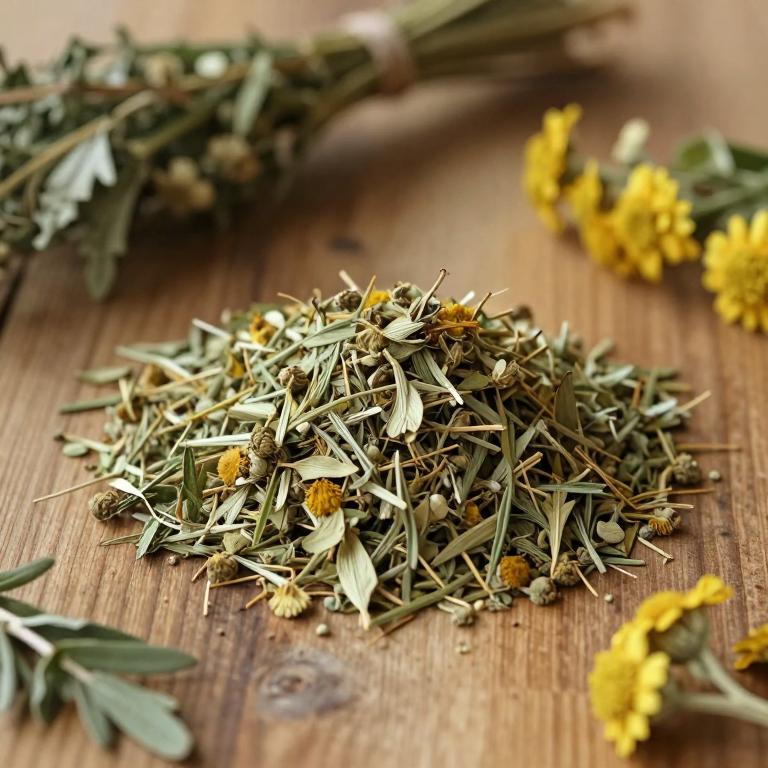
Artemisia fragrans, scientifically known as Artemisia fragrans, is a fragrant perennial herb native to specific arid regions. Renowned for its aromatic leaves and potent essential oils, this medicinal plant is traditionally utilized in various cultures for its antimicrobial, anti-inflammatory, and digestive properties, offering significant potential in ethnopharmacology.
- Family
- Asteraceae
- Native range
- Asia-Temperate
- Parts used
- Not available
- Common names
- Not available
- Scientific synonyms
- Artemisia Maritima Var. Erivanica · Seriphidium Fragrans Var. Erivanicum · 3 more
Names and Synonyms
Scientific Names
Accepted name
Artemisia fragransSynonyms
- Artemisia maritima var. erivanica
- Seriphidium fragrans var. erivanicum
- Seriphidium fragrans var. phyllostachys
- Seriphidium fragrans
- Artemisia fragrans var. phyllostachys
Sources: Wikidata
Taxonomical Classification
This plant, known scientifically as Artemisia fragrans, belongs to the kingdom Plantae and the phylum Streptophyta. Within the class Equisetopsida and subclass Magnoliidae, it is classified under the order Asterales. Finally, it is a member of the family Asteraceae and is categorized under the genus Artemisia.
| Rank | Classification |
|---|---|
| Kingdom | Plantae |
| Phylum | Streptophyta |
| Class | Equisetopsida |
| Subclass | Magnoliidae |
| Order | Asterales |
| Family | Asteraceae |
| Genus | Artemisia |
Sources: The World Checklist of Vascular Plants (WCVP)
Distribution
This plant exhibits a specific geographical range concentrated within the western regions of Eurasia. It is widely distributed throughout the Caucasus mountain system, including the North Caucasus region. Furthermore, its presence extends into the Transcaucasus area, covering significant portions of that territory. The species is also found within Western Asia, specifically spanning across Türkiye. Consequently, its natural habitat is primarily defined by these interconnected mountainous and western territories.
| Region | Area |
|---|---|
| Caucasus | North Caucasus |
| Caucasus | Transcaucasus |
| Western Asia | Türkiye |
Sources: The World Checklist of Vascular Plants (WCVP)
Botanical Identification
Ecology
The ecology of Artemisia fragrans is primarily defined by its preference for elevated terrains, where it is most commonly found inhabiting open hills. These hilly landscapes provide the specific topographic variations and drainage patterns necessary for its growth, often characterized by well-drained soils and significant exposure to sunlight. The distribution of the species within these hilly habitats is influenced by microclimatic factors, including wind patterns and temperature fluctuations typical of sloping environments. By occupying these specific niches, the plant participates in the local ecosystem, contributing to the specialized floral composition of upland regions.
- Habitat :
- hills
Life history
The life history of Artemisia fragrans is characterized by its nature as a perennial plant, allowing it to persist through multiple growing seasons. As a perennial species, it establishes a robust root system that facilitates survival during unfavorable environmental conditions, enabling the plant to emerge and thrive year after year. Its developmental cycle involves seasonal growth patterns where it allocates energy toward vegetative expansion during favorable periods and shifts toward reproductive efforts, such as flowering and seed production, when environmental cues are optimal. This perennial strategy ensures long-term persistence within its ecological niche, providing a stable presence in its habitat compared to annual or biennial species.
- Lifecycle :
- perennial
Morphology
The morphology of Artemisia fragrans is characterized by its growth form as a non-woody herb. This species is a self-supporting plant, lacking any climbing or vine-like tendencies, and functions as an independent organism rather than a parasite or epiphyte, typically occupying terrestrial habitats. It maintains a relatively low stature, with a plant height ranging from a minimum of 0.25 m to a maximum of 0.45 m. While its ecological niche can span various moisture levels, its primary habitat is categorized as terrestrial, though it may exist in semiaquatic or aquatic environments.
- Aquatic :
- terrestrial
- Climber :
- self-supporting
- Epiphyte :
- terrestrial
- Growth form :
- herb
- Parasite :
- independent
- Plant height max:
- 0.45 m
- Plant height min:
- 0.25 m
- Woodiness :
- non-woody
Reproduction
The reproduction of Artemisia fragrans is characterized by a specific phenological cycle tied to its flowering period. The plant initiates its flowering phase during the month of August, a period that serves as both the onset and the conclusion of its reproductive activity. Because the flowering start and flowering end both occur within August, the species exhibits a highly concentrated and brief reproductive window during this late summer month.
- Flowering time :
- Aug
Sources: Global Inventory of Floras and Traits (GIFT)
Chemicals
Artemisia fragrans has 2 reported phytochemicals identified across 0 scientific publications and several other databases. The most consistently reported chemicals include artemisinin, camphor.
| Chemical | Supporting sources | Consensus |
|---|---|---|
| artemisinin | 1 supporting sources | ★☆☆☆☆ |
| camphor | 1 supporting sources | ★☆☆☆☆ |
artemisinin
- Heliyon
camphor
- Heliyon
Conditions
Artemisia fragrans has 5 reported investigations on conditions identified across 0 scientific publications and several other databases. The most consistently reported conditions include diarrhea, fever, heartburn, hypertension, inflammation.
| Condition | Supporting sources | Consensus |
|---|---|---|
| Diarrhea | 1 supporting sources | ★☆☆☆☆ |
| Fever | 1 supporting sources | ★☆☆☆☆ |
| Heartburn | 1 supporting sources | ★☆☆☆☆ |
| Hypertension | 1 supporting sources | ★☆☆☆☆ |
| Inflammation | 1 supporting sources | ★☆☆☆☆ |
Diarrhea
- Journal of ethnopharmacology
Fever
- Journal of ethnopharmacology
Heartburn
- Journal of ethnopharmacology
Hypertension
- Journal of ethnopharmacology
Inflammation
- Iranian journal of basic medical sciences
Preparations
Artemisia fragrans has 1 reported preparations identified across 0 scientific publications and several other databases. The most consistently reported preparations include Fractions.
| Preparation | Supporting sources | Consensus |
|---|---|---|
| Fractions | 1 supporting sources | ★☆☆☆☆ |
Fractions
- Iranian journal of basic medical sciences