Artemisia crithmifolia
Artemisia crithmifolia · Accepted scientific name
Scientific literature: Very Sparse (8 studies) · ★☆☆☆☆
Artemisia crithmifolia, scientifically known as Artemisia crithmifolia, is a distinctive perennial herb valued in traditional medicine. Characterized by its aromatic foliage and delicate flowers, this plant belongs to the Asteraceae family. It is frequently studied for its potent bioactive compounds, offering significant potential in treating various inflammatory conditions.
- Family
- Asteraceae
- Native range
- Europe
- Parts used
- Root
- Common names
- Not available
- Scientific synonyms
- Artemisia Campestris Subsp. Lloydii · Draconia Campestris Subsp. Maritima · 6 more
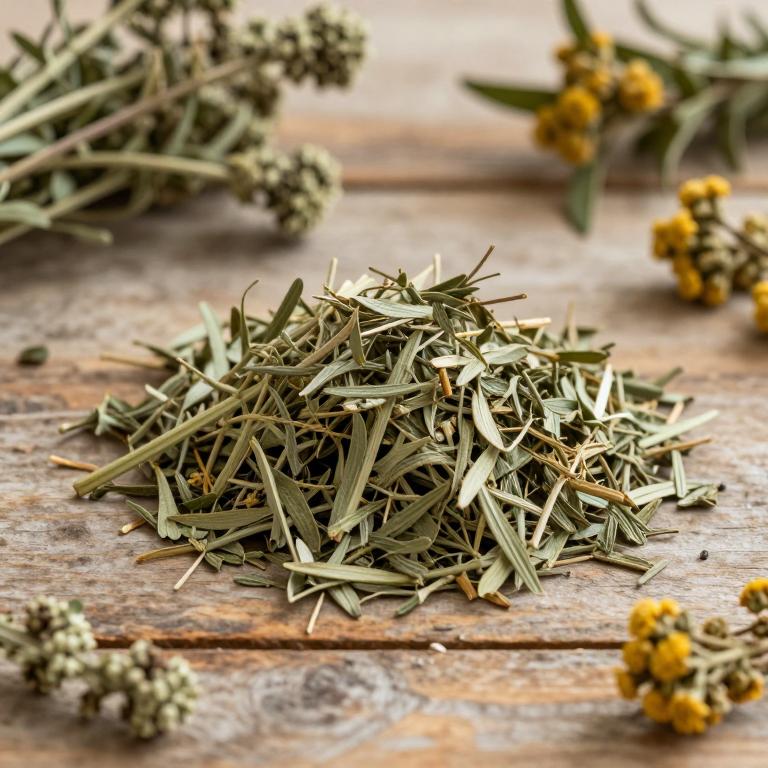
Names and Synonyms
Scientific Names
Accepted name
Artemisia crithmifoliaSynonyms
- Artemisia campestris subsp. lloydii
- Draconia campestris subsp. maritima
- Artemisia gayana
- Artemisia campestris var. maritima
- Artemisia campestris proles lloydii
- Oligosporus crithmifolius
- Artemisia campestris subsp. maritima
- Oligosporus gayanus
Sources: Wikidata
Taxonomical Classification
This plant belongs to the kingdom Plantae and is classified under the phylum Streptophyta and the class Equisetopsida. Within the subclass Magnoliidae, it falls under the order Asterales and the family Asteraceae. Finally, it is identified by the genus Artemisia, specifically as the species Artemisia crithmifolia.
| Rank | Classification |
|---|---|
| Kingdom | Plantae |
| Phylum | Streptophyta |
| Class | Equisetopsida |
| Subclass | Magnoliidae |
| Order | Asterales |
| Family | Asteraceae |
| Genus | Artemisia |
Sources: The World Checklist of Vascular Plants (WCVP)
Distribution
This plant exhibits a broad distribution across several distinct regions of the European continent. In Northern Europe, its presence can be recorded within Great Britain. Moving into Middle Europe, the species is found in both Belgium and the Netherlands. Its range extends further into Southwestern Europe, specifically covering parts of France. Finally, the plant is also distributed across the coastal landscapes of Portugal.
| Region | Area |
|---|---|
| Northern Europe | Great Britain |
| Middle Europe | Belgium |
| Middle Europe | Netherlands |
| Southwestern Europe | France |
| Southwestern Europe | Portugal |
| Southwestern Europe | Spain |
Sources: The World Checklist of Vascular Plants (WCVP)
Plant Parts
Artemisia crithmifolia has 1 reported plant parts identified across 1 scientific publications and several other databases that are studied for medicinal purposes. The most consistently reported plant part include root.
| Plant part | Supporting sources | Consensus |
|---|---|---|
| Root | 1 supporting sources | ★☆☆☆☆ |
Root
- Scientific reports
Chemicals
Artemisia crithmifolia has 3 reported phytochemicals identified across 1 scientific publications and several other databases. The most consistently reported chemicals include CHLOROGENIC ACID, Monoterpenes, quinic acid.
| Chemical | Supporting sources | Consensus |
|---|---|---|
| CHLOROGENIC ACID | 1 supporting sources | ★☆☆☆☆ |
| Monoterpenes | 1 supporting sources | ★☆☆☆☆ |
| quinic acid | 1 supporting sources | ★☆☆☆☆ |
CHLOROGENIC ACID
- Scientific reports
Monoterpenes
- Journal of ethnopharmacology
quinic acid
- Scientific reports
Activities
Artemisia crithmifolia has 1 reported activities identified across 1 scientific publications and several other databases. The most consistently reported activities include Antioxidant.
| Activity | Supporting sources | Consensus |
|---|---|---|
| Antioxidant | 1 supporting sources | ★☆☆☆☆ |
Antioxidant
- Scientific reports
Preparations
Artemisia crithmifolia has 3 reported preparations identified across 1 scientific publications and several other databases. The most consistently reported preparations include decoctions, infusions, tinctures.
| Preparation | Supporting sources | Consensus |
|---|---|---|
| Decoctions | 1 supporting sources | ★☆☆☆☆ |
| Infusions | 1 supporting sources | ★☆☆☆☆ |
| Tinctures | 1 supporting sources | ★☆☆☆☆ |
Decoctions
- Scientific reports
Infusions
- Scientific reports
Tinctures
- Scientific reports