field wormwood
Artemisia campestris subsp. campestris · Accepted scientific name
Scientific literature: Very Sparse (5 studies) · ★☆☆☆☆
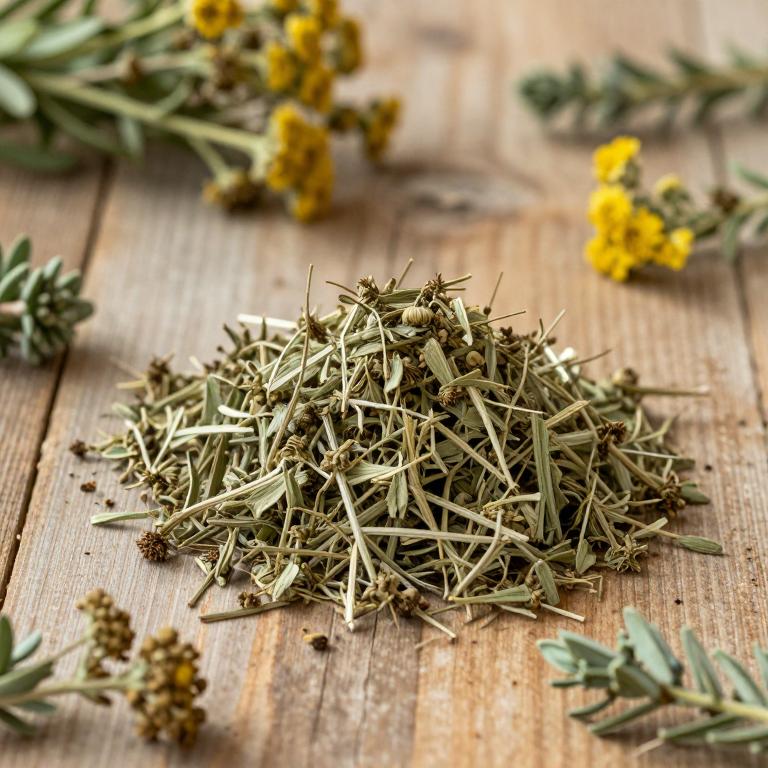
Field wormwood, scientifically known as Artemisia campestris subsp. campesestris, is a resilient perennial herb native to Mediterranean ecosystems. Characterized by its aromatic, silvery-grey foliage, this plant thrives in rocky, disturbed soils. Traditionally valued for its medicinal properties, it contains essential oils used to treat various ailments in herbal practices.
- Family
- Asteraceae
- Native range
- Europe
- Parts used
- Not available
- Common names
- Field Wormwood · Field Sagewort
- Scientific synonyms
- Artemisia Campestris Var. Collina · Artemisia Campestris Var. Delphinensis · 58 more
Names and Synonyms
Common Names
- field wormwood
- Field sagewort
Scientific Names
Accepted name
Artemisia campestris subsp. campestrisSynonyms
- Artemisia campestris var. collina
- Artemisia campestris var. delphinensis
- Artemisia campestris var. pyramidata
- Artemisia campestris var. pubescens
- Artemisia campestris var. monticola
- Artemisia campestris var. tenuifolia
- Artemisia campestris var. laxata
- Artemisia campestris var. brevicaulis
- Artemisia campestris var. virescens
- Artemisia campestris subsp. oligocephala
- Artemisia campestris var. erythroclada
- Artemisia campestris var. laxa
- Oligosporus collinus
- Artemisia campestris var. bracteolata
- Oligosporus delphinensis
- Artemisia campestris var. subspicata
- Oligosporus erythrocladus
- Artemisia campestris var. brevifolia
- Oligosporus floribundus
- Artemisia campestris var. longifolia
- Oligosporus fuscatus
- Oligosporus griseus
- Oligosporus implexus
- Artemisia campestris var. orophila
- Oligosporus jussieanus
- Oligosporus laxatus
- Oligosporus littoreus
- Oligosporus monticola
- Oligosporus orophilus
- Oligosporus parvulus
- Artemisia campestris var. implexa
- Oligosporus pubescens
- Artemisia campestris var. fuscata
- Oligosporus pyramidatus
- Oligosporus stenocladus
- Artemisia campestris var. brachyphylla
- Oligosporus suberectus
- Draconia campestris f. oligocephala
- Oligosporus tenuifolius
- Oligosporus virescens
- Artemisia campestris var. floribunda
- Oligosporus xylopodus
- Artemisia campestris var. stenoclada
- Artemisia campestris var. littorea
- Oligosporus brachylobus
- Artemisia campestris var. xylopoda
- Oligosporus brachyphyllus
- Oligosporus brevicaulis
- Absinthium campestre
- Absinthium virescens
- Artemisia bothnica
- Artemisia clausonis
- Artemisia collina
- Artemisia dniproica
- Artemisia glabrescens
- Artemisia hermaphrodita
- Artemisia infirma
- Artemisia jussieana
- Artemisia occitanica
- Artemisia odoratissima
Regional and Traditional Names
German:
- gewöhnlicher Feld-Beifuß
- Feld-Beifuß
- Filziger Feld-Beifuß
- Strand-Feld-Beifuß
- Gewoehnlicher Feld-Beifuss
French:
- Armoise des champs
Sources: Wikidata, Catalogue of Life
Taxonomical Classification
This plant belongs to the kingdom Plantae within the phylum Streptophyta and the class Equisetopsida. Following the subclass Magnoliidae, it is categorized under the order Asterales and the family Asteraceae. Finally, it is classified under the genus Artemisia as the subspecies campestris.
| Rank | Classification |
|---|---|
| Kingdom | Plantae |
| Phylum | Streptophyta |
| Class | Equisetopsida |
| Subclass | Magnoliidae |
| Order | Asterales |
| Family | Asteraceae |
| Genus | Artemisia |
Sources: The World Checklist of Vascular Plants (WCVP)
Distribution
This plant exhibits a broad distribution across several regions of the European continent. In Northern Europe, its presence is well-documented in Denmark and Finland. It can also be found inhabiting the landscapes of both Sweden and Great Britain. Moving toward the center of the continent, the species extends its reach into Middle Europe. Specifically, its range includes the mountainous and temperate terrains of Austria.
| Region | Area |
|---|---|
| Northern Europe | Denmark |
| Northern Europe | Finland |
| Northern Europe | Great Britain |
| Northern Europe | Sweden |
| Middle Europe | Austria |
| Middle Europe | Belgium |
| Middle Europe | Czechia-Slovakia |
| Middle Europe | Germany |
| Middle Europe | Hungary |
| Middle Europe | Netherlands |
Sources: The World Checklist of Vascular Plants (WCVP)
Chemicals
Artemisia campestris subsp. campestris has 3 reported phytochemicals identified across 0 scientific publications and several other databases. The most consistently reported chemicals include Eucalyptol, GERANYL ACETATE, LINALYL ACETATE.
| Chemical | Supporting sources | Consensus |
|---|---|---|
| Eucalyptol | 1 supporting sources | ★☆☆☆☆ |
| GERANYL ACETATE | 1 supporting sources | ★☆☆☆☆ |
| LINALYL ACETATE | 1 supporting sources | ★☆☆☆☆ |
Eucalyptol
- Biomedical chromatography : BMC
GERANYL ACETATE
- Biomedical chromatography : BMC
LINALYL ACETATE
- Biomedical chromatography : BMC
Preparations
Artemisia campestris subsp. campestris has 2 reported preparations identified across 0 scientific publications and several other databases. The most consistently reported preparations include Methanol extracts, aqueous and methanol extracts.
| Preparation | Supporting sources | Consensus |
|---|---|---|
| Methanol extracts | 1 supporting sources | ★☆☆☆☆ |
| Aqueous and methanol extracts | 1 supporting sources | ★☆☆☆☆ |
Methanol extracts
- Iranian journal of pharmaceutical research : IJPR
Aqueous and methanol extracts
- Iranian journal of pharmaceutical research : IJPR