coastal sagebrush
Artemisia californica · Accepted scientific name
Scientific literature: Very Sparse (2 studies) · ★☆☆☆☆
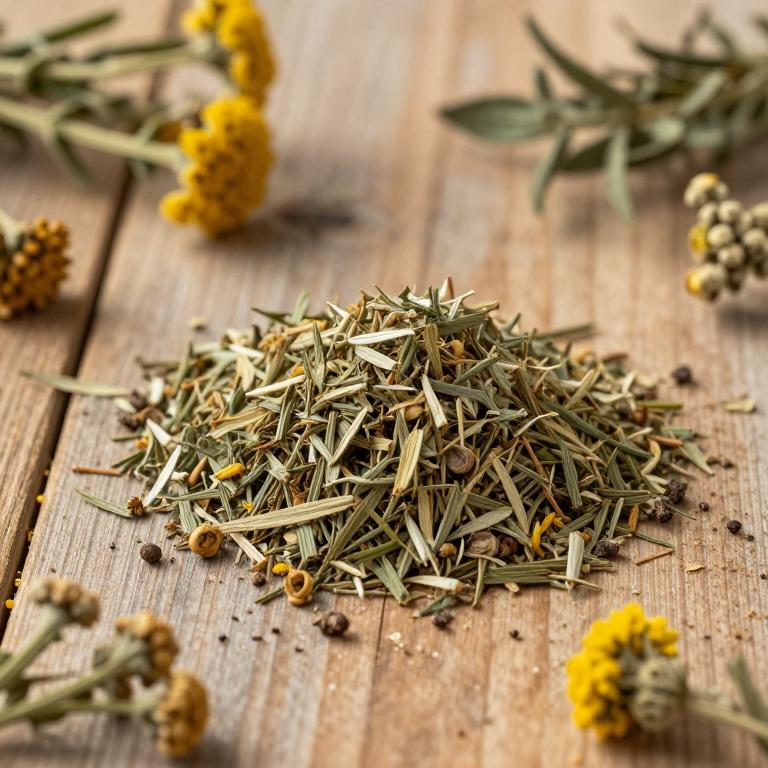
Coastal sagebrush, scientifically known as Artemisia californica, is a perennial shrub native to the California chaparral. Renowned for its aromatic, silver-green foliage, this resilient plant plays a vital role in its ecosystem. Traditionally used in indigenous medicine, it possesses potent antimicrobial and antioxidant properties highly valued in herbalism.
- Family
- Asteraceae
- Native range
- Northern America
- Parts used
- Not available
- Common names
- Coastal Sagebrush · Cowboy Cologne
- Scientific synonyms
- Crossostephium Foliosum · Artemisia Fischeriana · 3 more
Names and Synonyms
Common Names
- coastal sagebrush
- cowboy cologne
Scientific Names
Accepted name
Artemisia californicaSynonyms
- Crossostephium foliosum
- Artemisia fischeriana
- Artemisia foliosa
- Crossostephium californicum
- Artemisia fischeriana var. vegetior
Regional and Traditional Names
Spanish:
- Artemisia abrotanoides
- Artemisia fischeriana
- Artemisia fischeriana var. vegetior
- Artemisia foliosa
- Crossostephium californicum
- Artemisa de California
Sources: Wikidata, Catalogue of Life
Taxonomical Classification
This plant belongs to the kingdom Plantae and the phylum Streptophyta, falling under the class Equisetopsida and subclass Magnoliidae. Within the order Asterales, it is a member of the Asteraceae family. It is scientifically classified under the genus Artemisia, specifically as the species Artemisia californica.
| Rank | Classification |
|---|---|
| Kingdom | Plantae |
| Phylum | Streptophyta |
| Class | Equisetopsida |
| Subclass | Magnoliidae |
| Order | Asterales |
| Family | Asteraceae |
| Genus | Artemisia |
Sources: The World Checklist of Vascular Plants (WCVP)
Distribution
This plant is primarily found within the coastal and inland regions of the Southwestern United States. Specifically, it is widely distributed throughout the state of California. Beyond the American border, its range extends significantly into northern territories. This includes the specific region of Northwest Mexico. Therefore, its habitat spans a diverse longitudinal stretch across these two neighboring countries.
| Region | Area |
|---|---|
| Southwestern U.S.A. | California |
| Mexico | Mexico Northwest |
Sources: The World Checklist of Vascular Plants (WCVP)
Botanical Identification
Life history
The life history of Artemia californica is characterized by its status as a perennial species, though it exhibits a variable lifecycle that can encompass annual and biennial stages depending on environmental conditions and resource availability. As a long-lived perennial, the plant establishes a robust presence in its ecosystem, often developing woody bases and spreading through various mechanisms to ensure longevity. Its developmental trajectory involves navigating seasonal shifts, where it may undergo periods of dormancy or rapid growth to optimize its survival in Mediterranean climates. This flexibility in its lifecycle allows the plant to persist through fluctuating moisture levels and temperature extremes, ensuring that it can successfully complete its reproductive cycles over multiple years.
- Lifecycle :
- perennial
Morphology
The morphology of Artemisia californica is characterized by its growth form as a perennial shrub, exhibiting a robust and self-supporting structure. As a woody plant, it develops a firm, lignified stem system that allows it to maintain a stable stature without the need for climbing or external support. It is a terrestrial species, lacking any aquatic or semiaquatic tendencies, and grows as an independent organism rather than acting as a parasite or an epiphyte. This self-supporting, woody shrub habit enables it to thrive in its natural habitat through a sturdy, non-climbing architectural framework.
- Aquatic :
- terrestrial
- Climber :
- self-supporting
- Epiphyte :
- terrestrial
- Growth form :
- shrub
- Parasite :
- independent
- Woodiness :
- woody
Physiology
The physiology of Artemisia californica is characterized by a highly specialized adaptation to Mediterranean climates, defined primarily by its use of the C3 photosynthetic pathway. As a C3 plant, it fixes atmospheric carbon dioxide through the Calvin cycle using the enzyme RuBisCO, which necessitates efficient water management to balance gas exchange with transpiration. To mitigate the risks of photoinhibition and water loss during periods of high solar radiation and drought, the plant employs various physiological strategies, including the production of secondary metabolites such as volatile terpenoids. These compounds not only serve as chemical defenses but also play a role in managing oxidative stress. Furthermore, its physiological resilience is bolstered by a robust root system and leaf morphological adaptations that regulate leaf temperature and minimize moisture loss, ensuring metabolic stability despite the seasonal fluctuations in temperature and water availability typical of its habitat.
- Photosynthetic pathway :
- C3
Reproduction
Reproduction in Artemisia californica is characterized by the production of minute seeds that play a critical role in its survival and colonization within its habitat. The seed mass is highly uniform, with a consistent value across its range, showing a mean, maximum, and minimum mass of 6e-05 g. This extreme lightness in seed weight facilitates a diverse and unspecialized dispersal syndrome. Rather than relying on a single method, the plant utilizes a combination of dispersal mechanisms, including anemochory (wind dispersal), zoochory (animal dispersal), autochory (self-dispersal), and hydrochory (water dispersal), which allows the seeds to be spread effectively across varied environmental landscapes.
- Dispersal syndrome :
- unspecialized
- Seed mass mean:
- 6e-05 g
Sources: Global Inventory of Floras and Traits (GIFT)
Chemicals
Artemisia californica has 2 reported phytochemicals identified across 0 scientific publications and several other databases. The most consistently reported chemicals include Jaceidin, Jaceosidin.
| Chemical | Supporting sources | Consensus |
|---|---|---|
| Jaceidin | 1 supporting sources | ★☆☆☆☆ |
| Jaceosidin | 1 supporting sources | ★☆☆☆☆ |
Jaceidin
- Natural product research
Jaceosidin
- Natural product research
Preparations
Artemisia californica has 1 reported preparations identified across 0 scientific publications and several other databases. The most consistently reported preparations include dichloromethane-soluble fractions.
| Preparation | Supporting sources | Consensus |
|---|---|---|
| Dichloromethane-soluble fractions | 1 supporting sources | ★☆☆☆☆ |
Dichloromethane-soluble fractions
- Natural product research