Artemisia aucheri
Artemisia aucheri · Accepted scientific name
Scientific literature: Very Sparse (11 studies) · ★☆☆☆☆
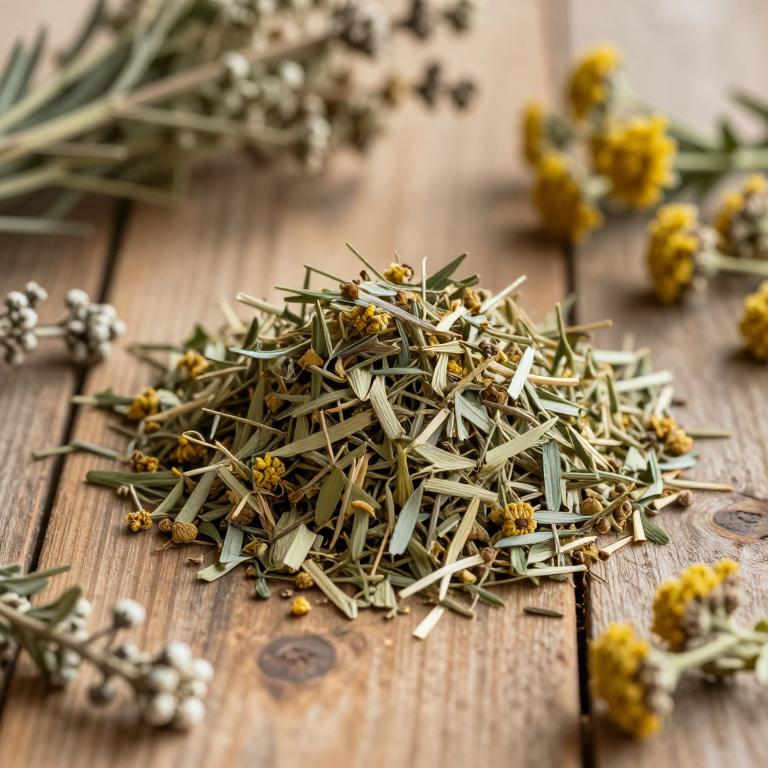
Artemisia aucheri, scientifically known as Artemisia aucheri, is a perennial medicinal shrub native to the mountainous regions of Iran and Central Asia. Renowned for its aromatic properties, this plant is highly valued in traditional medicine for its diverse bioactive compounds, offering significant therapeutic potential in treating various ailments.
- Family
- Asteraceae
- Native range
- Asia-Temperate
- Parts used
- Not available
- Common names
- Not available
- Scientific synonyms
- Seriphidium Aucheri
Names and Synonyms
Scientific Names
Accepted name
Artemisia aucheriSynonyms
- Seriphidium aucheri
Sources: Wikidata, Catalogue of Life
Taxonomical Classification
This plant, Artemisia aucheri, belongs to the kingdom Plantae and the phylum Streptophyta. It is classified under the class Equisetopsida and subclass Magnoliidae, falling within the order Asterales. Finally, it is a member of the family Asteraceae and the genus Artemisia.
| Rank | Classification |
|---|---|
| Kingdom | Plantae |
| Phylum | Streptophyta |
| Class | Equisetopsida |
| Subclass | Magnoliidae |
| Order | Asterales |
| Family | Asteraceae |
| Genus | Artemisia |
Sources: The World Checklist of Vascular Plants (WCVP)
Distribution
This plant exhibits a wide geographical distribution across several key regions of Asia. In Western Asia, it can be found growing within the territories of both Afghanistan and Iran. Its range extends further east into China, specifically inhabiting the high-altitude regions of Tibet. Additionally, the species is present within the Indian Subcontinent, specifically located in the West Himalaya. Collectively, these locations highlight the plant's preference for diverse mountainous environments.
| Region | Area |
|---|---|
| Western Asia | Afghanistan |
| Western Asia | Iran |
| China | Tibet |
| Indian Subcontinent | West Himalaya |
Sources: The World Checklist of Vascular Plants (WCVP)
Botanical Identification
Ecology
The ecology of Artemisia aucheri is characterized by its adaptation to high-altitude montane environments, where it occupies a specific altitudinal niche within mountain ecosystems. This species is typically found across a broad elevational gradient, ranging from a minimum altitude of 1700 m AMSL to a maximum of 3700 m AMSL. The distribution of the plant centers around a mean elevation of 3050 m AMSL, suggesting that it thrives most effectively in subalpine or alpine zones. Such a wide vertical range indicates a significant capacity to tolerate varying levels of atmospheric pressure, temperature fluctuations, and UV exposure typical of high-mountain terrains.
- Elevational range max:
- 3700 m AMSL
- Elevational range mean:
- 3050 m AMSL
- Elevational range min:
- 1700 m AMSL
Morphology
The morphology of Artemisia aucheri is characterized by its growth form as a herb, specifically manifesting as a non-woody plant. It does not exhibit climbing behavior, as it lacks any obligate or facultative climbing mechanisms, remaining entirely self-supporting in its structural development.
- Climber :
- self-supporting
- Growth form :
- herb
- Woodiness :
- non-woody
Sources: Global Inventory of Floras and Traits (GIFT)
Chemicals
Artemisia aucheri has 10 reported phytochemicals identified across 0 scientific publications and several other databases. The most consistently reported chemicals include APX, ASA, CAT, DHA, GR.
| Chemical | Supporting sources | Consensus |
|---|---|---|
| APX | 1 supporting sources | ★☆☆☆☆ |
| ASA | 1 supporting sources | ★☆☆☆☆ |
| CAT | 1 supporting sources | ★☆☆☆☆ |
| DHA | 1 supporting sources | ★☆☆☆☆ |
| GR | 1 supporting sources | ★☆☆☆☆ |
| GSH | 1 supporting sources | ★☆☆☆☆ |
| MDA | 1 supporting sources | ★☆☆☆☆ |
| POD | 1 supporting sources | ★☆☆☆☆ |
| SOD | 1 supporting sources | ★☆☆☆☆ |
| salicylic acid | 1 supporting sources | ★☆☆☆☆ |
APX
- Botanical studies
ASA
- Botanical studies
CAT
- Botanical studies
DHA
- Botanical studies
GR
- Botanical studies
GSH
- Botanical studies
MDA
- Botanical studies
POD
- Botanical studies
SOD
- Botanical studies
salicylic acid
- Botanical studies
Conditions
Artemisia aucheri has 1 reported investigations on conditions identified across 0 scientific publications and several other databases. The most consistently reported conditions include HSV-1.
| Condition | Supporting sources | Consensus |
|---|---|---|
| Hsv-1 | 1 supporting sources | ★☆☆☆☆ |
Hsv-1
- Antiviral therapy
Preparations
Artemisia aucheri has 3 reported preparations identified across 0 scientific publications and several other databases. The most consistently reported preparations include aqueous extract, chloroform fraction, ethyl acetate fraction.
| Preparation | Supporting sources | Consensus |
|---|---|---|
| Aqueous extract | 1 supporting sources | ★☆☆☆☆ |
| Chloroform fraction | 1 supporting sources | ★☆☆☆☆ |
| Ethyl acetate fraction | 1 supporting sources | ★☆☆☆☆ |
Aqueous extract
- Antiviral therapy
Chloroform fraction
- Antiviral therapy
Ethyl acetate fraction
- Antiviral therapy