tree wormwood
Artemisia arborescens · Accepted scientific name
Scientific literature: Very Sparse (30 studies) · ★☆☆☆☆
Tree wormwood, scientifically known as Artemisia arborescens, is a versatile medicinal shrub native to the Himalayan regions. Renowned for its potent bioactive compounds, it is traditionally used in Ayurvedic medicine to treat respiratory ailments, digestive issues, and inflammation. This hardy plant offers significant therapeutic potential in modern pharmacology.
- Family
- Asteraceae
- Native range
- Europe
- Parts used
- Not available
- Common names
- Hedge Artemisia · Shrubby Mugwort
- Scientific synonyms
- Absinthium Arborescens · Absinthium Argenteum
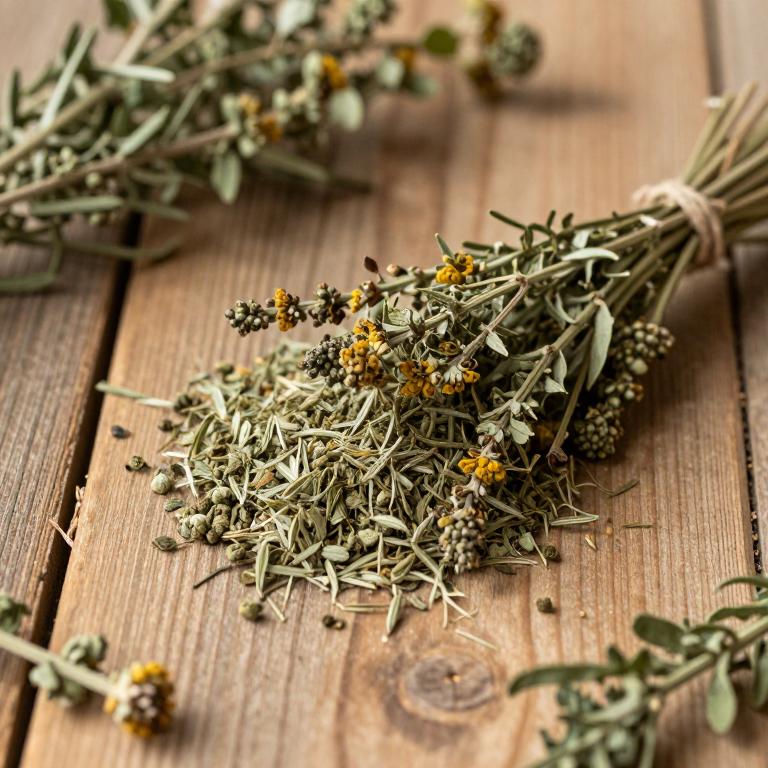
Names and Synonyms
Common Names
- Hedge Artemisia
- Shrubby Mugwort
Scientific Names
Accepted name
Artemisia arborescensSynonyms
- Absinthium arborescens
- Absinthium argenteum
Regional and Traditional Names
German:
- Strauch-Beifuß
French:
- Armoise arborescente
Sources: Wikidata, Catalogue of Life
Taxonomical Classification
This plant belongs to the kingdom Plantae and is classified under the phylum Streptophyta and class Equisetopsida. Within the subclass Magnoliidae, it falls under the order Asterales and is a member of the Asteraceae family. Finally, its specific taxonomic placement is within the genus Artemisia.
| Rank | Classification |
|---|---|
| Kingdom | Plantae |
| Phylum | Streptophyta |
| Class | Equisetopsida |
| Subclass | Magnoliidae |
| Order | Asterales |
| Family | Asteraceae |
| Genus | Artemisia |
Sources: The World Checklist of Vascular Plants (WCVP)
Distribution
This plant exhibits a specific geographical distribution concentrated throughout Southwestern Europe. It can be found growing in the Balearic Islands, which are part of the Baleares archipelago. The species is also present on the island of Corsica and across the mainland of France. Additionally, its range extends to the coastal regions of Portugal. Finally, the plant is documented inhabiting the territory of Sardegna.
| Region | Area |
|---|---|
| Southwestern Europe | Baleares |
| Southwestern Europe | Corse |
| Southwestern Europe | France |
| Southwestern Europe | Portugal |
| Southwestern Europe | Sardegna |
| Southwestern Europe | Spain |
| Southeastern Europe | Greece |
| Southeastern Europe | Italy |
| Southeastern Europe | Kriti |
| Southeastern Europe | Sicilia |
Sources: The World Checklist of Vascular Plants (WCVP)
Botanical Identification
Ecology
The ecology of Artemisia arborescens is fundamentally defined by its preference for coastal environments, where it has adapted to the unique stressors of maritime landscapes. Occupying these specialized habitats, the plant thrives in regions characterized by high salt spray, sandy or rocky substrates, and significant exposure to wind and solar radiation. Its distribution within coastal zones suggests a high tolerance for saline conditions and potentially well-drained soils typical of shorelines. The species plays a functional role in these ecosystems by stabilizing coastal soil structures and interacting with the specific microclimates created by the proximity to the ocean, facilitating nutrient cycling within these sensitive maritime niches.
- Habitat :
- Coastal
Life history
The life history of Artemisia arborescens is characterized by its nature as a perennial plant, allowing it to persist through multiple growing seasons and establish a long-term presence within its ecological niche. In terms of its structural growth strategy, it functions as a chamaephyte, meaning its perennating buds are located close to the ground level, often just above or at the soil surface, which provides a level of protection against environmental stressors such as frost or herbivory. This combination of a multi-year lifecycle and a low-growing life form enables the species to maintain stability and resilience within its habitat over extended periods.
- Life form :
- chamaephyte
- Lifecycle :
- perennial
Morphology
The morphology of Artemisia arborescens is characterized by its growth form as a woody subshrub or shrub, exhibiting a self-supporting structure rather than acting as a climber. This plant is a terrestrial species, functioning as an independent organism that is neither an epiphyte nor a parasite. In terms of physical dimensions, it reaches a plant height ranging from a minimum of 1 meter to a maximum of 3 meters.
- Aquatic :
- terrestrial
- Climber :
- self-supporting
- Epiphyte :
- terrestrial
- Growth form :
- shrub
- Growth form :
- subshrub
- Parasite :
- independent
- Plant height max:
- 3 m
- Plant height min:
- 1 m
- Woodiness :
- woody
Physiology
The physiology of Artemisia arborescens is characterized by distinct morphological variations in its foliage that support its metabolic processes and environmental adaptation. The leaf dimensions exhibit a significant range, reflecting the plant's developmental plasticity and structural efficiency. Specifically, the leaf length fluctuates between a minimum of 5 cm and a maximum of 10 cm, providing a variable surface area optimized for photosynthetic activity and gas exchange. Complementing this longitudinal variation, the leaf width ranges from a minimum of 3 cm to a maximum of 7 cm. These dimensional parameters collectively influence the plant's transpiration rates and its ability to regulate thermal energy within the canopy, ensuring robust physiological function across varying microclimatic conditions.
- Leaf length max:
- 10 cm
- Leaf length min:
- 5 cm
- Leaf width max:
- 7 cm
- Leaf width min:
- 3 cm
Reproduction
The reproduction of Artemisia arborescens is characterized by a biotic pollination syndrome, specifically relying on insect vectors to facilitate the transfer of pollen. Following successful fertilization, the plant produces a fruit categorized as an achene. These fruits are notably indehiscent, meaning they do not split open at maturity to release their seeds, but rather remain intact.
- Dehiscence :
- indehiscent
- Fruit type :
- achene
- Pollination syndrome :
- insect
- Pollination syndrome :
- biotic
Sources: Global Inventory of Floras and Traits (GIFT)
Chemicals
Artemisia arborescens has 13 reported phytochemicals identified across 0 scientific publications and several other databases. The most consistently reported chemicals include Flavonoids, 15(S)-HETE, Arborescin, Artemitin, Chamazulene.
| Chemical | Supporting sources | Consensus |
|---|---|---|
| Flavonoids | 2 supporting sources | ★☆☆☆☆ |
| 15(S)-HETE | 1 supporting sources | ★☆☆☆☆ |
| Arborescin | 1 supporting sources | ★☆☆☆☆ |
| Artemitin | 1 supporting sources | ★☆☆☆☆ |
| Chamazulene | 1 supporting sources | ★☆☆☆☆ |
| Chrysoeriol | 1 supporting sources | ★☆☆☆☆ |
| Chrysoeriol 4-glucoside | 1 supporting sources | ★☆☆☆☆ |
| Dihydroridentin | 1 supporting sources | ★☆☆☆☆ |
| Tannins | 1 supporting sources | ★☆☆☆☆ |
| apigenin | 1 supporting sources | ★☆☆☆☆ |
Flavonoids
- Biomedicine & pharmacotherapy = Biomedecine & pharmacotherapie
- Cardiovascular & hematological agents in medicinal chemistry
15(S)-HETE
- Phytotherapy research : PTR
Arborescin
- Planta medica
Artemitin
- Planta medica
Chamazulene
- Natural product communications
Chrysoeriol
- Planta medica
Chrysoeriol 4-glucoside
- Planta medica
Dihydroridentin
- Planta medica
Tannins
- Cardiovascular & hematological agents in medicinal chemistry
apigenin
- Planta medica
Activities
Artemisia arborescens has 3 reported activities identified across 0 scientific publications and several other databases. The most consistently reported activities include Antihyperglycemic, Antihyperlipidemic, Nephroprotective.
| Activity | Supporting sources | Consensus |
|---|---|---|
| Antihyperglycemic | 1 supporting sources | ★☆☆☆☆ |
| Antihyperlipidemic | 1 supporting sources | ★☆☆☆☆ |
| Nephroprotective | 1 supporting sources | ★☆☆☆☆ |
Antihyperglycemic
- Cardiovascular & hematological agents in medicinal chemistry
Antihyperlipidemic
- Cardiovascular & hematological agents in medicinal chemistry
Nephroprotective
- Biomedicine & pharmacotherapy = Biomedecine & pharmacotherapie
Conditions
Artemisia arborescens has 10 reported investigations on conditions identified across 0 scientific publications and several other databases. The most consistently reported conditions include antihyperglycemic, antihyperlipidemic, cancer, lung diseases, mycoplasma infections.
| Condition | Supporting sources | Consensus |
|---|---|---|
| Antihyperglycemic | 1 supporting sources | ★☆☆☆☆ |
| Antihyperlipidemic | 1 supporting sources | ★☆☆☆☆ |
| Cancer | 1 supporting sources | ★☆☆☆☆ |
| Lung diseases | 1 supporting sources | ★☆☆☆☆ |
| Mycoplasma infections | 1 supporting sources | ★☆☆☆☆ |
| Neuralgia | 1 supporting sources | ★☆☆☆☆ |
| Prostate cancer | 1 supporting sources | ★☆☆☆☆ |
| Psoriasis | 1 supporting sources | ★☆☆☆☆ |
| Tumors | 1 supporting sources | ★☆☆☆☆ |
| Urticaria | 1 supporting sources | ★☆☆☆☆ |
Antihyperglycemic
- Cardiovascular & hematological agents in medicinal chemistry
Antihyperlipidemic
- Cardiovascular & hematological agents in medicinal chemistry
Cancer
- Journal of ethnopharmacology
Lung diseases
- Journal of ethnopharmacology
Mycoplasma infections
- Tropical animal health and production
Neuralgia
- Journal of ethnopharmacology
Prostate cancer
- Journal of ethnopharmacology
Psoriasis
- Phytotherapy research : PTR
Tumors
- Journal of ethnopharmacology
Urticaria
- Journal of ethnopharmacology
Preparations
Artemisia arborescens has 10 reported preparations identified across 0 scientific publications and several other databases. The most consistently reported preparations include aqueous extract, essential oil, ethanolic extract, extract in drinking water, feed-supplementation.
| Preparation | Supporting sources | Consensus |
|---|---|---|
| Aqueous extract | 2 supporting sources | ★☆☆☆☆ |
| Essential oil | 1 supporting sources | ★☆☆☆☆ |
| Ethanolic extract | 1 supporting sources | ★☆☆☆☆ |
| Extract in drinking water | 1 supporting sources | ★☆☆☆☆ |
| Feed-supplementation | 1 supporting sources | ★☆☆☆☆ |
| Ground aerial parts | 1 supporting sources | ★☆☆☆☆ |
| Hydroalcoholic extract | 1 supporting sources | ★☆☆☆☆ |
| Methanol crude extracts | 1 supporting sources | ★☆☆☆☆ |
| Methanolic extracts | 1 supporting sources | ★☆☆☆☆ |
| Ritual bathing of newborns | 1 supporting sources | ★☆☆☆☆ |
Aqueous extract
- Planta medica
- Cardiovascular & hematological agents in medicinal chemistry
Essential oil
- Natural product communications
Ethanolic extract
- Planta medica
Extract in drinking water
- Biomedicine & pharmacotherapy = Biomedecine & pharmacotherapie
Feed-supplementation
- Animals : an open access journal from MDPI
Ground aerial parts
- Planta medica
Hydroalcoholic extract
- Biomedicine & pharmacotherapy = Biomedecine & pharmacotherapie
Methanol crude extracts
- Phytotherapy research : PTR
Methanolic extracts
- Tropical animal health and production
Ritual bathing of newborns
- Journal of ethnobiology and ethnomedicine